Do All Ragdoll Cats Have Blue Eyes? Eye Color, Genetics, Kitten Changes & Breed Standards
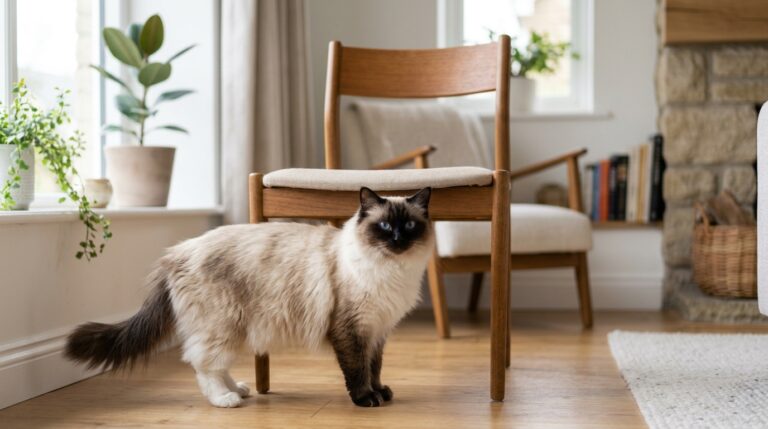
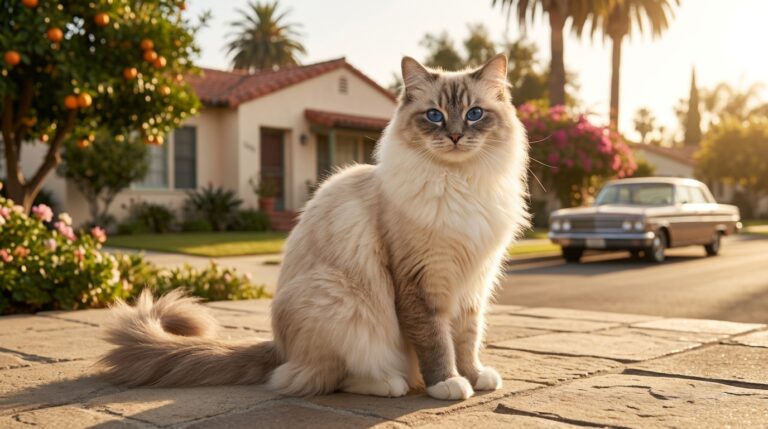
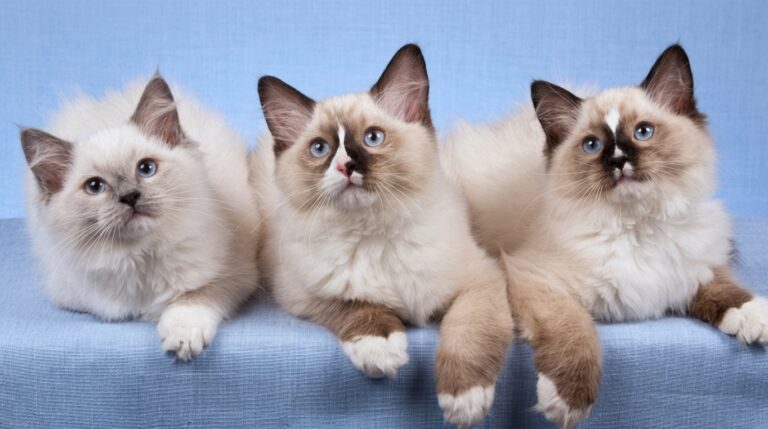
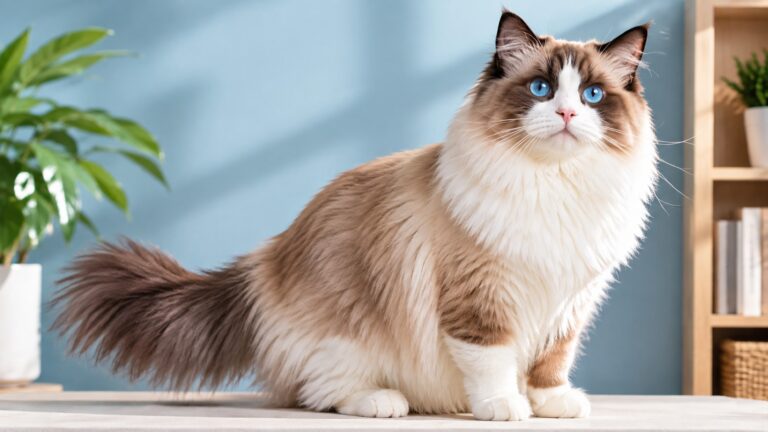
Ragdoll cats are famous for many beautiful features, including their soft coats, color-point patterns, large size, and relaxed personalities. However, one of the most recognizable features of this breed is their striking blue eyes. When people see a Ragdoll for the first time, the bright blue eyes often stand out immediately against the cat’s darker face markings and fluffy coat.
This naturally leads to a common question among cat lovers: do all Ragdoll cats have blue eyes?
For purebred Ragdolls, blue eyes are a defining characteristic of the breed. Their eye color is closely connected to the genetics responsible for their color-point pattern. While the exact shade of blue can vary from one cat to another, blue is the expected eye color for a Ragdoll that meets established breed standards.
Understanding Ragdoll eye color becomes even more interesting when you look at kittens. Ragdoll kittens are born with immature eyesight, and their eyes can look different during the early stages of development. As they grow, their characteristic blue color becomes more apparent.
In this guide, we will explore why Ragdoll cats have blue eyes, how genetics influence their appearance, when kittens develop their recognizable eye color, whether different Ragdoll colors have different eye shades, and what unusual eye colors might mean.
Do All Ragdoll Cats Have Blue Eyes?
The short answer is that blue eyes are a defining characteristic of the Ragdoll breed. Purebred Ragdolls are expected to have blue eyes, and breed standards generally describe the desired eye color as blue.
However, “blue” does not mean that every Ragdoll has eyes that look the same. One Ragdoll may have a very pale icy blue color, while another may have a deeper, more vivid blue appearance. The shade can also look different depending on lighting, the cat’s age, photographs, and the surrounding coat color.
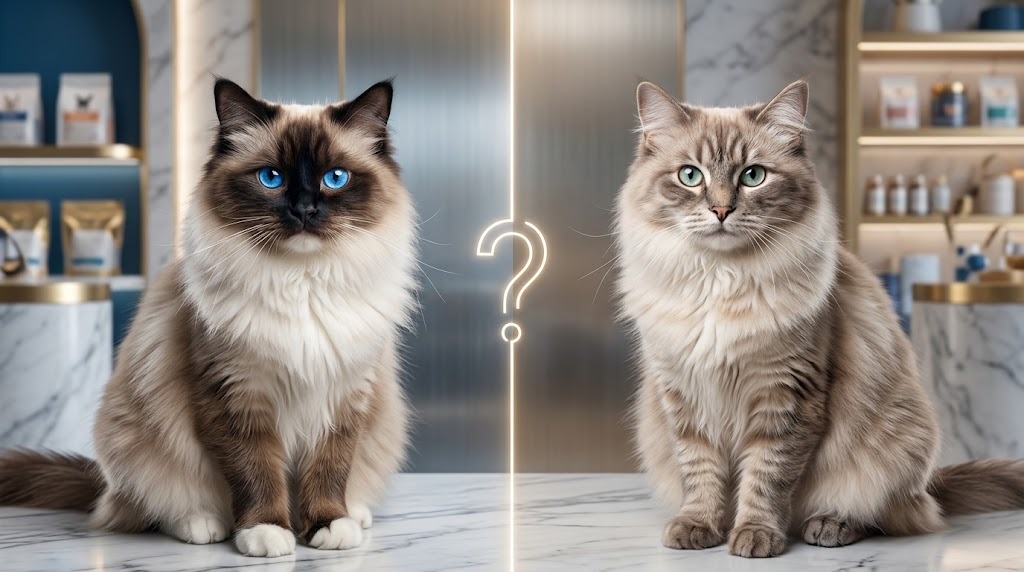
The important distinction is between the breed standard and individual cats that may have uncertain ancestry. A registered purebred Ragdoll should have the characteristic blue eyes associated with the breed. A cat that looks like a Ragdoll but has green, yellow, copper, or another eye color may be a mixed-breed cat, may have uncertain ancestry, or may require closer examination.
Eye color by itself, however, is not enough to determine whether a cat is truly a Ragdoll. Breed identification also involves physical characteristics, coat patterns, body structure, pedigree, and other traits.
Blue eyes are therefore one of the most useful visual clues, but they should not be treated as the only way to identify the breed.
Why Do Ragdoll Cats Have Blue Eyes?
The beautiful blue eyes of Ragdoll cats are closely related to their color-point genetics.
Ragdolls have a form of temperature-sensitive pigmentation associated with the color-point pattern. This means the pigment-producing process is affected by temperature. The cooler areas of the body, such as the ears, face, legs, and tail, develop darker coloration, while the warmer central areas of the body remain much lighter.
The same genetic mechanism is connected to the lack of heavy pigmentation in the iris.
The iris is the colored part of the eye. In many cats, different amounts and types of pigment contribute to colors such as green, gold, yellow, copper, or brown. In color-point cats such as Ragdolls, the genetic characteristics responsible for their pattern result in blue eyes.
Blue eyes do not mean that the eyes contain blue pigment in the same way that a coat can contain dark pigment. Instead, the appearance is related to how light interacts with the relatively low amount of pigmentation in the iris.
This is why the blue eyes of a Ragdoll can look especially bright. Their pale irises reflect light in a way that creates the familiar blue appearance.
What Color Eyes Do Ragdoll Cats Have?
Although blue is the characteristic Ragdoll eye color, blue itself has several visual variations.
Some Ragdolls have eyes that appear very light and almost icy. Others have a medium blue shade that looks especially noticeable against a darker color-point mask. Some cats have a more intense blue appearance.
These differences do not necessarily mean that one cat is healthier or more purebred than another.
Deep Blue Eyes
Some Ragdolls have rich, deep blue eyes that create a strong contrast with their coat. This appearance is particularly noticeable in cats with darker facial markings.
Deep blue eyes can look almost sapphire-like under certain lighting conditions. Indoor lighting, sunlight, and camera exposure can all affect how intense the color appears in photographs.
Light Blue Eyes
Other Ragdolls have lighter blue eyes. Their eyes may appear pale blue, icy blue, or almost silvery under certain conditions.
Light blue eyes are still within the general blue range associated with the breed. The exact visual shade can vary naturally between individual cats.
Bright or Vivid Blue Eyes
Some Ragdolls have exceptionally vivid-looking blue eyes. These eyes may appear especially bright when the cat is sitting near a window or in natural daylight.
Photography can exaggerate this effect because cameras often increase the apparent contrast between the iris and the surrounding facial markings.
For that reason, it is better to evaluate a cat’s eye color in normal lighting rather than relying entirely on photographs.
Do Ragdoll Kittens Have Blue Eyes at Birth?
Ragdoll kittens are born with their eyes closed, just like other kittens. Their eyes do not immediately display the mature appearance that people associate with adult Ragdolls.
When kittens begin opening their eyes, the color can look somewhat different from the final shade that develops later.
This is completely normal.
A young kitten is still going through important stages of eye development. As the kitten grows, the appearance of the iris becomes clearer, and the characteristic blue color becomes easier to recognize.
Because Ragdolls are a color-point breed, their eye color is genetically linked to the same overall characteristics that produce their distinctive coat pattern.
When Do Ragdoll Kittens Develop Their Blue Eyes?
The exact pace of development varies from kitten to kitten. During the early weeks, the eyes may appear soft or pale. As the kitten matures, the blue color becomes more noticeable.
By the time a Ragdoll is older, its characteristic eye color should be much easier to identify.
This is one reason it is not ideal to judge a very young kitten solely by its early appearance. Coat markings, body proportions, facial features, and eye color can all continue developing as the kitten grows.
If you are considering purchasing or adopting a Ragdoll kitten, asking about the kitten’s age, parents, pedigree, and health records can provide much more useful information than looking at eye color alone.
Can a Ragdoll Cat Have Eyes That Are Not Blue?
For a purebred Ragdoll that conforms to the recognized breed standard, blue eyes are expected.
A cat that has clearly green, gold, copper, or another non-blue eye color does not match the traditional Ragdoll breed description.
However, there are several reasons why someone might see a cat advertised as a “Ragdoll” with unusual eyes.
The first possibility is that the cat is not actually a purebred Ragdoll. Some cats have a Ragdoll-like appearance without having a documented Ragdoll pedigree.
Another possibility is that the cat is a mix. When a Ragdoll is crossed with another breed or with a cat of unknown ancestry, the resulting kittens may inherit characteristics that do not match the traditional Ragdoll standard.
Lighting can also create confusion. A blue eye can sometimes appear grayish, greenish, or even slightly different in photographs because of reflections and camera settings.
If the eye color appears to have changed suddenly in an adult cat, however, that is a different situation. A sudden change in eye appearance can sometimes indicate an eye problem and should be evaluated by a veterinarian.
Does Ragdoll Coat Color Affect Eye Color?
Ragdolls come in several recognized colors and patterns, but their characteristic blue eye color remains an important feature of the breed.
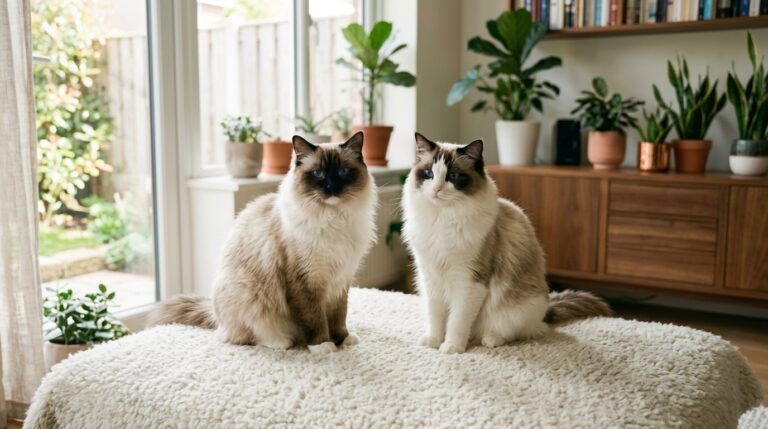
Their coat colors can include seal, blue, chocolate, lilac, and other recognized variations and patterns. These differences affect the appearance of the coat, especially the darker points on the ears, face, legs, and tail.
The eye color remains blue because the genetic characteristics that create the color-point pattern are also connected to the appearance of the iris.
Seal Point Ragdolls
Seal point Ragdolls have very dark brown or seal-colored points. Their facial markings can create a dramatic contrast with their bright blue eyes.
Because the face is relatively dark, the blue eyes can appear particularly vivid.
Blue Point Ragdolls
Blue point Ragdolls have softer gray-blue points rather than the darker seal coloration.
Their lighter facial markings can create a different visual effect around the eyes. The eyes may appear especially noticeable against the cooler tones of the coat.
Chocolate Point Ragdolls
Chocolate point Ragdolls have warm brown-colored points. Their blue eyes can create an attractive contrast with these warmer coat tones.
Lilac Point Ragdolls
Lilac point Ragdolls have pale, cool-toned points. Their softer overall appearance can make their blue eyes look particularly delicate.
Regardless of these coat differences, the characteristic Ragdoll eye color remains blue.
Ragdoll Eye Color and Breed Standards
Breed standards are written descriptions used by cat organizations to define the characteristics associated with a particular breed.
For Ragdolls, blue eyes are one of the important breed characteristics.
Breed standards can describe desired eye shape, color, coat characteristics, body structure, and overall appearance. The exact wording can differ between organizations, but the connection between Ragdolls and blue eyes is well established.
This is important for people who are researching Ragdolls because online advertisements sometimes use the word “Ragdoll” loosely.
A cat may have a long coat, blue eyes, and a color-point pattern while still not being a registered purebred Ragdoll.
That does not make the cat less lovable or less deserving of a good home. It simply means that appearance and documented breed status are not always the same thing.
If pedigree is important to you, documentation from a reputable breeder or recognized cat registry is more reliable than appearance alone.
How Genetics Create Blue Eyes in Ragdolls
Ragdoll eye color is a fascinating example of how genetics can influence multiple physical characteristics at the same time.
The genes associated with the color-point pattern affect pigment production in specific parts of the body. The result is the familiar contrast between a lighter torso and darker points.
The same genetic background contributes to the blue appearance of the eyes.
A simple way to understand this is to think of pigmentation as a process controlled by biological instructions. Different genetic variations can influence how much pigment is produced and where that pigment appears.
In a Ragdoll, the color-point genetic pattern limits pigmentation in the warmer central areas of the body while allowing stronger coloration in cooler extremities.
The iris has very little pigmentation compared with cats whose eyes are green, gold, or copper. The way light interacts with the iris produces the blue appearance.
This is why the blue eyes are not simply an unrelated cosmetic feature. They are connected to the same genetic characteristics that make the Ragdoll a color-point cat.
Why Do Ragdoll Cats’ Eyes Look Different in Photos?
If you search for pictures of Ragdoll cats, you may notice that their eyes do not always appear to have exactly the same shade of blue.
This does not necessarily indicate a difference in breed quality or health.
Photography can dramatically affect eye color.
Natural daylight may make blue eyes appear brighter and more saturated. Warm indoor bulbs can make them appear slightly gray or muted. Camera exposure, white balance, reflections, and image editing can also change the apparent color.
The cat’s surroundings matter too.
A Ragdoll sitting beside a bright window may have eyes that look much lighter than the same cat photographed in a dim room.
For this reason, it is better to evaluate eye color under normal, natural lighting whenever possible.
How Age Can Affect the Appearance of Ragdoll Eyes
Age can also influence how a Ragdoll’s eyes appear.
Kittens are still developing, so their eye color may not immediately resemble the mature appearance of an adult. As they grow, their blue eyes become more clearly established.
Adult Ragdolls generally maintain their characteristic blue eye color throughout life.
However, an adult cat’s eyes should not suddenly change dramatically in appearance without a reason.
A cloudy eye, unusual redness, discharge, swelling, or a sudden difference between the two eyes is not simply a normal variation in blue eye color.
These changes can sometimes be associated with health problems and deserve veterinary attention.
How to Tell If a Ragdoll Has Healthy Eyes
Blue color alone does not determine whether a cat’s eyes are healthy.
Healthy-looking eyes are generally clear, bright, and free from unusual discharge. The cat should also be able to use both eyes normally and should not appear to have persistent discomfort.
You may notice occasional tearing, especially after environmental irritation, but persistent watering or discharge should not be ignored.
Other signs worth discussing with a veterinarian include persistent redness, swelling, cloudiness, unusual sensitivity to light, squinting, or a sudden change in eye appearance.
According to the Cat Fanciers’ Association (CFA), Ragdolls are recognized for their large blue eyes along with their distinctive color-pointed coat and overall body structure. Checking an established breed standard can help readers understand how eye color fits into the broader characteristics of the Ragdoll breed.
It is also important to remember that eye health is different from eye color.
A Ragdoll can have beautiful blue eyes and still develop an eye condition. Likewise, variation in the exact shade of blue does not automatically indicate a health problem.
Regular veterinary examinations are the best way to monitor a cat’s overall eye health.
Do Ragdoll Mixes Always Have Blue Eyes?
No, a Ragdoll mix does not necessarily have the same eye color as a purebred Ragdoll.
When two different genetic backgrounds are combined, the kitten can inherit traits from both sides.
If one parent is a Ragdoll and the other parent belongs to a breed or mixed background with different eye-color genetics, the kittens may not perfectly match the traditional Ragdoll appearance.
Some mixed cats may have blue eyes and look extremely similar to Ragdolls. Others may have different eye colors or coat characteristics.
This is why eye color alone cannot prove that a cat is a purebred Ragdoll.
If a breeder claims that a kitten is a registered purebred Ragdoll, pedigree documentation and information about the parents are more meaningful than appearance alone.
Are Blue Eyes the Most Important Ragdoll Characteristic?
Blue eyes are certainly one of the most recognizable characteristics of Ragdolls, but they are not the only feature that defines the breed.
Ragdolls are known for their distinctive color-point coats, large and sturdy bodies, long coats, broad heads, and generally gentle appearance.
Their personalities are also an important part of why people love them. Many Ragdolls are known for being affectionate, people-oriented, and relatively relaxed, although individual personalities can vary.
A cat should not be identified as a Ragdoll based on one characteristic.
For example, a cat with blue eyes is not automatically a Ragdoll. Many other cats and mixed-breed cats can also have blue eyes.
The combination of physical characteristics, coat pattern, pedigree, and other breed traits gives a much clearer picture.
Can Ragdoll Eye Color Change Suddenly?
A kitten’s eye color can develop as it grows, but a mature Ragdoll should generally retain its characteristic blue eyes.
A sudden change in the appearance of an adult cat’s eye is different from normal kitten development.
If one eye suddenly looks cloudy, darker, lighter, unusually red, or different from the other eye, it is worth contacting a veterinarian.
Eye changes can have many possible causes, and only a qualified veterinary professional can determine what is happening.
Pet owners should avoid assuming that a dramatic eye-color change is simply a normal Ragdoll trait.
Early veterinary attention can be important when a cat develops an unexpected eye problem.
Why Are Ragdoll Eyes So Striking?
There is a simple visual reason Ragdoll eyes attract so much attention.
The breed combines a pale body, darker points, and blue eyes. This creates strong natural contrast.
The darker facial markings frame the eyes, making the blue iris stand out.
The large size of the Ragdoll’s eyes also contributes to its distinctive appearance. When combined with the breed’s soft facial features and long coat, the eyes become one of the first things people notice.
Lighting can make the effect even stronger.
In natural daylight, the blue eyes may appear exceptionally bright. In photographs, the contrast between the eyes and facial markings can make them look almost jewel-like.
This combination is one reason Ragdolls are so popular among cat photographers and owners who enjoy taking pictures of their pets.
What Should You Look for When Choosing a Ragdoll Kitten?
If you are considering bringing a Ragdoll kitten home, eye color is only one factor to consider.
A responsible breeder should be able to provide useful information about the kitten’s parents, health history, vaccinations, socialization, and pedigree where applicable.
The kitten should appear active, alert, and appropriately cared for.
Its eyes should not have persistent discharge or obvious irritation.
You should also pay attention to the living conditions in which the kitten has been raised.
A healthy beginning can be just as important as having the expected blue eyes.
If breed documentation matters to you, ask for appropriate registration or pedigree information rather than relying on photographs or verbal claims.
A beautiful kitten with blue eyes may look like a Ragdoll, but documentation provides stronger evidence of purebred status.
FAQs
Do all Ragdoll cats have blue eyes?
Purebred Ragdolls are expected to have blue eyes, and blue is a defining characteristic of the breed. The exact shade can range from pale to deeper blue.
Can Ragdoll kittens’ eyes change color?
Young kittens go through normal eye development, so their eyes can look different during the early stages of life. Their characteristic blue color becomes more apparent as they mature.
What shade of blue should a Ragdoll’s eyes be?
Ragdoll eyes can vary in visual intensity, from light blue to deeper and more vivid blue. Lighting can also affect how the shade appears.
Can a purebred Ragdoll have green eyes?
Green is not the characteristic eye color described by traditional Ragdoll breed standards. If a cat presented as a Ragdoll has clearly green eyes, its pedigree and breed status may need closer examination.
Why are Ragdoll cats known for blue eyes?
Their blue eyes are connected to the genetics responsible for the Ragdoll’s color-point pattern and reduced pigmentation in the iris.
Do Ragdoll mixes have blue eyes?
They can, but they do not necessarily have blue eyes. A mix can inherit characteristics from both parents, so appearance can vary considerably.
When do Ragdoll kittens develop their final eye color?
The eyes develop as the kitten grows, and the characteristic blue color becomes increasingly clear during kittenhood. Very young kittens should not be judged solely by their early eye appearance.
Does coat color change a Ragdoll’s eye color?
Different Ragdoll coat colors and patterns can change the visual contrast around the eyes, but blue remains the characteristic eye color associated with the breed.
Why do my Ragdoll’s eyes look different in different lighting?
Lighting, reflections, camera exposure, and the surrounding colors can all influence how blue eyes appear. Natural daylight can make them look particularly bright.
Should I worry if my adult Ragdoll’s eye suddenly looks different?
A sudden change in an adult cat’s eye appearance should not automatically be considered normal. Cloudiness, redness, swelling, discharge, or a noticeable difference between the eyes should be discussed with a veterinarian.
Final Thoughts
So, do all Ragdoll cats have blue eyes? For purebred Ragdolls that conform to the recognized breed characteristics, blue eyes are a defining feature. The exact shade can vary naturally, with some cats appearing pale blue while others have a deeper or more vivid blue appearance. Lighting, photography, age, and surrounding coat colors can also change how the eyes look.
Ragdoll kittens may not immediately show the same mature appearance as adult cats because their eyes are still developing. As they grow, their characteristic blue color becomes more noticeable. Their eye color is closely connected to the genetics behind the breed’s distinctive color-point pattern.
It is also important not to identify a Ragdoll solely by eye color. Blue eyes can occur in other cats and mixed-breed cats, while pedigree and overall physical characteristics provide stronger evidence of breed status.
For owners, beautiful blue eyes are certainly one of the most charming features of a Ragdoll. At the same time, clear and healthy-looking eyes, proper veterinary care, responsible breeding, and good overall health are much more important than achieving a particular shade of blue. Whether your Ragdoll has icy blue or deep blue eyes, that distinctive gaze is part of what makes this breed so memorable.