
Where to Get Ragdoll Kittens: A Complete Guide to Finding a Healthy Kitten
Finding the right kitten is an exciting experience, especially when you have decided that a Ragdoll is the right breed for your home. With their gentle personality, beautiful appearance, affectionate nature, and calm temperament, Ragdoll cats have become a popular choice for families and individual cat lovers. However, knowing where to get Ragdoll kittens is just as important as choosing the breed itself. The source of your kitten can have a major influence on its health, early socialization, temperament, and overall well-being.
When searching for a Ragdoll kitten, it is important to look beyond photographs, advertisements, and attractive prices. A responsible breeder, reputable rescue organization, or established adoption center should be able to provide clear information about the kitten’s health, background, care, and development. Taking time to research your options can help you avoid irresponsible sellers and make the process of bringing a new kitten home much safer and more enjoyable.
This guide explains where to get Ragdoll kittens, how to identify responsible sources, what questions to ask before making a decision, what health information to look for, and how to prepare your home for your new companion.
Where to Get Ragdoll Kittens
There are several places where prospective owners can look for Ragdoll kittens. Reputable Ragdoll breeders are one of the most common sources because responsible breeders focus specifically on the breed and generally understand its characteristics, development, health considerations, and temperament. A good breeder should be interested in the welfare of the kittens rather than simply making a sale.
Ragdoll rescue organizations are another option worth considering. Although Ragdoll kittens are less commonly available through rescues than adult cats, some young Ragdolls may become available because of changes in their previous owner’s circumstances. Breed-specific rescue groups can sometimes help match cats with families that understand the needs of the breed.
Animal shelters and established adoption organizations may also occasionally have Ragdoll cats or Ragdoll mixes available. Adoption availability varies considerably depending on location and timing. If you are open to adopting an adult cat rather than specifically purchasing a young kitten, rescue organizations can provide another responsible path to finding a Ragdoll companion.
Established cat associations and recognized breeder directories can also help prospective owners begin their search. These resources can make it easier to identify breeders who are involved with the cat community and who follow recognized standards. However, being listed in a directory alone should not be treated as a complete guarantee of quality. Further research is still necessary.
How to Find a Reputable Ragdoll Breeder
Finding a responsible breeder requires patience. A professional-looking website or attractive social media page does not automatically mean that a breeder follows responsible breeding practices. Prospective owners should look for detailed information about the breeder’s cats, kitten care, health practices, socialization, and policies.
A reputable breeder should be willing to answer questions about the kitten’s parents and background. They should be able to explain how their breeding program works and what steps they take to maintain the health and welfare of their cats. Communication should feel informative rather than rushed or pressured.
Responsible breeders generally care about where their kittens are going. They may ask prospective owners questions about their home, lifestyle, previous experience with cats, and plans for caring for the kitten. This type of conversation is often a positive sign because it shows that the breeder is thinking about the kitten’s long-term welfare.
The environment in which kittens are raised also matters. Young kittens need appropriate nutrition, veterinary care, cleanliness, social interaction, and opportunities to become familiar with normal household experiences. Early development is an important stage of a cat’s life, and a responsible breeder should understand the importance of providing appropriate care during this period.
Whenever possible, prospective owners should learn as much as they can about the breeder before committing to a kitten. Clear communication, transparent information, proper documentation, and a strong focus on animal welfare are important factors to consider.
What to Look for in a Healthy Ragdoll Kitten
Health should be one of the most important considerations when choosing a kitten. A beautiful coat or distinctive blue eyes can be appealing, but appearance should never be the only factor used to evaluate a kitten. A healthy kitten should receive appropriate veterinary care and should show normal development for its age.
The kitten’s eyes should be clear and free from obvious discharge. The ears should appear reasonably clean, and the coat should be maintained without signs of significant skin problems. The kitten should generally appear alert, responsive, and comfortable in its surroundings.
Healthy kittens are normally active and curious during appropriate periods of the day. Their behavior can vary depending on personality, age, and environment, so a single moment should not determine the assessment of health. Veterinary records and professional examination are much more reliable than appearance alone.
A responsible breeder should provide information about vaccinations, deworming, veterinary examinations, and other relevant preventive care. The exact schedule may depend on the kitten’s age and veterinary recommendations. Documentation should be clear and should correspond to the kitten being purchased.
It is also important to ask about the health history of the kitten’s parents. Ragdolls, like other pedigreed cats, can be affected by inherited health conditions. Responsible breeding programs should take appropriate measures to understand and manage relevant genetic health risks.
Questions to Ask Before Buying a Ragdoll Kitten
Asking questions before purchasing a kitten can help you understand whether a breeder or seller is responsible. One of the first areas to ask about is the kitten’s parents. Information about the parents can provide useful background regarding lineage, temperament, health screening, and breed characteristics.
You should also ask what veterinary care the kitten has received. Find out whether the kitten has been examined by a veterinarian, which vaccinations have been administered, and whether parasite prevention has been provided. Request documentation rather than relying only on verbal statements.
Questions about socialization are also important. Kittens benefit from positive interactions with people and exposure to normal household sounds and routines. A breeder should be able to explain how the kittens are handled and cared for during their early development.
It is also reasonable to ask about the breeder’s policies regarding contracts, health guarantees, deposits, and returning a cat if circumstances change. A written agreement can help clarify the responsibilities of both the buyer and the breeder.
The breeder should also be comfortable answering reasonable questions about their practices. If someone becomes unusually defensive, refuses to provide basic information, or attempts to pressure you into making an immediate payment, it is sensible to slow down and investigate further.
Where to Find Ragdoll Kittens for Adoption
Adoption can be an excellent option for people who want to provide a home to a cat that needs one. Ragdoll-specific rescue groups may occasionally have young cats or kittens available, although availability can be limited. Some organizations focus on helping purebred or breed-specific cats that need new homes.
Local animal shelters can also be worth checking. A shelter may not always identify a cat as a Ragdoll unless its breed characteristics are especially clear, and some cats may be listed as mixes. If you are open to a Ragdoll mix, your adoption options may be broader.
Adoption organizations generally have their own application and screening processes. Some may ask about your living situation, experience with pets, household members, and plans for veterinary care. These questions are intended to help organizations determine whether a particular cat is likely to be comfortable and well cared for in your home.
Adopting a cat can also require flexibility. You may not find a Ragdoll kitten immediately, and you may need to wait for a suitable cat to become available. Patience can be particularly important when looking for a specific breed through rescue channels.
How Much Does a Ragdoll Kitten Cost?
The cost of a Ragdoll kitten can vary significantly depending on factors such as location, pedigree, breeder reputation, kitten age, registration, breeding quality, health care, and included documentation. Prices can also vary between regions and individual breeding programs.
A very low price should not automatically be viewed as a bargain. The initial purchase price is only one part of the overall cost of owning a cat. Veterinary care, high-quality food, litter, grooming supplies, toys, scratching equipment, routine preventive care, and unexpected medical expenses all contribute to the long-term cost.
Responsible breeders may charge more because responsible breeding involves expenses related to veterinary care, health testing, nutrition, housing, socialization, registration, and general kitten welfare. The price alone, however, should not be used as proof that a breeder is responsible.
Adoption fees are often different from breeder prices and may include some veterinary services depending on the organization. Prospective owners should ask what is included in the adoption fee and what expenses they will need to cover after bringing the cat home.
Before making a decision, consider your long-term ability to care for the cat rather than focusing only on the initial payment. A Ragdoll can be a long-term companion, so responsible ownership requires planning beyond the day you bring the kitten home.
How to Avoid Ragdoll Kitten Scams
Online kitten scams can make the search for a Ragdoll more difficult. Fraudulent sellers may use stolen photographs, fake breeder identities, unrealistic prices, or fabricated health information to attract buyers. Because online listings can look convincing, careful verification is essential.
One warning sign is pressure to send money before you have received sufficient information about the kitten or seller. Another concern is a seller who refuses reasonable questions about veterinary records, parents, location, or kitten care.
Be particularly cautious when a seller claims that a high-quality Ragdoll kitten is available at an unusually low price and insists that you make an immediate payment. Responsible transactions should allow you enough time to research the breeder and understand the agreement.
You should also be cautious about sellers who constantly introduce additional charges after receiving an initial payment. Claims involving unexpected transportation, special crates, insurance, or emergency fees should be carefully investigated before sending additional money.
Whenever possible, verify the breeder’s identity, website, social media presence, reviews, registration information, and history independently. Do not rely entirely on testimonials displayed on the seller’s own website.
A responsible breeder should generally be transparent about their cats and willing to provide meaningful information. Taking your time can significantly reduce the risk of becoming a victim of a kitten scam.
When Can a Ragdoll Kitten Go to a New Home?
The age at which a kitten moves to a new home matters. Young kittens need sufficient time with their mother and littermates for physical development, social learning, and weaning. Responsible breeders understand that kittens should not be separated prematurely.
The exact timing can depend on the kitten’s development, health, veterinary care, and the breeder’s practices. A kitten should be physically ready to transition and should have received appropriate care before moving to a new household.
Early separation can interfere with important developmental experiences. Kittens learn social behaviors through interactions with their mother and littermates, and adequate early development can help them transition more comfortably into their future homes.
Prospective owners should therefore be cautious about sellers who are willing to release very young kittens simply because the buyer wants to take them home quickly. The kitten’s developmental needs should come before convenience.
Before taking the kitten home, confirm that the breeder has provided the appropriate veterinary documentation and information needed to continue the kitten’s care. A smooth transition is easier when the new owner understands the kitten’s diet, routine, health history, and behavioral needs.
What to Prepare Before Bringing Home a Ragdoll Kitten
Preparing your home before the kitten arrives can make the transition much easier. A new kitten needs a safe and comfortable environment where it can gradually become familiar with its surroundings.
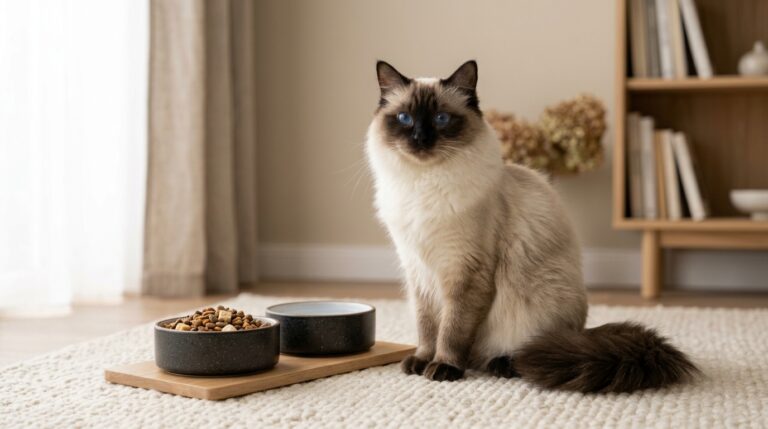
Food and water bowls should be ready, along with the type of kitten food recommended by the breeder or veterinarian. Sudden dietary changes can sometimes cause digestive problems, so it is usually better to transition food gradually when a change is necessary.
A clean litter box should be available in an accessible and quiet location. The kitten should be able to reach it easily without having to cross a stressful or dangerous area. Depending on the size of your home, more than one litter box may be useful.
Ragdolls also benefit from appropriate scratching surfaces, toys, comfortable sleeping spaces, and areas where they can rest without constant disturbance. Because cats naturally explore their surroundings, the home should be checked for hazards before the kitten arrives.
Electrical cords, small objects, toxic substances, unsafe plants, open windows, and other potential hazards should be addressed. Doors and windows should be secure, particularly during the kitten’s first days in the home.
Creating a calm starting area can also help the kitten adjust. Instead of giving a new kitten unrestricted access to the entire home immediately, some owners choose to provide a quiet room or controlled space where the kitten can gradually become comfortable.
Choosing the Right Ragdoll Kitten for Your Home
Every Ragdoll kitten has its own personality. Although the breed is generally associated with a gentle and affectionate temperament, individual cats can differ in confidence, activity level, sociability, and preferences.
When choosing a kitten, consider how its personality fits your household. A busy home with children and other pets may require different considerations from a quiet household. Your lifestyle, schedule, living space, and ability to provide attention should all be part of the decision.
It is also important to remember that a kitten is not simply a decorative pet. Ragdolls require daily care, appropriate nutrition, grooming, veterinary attention, play, and companionship. Their long-term needs should be considered before making a commitment.
A responsible breeder or adoption organization can often help you understand a kitten’s personality and development. They may have observed how the kitten interacts with people, other cats, toys, and its surroundings.
Choosing a kitten based on personality and compatibility rather than appearance alone can help create a stronger long-term relationship between the cat and its new family.
Ragdoll Kitten Health and Veterinary Care
Veterinary care is an essential part of responsible Ragdoll ownership. A new kitten should have appropriate veterinary support, including routine examinations, vaccinations, parasite prevention, and other care recommended by a qualified veterinarian.
Before purchasing or adopting a kitten, ask for its existing veterinary records. These records can help your veterinarian understand what care has already been provided and what may be needed next.
Ragdolls can also have breed-associated health considerations, so discussing preventive care with a veterinarian is important. Responsible breeders should be knowledgeable about relevant inherited conditions and should take appropriate steps to reduce avoidable health risks in their breeding programs.
Genetic health information can be particularly valuable when evaluating a breeder. Ask what health screening has been performed on the parents and whether documentation is available.
No breeder can guarantee that a cat will never experience a health problem. However, transparent health practices and responsible breeding decisions can provide prospective owners with useful information when choosing a kitten.
Ragdoll Grooming and Daily Care
Ragdolls have semi-long coats that require regular grooming. Although their coats can be relatively manageable compared with some other long-haired cats, regular brushing helps reduce loose hair and can help prevent mats and tangles.
Grooming should become a normal part of the kitten’s routine. Gentle handling from an early age can make future grooming sessions easier. Owners should introduce grooming gradually and keep the experience calm.
Nail care is another important part of routine maintenance. Cats need their claws maintained naturally through scratching, but regular nail checks are still useful. If you are unsure about trimming nails, a veterinarian or professional groomer can provide guidance.
Dental care should not be ignored either. Oral health is an important part of overall feline health. Your veterinarian can recommend appropriate dental care based on your cat’s age and individual needs.
Regular observation is also valuable. Changes in appetite, energy, litter box habits, coat condition, or behavior can sometimes indicate that veterinary attention is needed. Knowing your cat’s normal routine makes it easier to notice changes.
Feeding a Ragdoll Kitten
Nutrition plays a major role in healthy kitten development. Growing kittens have different nutritional requirements from adult cats, so they should receive a complete and balanced diet appropriate for their developmental stage.
When bringing a kitten home, ask the breeder or rescue organization what food the kitten has been eating. Maintaining the same diet initially can make the transition easier. If you decide to change foods, a gradual transition is generally preferable.
Fresh water should always be available. Feeding schedules can vary according to the kitten’s age, diet, veterinary advice, and individual needs.
Because nutritional requirements can change as a kitten grows, regular veterinary appointments are useful for monitoring development and discussing feeding needs. Your veterinarian can provide recommendations based on the kitten’s health and growth.
Avoid making major dietary decisions based solely on online claims. Cats have individual nutritional needs, and professional veterinary guidance is more appropriate when you have concerns about food, weight, growth, or digestion.
When searching for a Ragdoll kitten, prospective owners can use recognized cat organizations as a starting point for breeder research. The International Cat Association (TICA) provides a breeder directory where people can search for registered catteries and Ragdoll breeders. TICA also provides information about the Ragdoll breed, including its temperament, grooming needs, health considerations, and general characteristics. You can visit the TICA Ragdoll breed page to learn more about the breed before choosing a kitten.
Socialization and the Ragdoll Kitten’s Development
Early socialization can influence how comfortably a kitten responds to people and its environment. Positive experiences with gentle handling, household sounds, normal routines, and appropriate interaction can help a kitten become more confident.
Socialization should always be gradual and respectful. A kitten should have opportunities to retreat and rest rather than being constantly handled or exposed to stressful situations.
A responsible breeder can play an important role in early social development. Kittens raised in a clean, enriched, and appropriately social environment may have more opportunities to become familiar with normal household experiences.
Once the kitten arrives home, the new owner also becomes responsible for continuing positive experiences. Gentle play, predictable routines, appropriate handling, and a safe environment can help the kitten adjust.
Every kitten develops at its own pace. Some may explore immediately, while others may need more time before becoming comfortable in a new environment.
Understanding the Commitment of Ragdoll Ownership
Knowing where to get Ragdoll kittens is only the beginning of responsible ownership. Before bringing a kitten home, you should consider the long-term commitment involved in caring for a cat.
A Ragdoll may become part of your household for many years. This means owners need to plan for routine veterinary visits, food, grooming, enrichment, litter, preventive healthcare, and possible unexpected medical expenses.
Time is also important. Cats need attention, interaction, mental stimulation, and a stable environment. Although Ragdolls are often described as affectionate and people-oriented, individual cats still have different personalities and needs.
You should also consider what will happen when you travel, move, work long hours, or experience changes in your household. Planning ahead can help ensure that your cat continues to receive proper care throughout its life.
Responsible ownership begins before the kitten arrives. Choosing the right source, preparing the home, understanding the breed, and planning for long-term care all contribute to a healthier relationship with your new companion.
Ragdoll Kitten Buying Checklist
Before committing to a Ragdoll kitten, take time to review the important details. Confirm that you understand who you are purchasing or adopting from and that the source provides clear information about the kitten.
Review the kitten’s health records and vaccination information. Ask about veterinary examinations, parasite treatment, and any relevant health testing. Information about the kitten’s parents can also be important, particularly when purchasing from a breeder.
Make sure you understand the contract, payment terms, health policies, and any requirements associated with the purchase or adoption. Do not agree to something you have not had enough time to read or understand.
Consider the kitten’s age and development before bringing it home. The kitten should be ready for the transition and should have received appropriate care during its early life.
Finally, prepare your home before the kitten arrives. Having food, litter, sleeping areas, scratching surfaces, toys, grooming supplies, and veterinary arrangements ready can make the transition smoother.
FAQ
Where is the best place to get a Ragdoll kitten?
A reputable breeder, established rescue organization, or recognized adoption organization can be a responsible source. The most important consideration is not simply the type of source but the quality of care, transparency, health practices, and welfare standards associated with it.
How can I find a reputable Ragdoll breeder?
Research breeders carefully and look for transparent information about their cats, breeding practices, health screening, kitten care, and policies. A responsible breeder should be willing to answer questions and provide appropriate documentation.
How much does a Ragdoll kitten usually cost?
The price varies depending on location, breeder, pedigree, registration, health care, and other factors. Prospective owners should also consider ongoing expenses such as food, litter, veterinary care, grooming, and supplies.
Can I adopt a Ragdoll kitten from a rescue?
Yes, Ragdolls can sometimes become available through breed-specific rescues, shelters, and adoption organizations. Availability is limited and varies by location, so prospective adopters may need to be patient.
What age should a Ragdoll kitten be before going home?
A kitten should remain with its mother and littermates long enough to complete important developmental stages and should be physically and socially ready for the transition. Responsible breeders will generally prioritize the kitten’s development rather than releasing it prematurely.
How can I tell if a Ragdoll kitten is healthy?
Health should be evaluated through veterinary records and professional examination rather than appearance alone. Clear eyes, a healthy coat, normal activity, appropriate development, vaccination records, and veterinary care are important considerations.
What should I ask a Ragdoll breeder before buying?
Ask about the kitten’s parents, health testing, veterinary care, vaccinations, socialization, feeding, age, registration, contract, and health policies. A responsible breeder should be comfortable discussing these areas.
Conclusion
Knowing where to get Ragdoll kittens is an important first step toward becoming a responsible Ragdoll owner. The source you choose can influence the kitten’s early care, health information, socialization, and overall transition into your home. Whether you choose a reputable breeder, rescue organization, or adoption center, careful research is essential.
A healthy kitten should come with appropriate care and documentation, and the person or organization providing the kitten should be transparent about its background. Avoid rushing into a purchase because of an attractive photograph, limited availability, or pressure from a seller. Taking additional time to investigate can protect both your investment and the welfare of the kitten.
The best approach is to focus on responsible care, trustworthy information, proper veterinary support, and long-term compatibility. Once you find a healthy and well-cared-for Ragdoll kitten, preparing your home and learning about its needs will help create a positive beginning.
A Ragdoll can become a cherished member of the family for many years. By researching where to get Ragdoll kittens, asking the right questions, checking health information, and choosing a responsible source, you can make the process safer and give your new companion the foundation it deserves.