
Where Are Ragdoll Cats From? Fascinating Origin & Amazing History
If you have ever looked into the history of Ragdoll cats, you may have wondered where are Ragdoll cats from and how this beautiful breed became so popular around the world. Ragdoll cats are known for their striking blue eyes, soft semi-long coats, large bodies, and calm personalities. They are now found in homes across many countries, but their original history can be traced back to the United States, specifically California.
The Ragdoll is a relatively modern cat breed compared with some of the much older breeds that have been around for centuries. Its development began during the 1960s, when a breeder named Ann Baker started developing a distinctive type of cat in Riverside, California. Through selective breeding, she established cats with particular physical characteristics and a generally relaxed temperament. Over time, these cats became known as Ragdolls.
Understanding the history of Ragdoll cats makes it easier to appreciate why the breed looks and behaves so differently from many other domestic cats. Their large size, pointed coloring, blue eyes, soft coat, and affectionate nature are all important parts of their identity. Although some stories about the breed’s early history have been repeated for decades, not every claim has the same level of historical documentation.
Today, Ragdolls are recognized by major cat organizations and are among the most familiar pedigree cat breeds. Their journey from a small breeding program in California to international popularity is an interesting part of modern cat history. This article explores where Ragdoll cats are from, who developed the breed, how their name originated, and how they eventually became popular worldwide.
Where Are Ragdoll Cats From?
Ragdoll cats are originally from Riverside, California, in the United States. The breed was developed during the 1960s by Ann Baker, a breeder who worked with longhaired cats and began selectively breeding them to establish a new type of cat. Riverside is therefore closely associated with the origins of the modern Ragdoll breed.
Unlike ancient cat breeds whose histories stretch back hundreds or even thousands of years, the Ragdoll has a relatively well-defined modern history. Its development took place within a specific period and geographic location. The cats that eventually became known as Ragdolls were part of a breeding program designed to produce particular physical and behavioral characteristics.
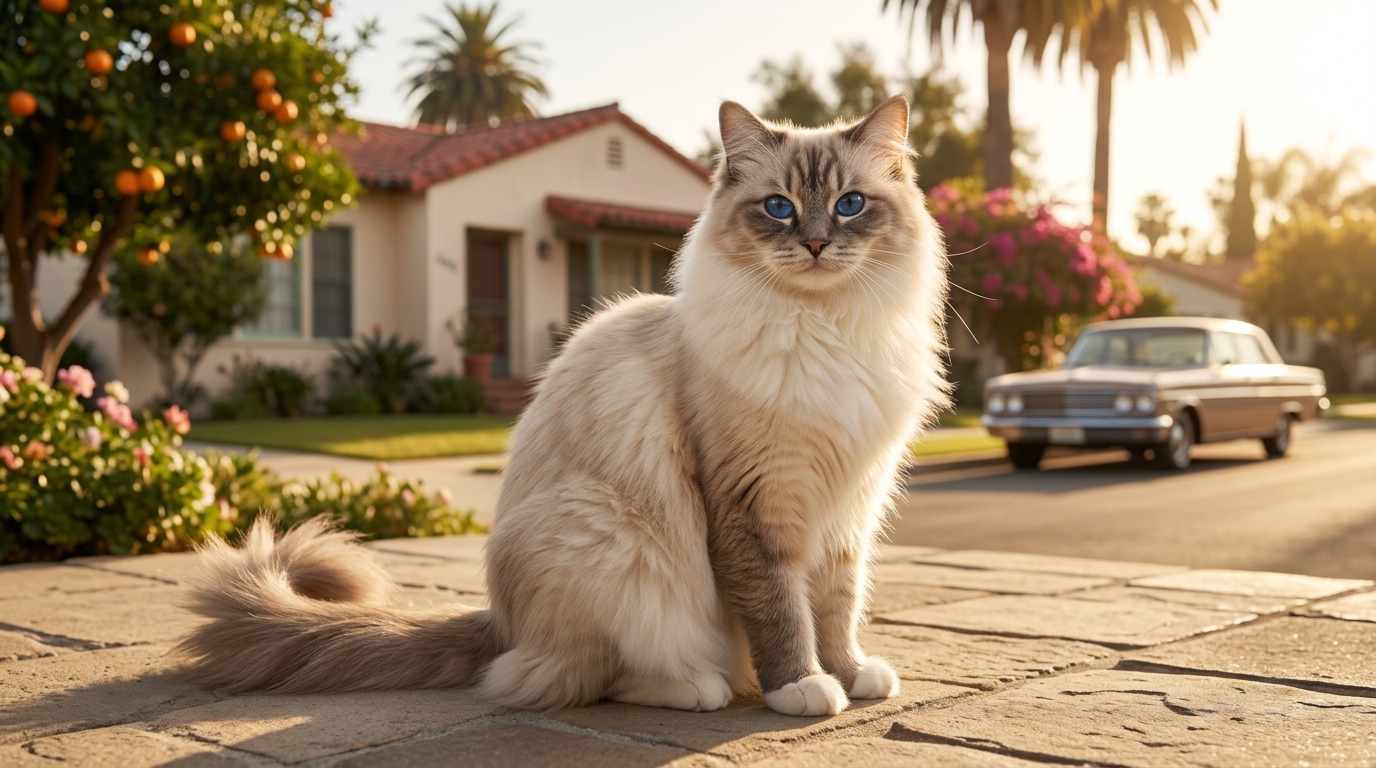
The breed’s California roots are an important part of its identity. Although Ragdolls can now be found throughout North America, Europe, Asia, Australia, and many other parts of the world, their original development took place in the United States. Breeders in different countries later helped establish and expand the breed internationally.
When people ask where are Ragdoll cats from, the simplest answer is California, USA. However, understanding their origin requires looking beyond the location itself. The Ragdoll was not simply discovered as a naturally occurring breed. Instead, it was deliberately developed through selective breeding during the twentieth century.
The Beginning of the Ragdoll Breed
The story of the Ragdoll begins in California during the 1960s. Ann Baker, a breeder in Riverside, became interested in developing a particular kind of cat with a gentle temperament, attractive appearance, and large size. She worked with several cats in her breeding program and gradually established the characteristics that became associated with the Ragdoll.
One of the cats strongly associated with the early history of the breed was a white longhaired female named Josephine. Josephine is frequently identified in historical accounts as an important foundation cat for the Ragdoll breeding program. She was a domestic longhaired cat rather than an established Ragdoll breed at the time.
Baker bred Josephine and other cats to produce kittens with desirable characteristics. As generations of cats were selectively bred, certain traits became increasingly consistent. These included large bodies, pointed coloration, blue eyes, soft coats, and calm temperaments.
The early breeding process was not as standardized as the breeding programs used by many established cat breeds today. As a result, some details surrounding the exact ancestry of the earliest Ragdolls remain debated or difficult to verify. Nevertheless, the connection between Ann Baker, Riverside, Josephine, and the development of the breed is a central part of accepted Ragdoll history.
Who Developed the Ragdoll Cat Breed?
Ann Baker is generally credited with developing the Ragdoll cat breed. She was a breeder based in Riverside, California, and began working with cats that eventually became the foundation of the Ragdoll line.
Baker’s breeding goals were centered on producing cats with a distinctive combination of physical appearance and temperament. The cats she developed were larger than many ordinary domestic cats and had an especially relaxed personality. Their soft coats and striking blue eyes also contributed to their appeal.
As the breed became more established, other breeders became involved in developing and promoting Ragdolls. The breed’s history eventually moved beyond Baker’s original breeding program, and different breeders played important roles in helping Ragdolls gain recognition within the organized cat fancy.
Baker’s role remains particularly important because the Ragdoll is considered one of the breeds that can be traced to a relatively recent individual breeder and breeding program. Her work in California during the 1960s created the foundation for a breed that would later become internationally recognized.
When Were Ragdoll Cats First Developed?
Ragdoll cats were first developed during the 1960s in Riverside, California. This period represents the beginning of the breed’s modern history.
During the early years, the cats were not immediately recognized around the world as a standardized pedigree breed. Developing a new cat breed requires multiple generations of selective breeding, along with consistent characteristics that can be recognized by breeders and cat associations.
The early Ragdolls gradually developed the combination of characteristics that people now associate with the breed. Their large size, pointed patterns, blue eyes, and gentle personalities became important parts of the developing breed standard.
The 1960s were therefore a crucial period in Ragdoll history. The cats that existed during the earliest stage were the foundation for later generations, and the breed continued to evolve as more breeders became involved.
How Did Ragdoll Cats Get Their Name?
The name “Ragdoll” is one of the most recognizable features of the breed. The name is associated with the cats’ tendency to become very relaxed when handled, particularly when they are comfortable and trust the person holding them.
The description became connected with the breed because some early Ragdolls were known for relaxing their bodies when picked up. This characteristic contributed to the impression that they could become soft and loose in a person’s arms, similar to a rag doll.
However, it is important not to misunderstand this characteristic. Ragdoll cats are still individual animals with their own personalities. Not every Ragdoll will completely relax whenever it is picked up, and cats should never be forced into a position they find uncomfortable.
The name became an important part of the breed’s identity because it captured the relaxed nature that breeders and owners admired. Today, “Ragdoll” immediately brings to mind a large, affectionate cat with blue eyes and a soft pointed coat.
What Cats Were Used to Develop Ragdolls?
The ancestry of the Ragdoll breed is one of the more complicated parts of its history. Historical accounts identify Josephine and several other cats connected with Ann Baker’s breeding program as important foundation animals.
Some accounts have suggested that breeds such as Persians, Birmans, or Burmese-type cats may have influenced the development of Ragdolls. However, the exact genetic contribution of different foundation cats is not always clearly documented, and historical stories about the breed sometimes contain claims that are difficult to verify.
For this reason, it is better to distinguish between documented history and traditional breed stories. The Ragdoll’s development is clearly associated with Ann Baker’s breeding program in California, but the exact ancestry of every early cat is not completely established.
Modern Ragdolls are the result of generations of selective breeding. Breeders have worked to maintain recognizable physical and behavioral characteristics while following the standards established by cat organizations. The breed’s present appearance is therefore the result of decades of development rather than the characteristics of a single original cat.
What Does a Ragdoll Cat Look Like?
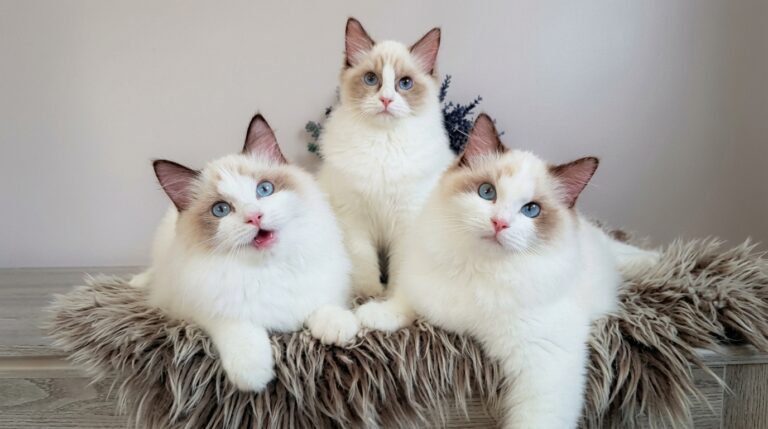
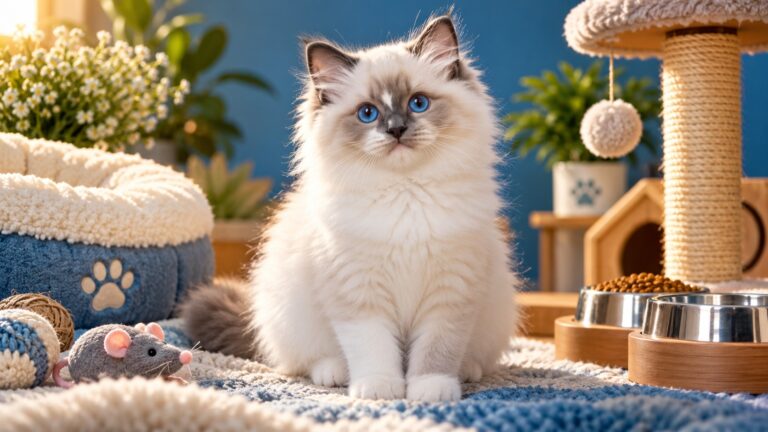
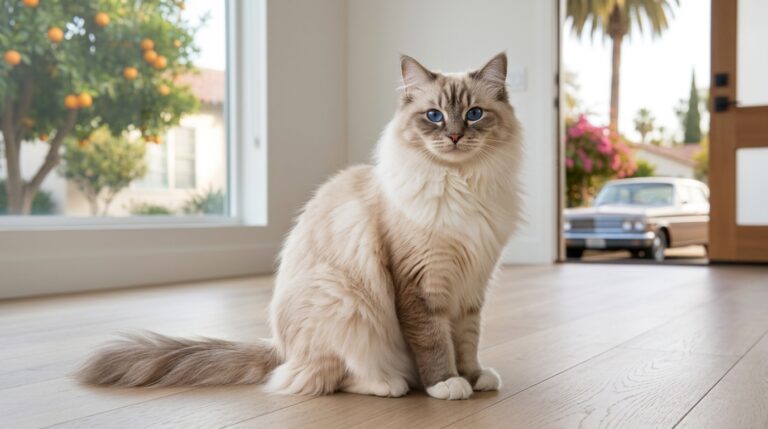
Ragdoll cats are famous for their impressive appearance. They are generally large cats with a substantial body, broad chest, sturdy legs, and a long, bushy tail. Their size is one of the features that immediately distinguishes them from many smaller domestic cat breeds.
One of the most recognizable characteristics of the Ragdoll is its blue eyes. Traditional Ragdolls have blue eyes because of the genetic relationship between their pointed coloration and eye color. The exact intensity of the blue can vary, but blue eyes are a defining feature of the breed.
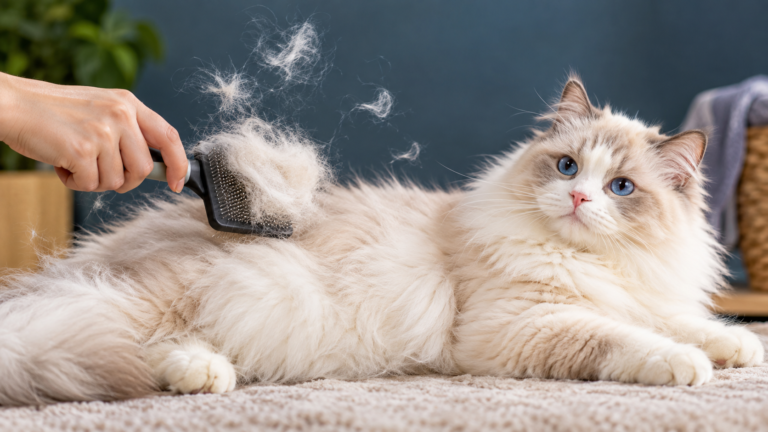
Their coat is semi-long and has a soft, silky texture. Unlike some longhaired breeds, Ragdolls generally have a coat that is relatively easy to maintain with regular grooming. Their coat can still develop tangles and mats, particularly around areas where friction occurs, so routine brushing remains important.
Ragdolls are also known for pointed coloration. This means that the body is generally lighter while the ears, face, legs, paws, and tail are darker. The contrast between the body and the points becomes particularly noticeable as the cat matures.
Why Are Ragdoll Cats So Large?
Size is another important part of the Ragdoll’s identity. Ragdolls are considered one of the larger domestic cat breeds, and they can take several years to reach full physical maturity.
Their substantial size is connected to the selective breeding that shaped the breed over generations. Breeders have maintained characteristics such as strong bone structure, large bodies, and broad chests as important elements of the breed.
A Ragdoll’s size can also vary depending on genetics, sex, nutrition, health, and individual development. Male Ragdolls are generally larger than females, although individual cats can differ considerably.
Because they mature relatively slowly, young Ragdolls may look much smaller and less developed than they will become as adults. Their coat, coloration, body structure, and overall appearance can also continue changing as they grow.
How Did Ragdoll Cats Become Recognized as a Breed?
Creating a new cat breed involves more than producing cats with an attractive appearance. A breed needs consistent characteristics, dedicated breeders, and recognition from organized cat associations.
As Ragdolls became more established, breeders began working to promote and standardize the breed. Different breeding groups contributed to its development, and eventually Ragdolls gained recognition from major cat organizations.
The process of recognition helped establish expectations regarding the breed’s appearance and characteristics. Breed standards provided a framework for breeders and judges to understand what distinguishes a Ragdoll from other longhaired pointed cats.
Over time, the Ragdoll moved from being a relatively new California breeding project to becoming a recognized pedigree breed. This transition was essential to its long-term development and international popularity.
How Did Ragdoll Cats Spread Beyond California?
The popularity of Ragdoll cats gradually expanded beyond their original home in California. As breeders became interested in the new breed, Ragdolls began appearing in other parts of the United States and eventually outside the country.
Breed enthusiasts helped introduce Ragdolls to new regions by establishing breeding programs and participating in cat shows. As people became familiar with their distinctive appearance and temperament, interest in the breed increased.
International breeders eventually played an important role in continuing the development of Ragdolls. Once the breed became established in different countries, it was no longer associated only with California. It became a worldwide breed with organized breeding communities in many regions.
Today, Ragdoll cats can be found in households across North America, Europe, Australia, and parts of Asia. Their California origin remains an important part of their history even though the breed itself has become international.
Why Did Ragdoll Cats Become So Popular?
Several characteristics helped Ragdoll cats attract attention. Their large size gives them an impressive appearance, while their blue eyes and pointed coats make them visually distinctive.
Their temperament has also played an important role in their popularity. Ragdolls are commonly described as affectionate, social, and relatively relaxed. Many enjoy spending time near their human companions and may follow family members around the home.
However, every cat is an individual. Breed tendencies can influence behavior, but they do not guarantee that every Ragdoll will behave in the same way. Socialization, upbringing, environment, genetics, and individual personality all contribute to a cat’s behavior.
The combination of appearance and temperament has nevertheless made Ragdolls highly desirable among cat enthusiasts. Their reputation as affectionate companion animals has helped the breed grow significantly since its beginnings in California.
Where Are Ragdoll Cats Popular Today?
Ragdoll cats are now popular in many countries around the world. They have established strong followings in the United States and the United Kingdom, while also becoming increasingly familiar throughout Europe, Australia, and other regions.
Their international popularity is supported by established breeding programs and cat organizations. Responsible breeders work to maintain recognized breed characteristics while paying attention to health, temperament, and responsible breeding practices.
The internet has also made it easier for people to discover Ragdoll cats. Photos, videos, breeder websites, cat communities, and social media have introduced the breed to millions of people who may never have encountered one locally.
Despite their worldwide popularity, the answer to where are Ragdoll cats from has not changed. Their historical origin remains Riverside, California, United States.
Are Ragdoll Cats Originally From the United States?
Yes, Ragdoll cats originated in the United States. More specifically, their development is associated with Riverside, California, during the 1960s.
This makes the Ragdoll an American cat breed. Although its ancestry includes domestic cats and its modern development involved selective breeding, the recognized breed itself was established in California.
Today, a Ragdoll cat may be born in almost any country where responsible breeding programs exist. A cat’s current birthplace does not change the historical origin of the breed.
The distinction between breed origin and individual birthplace is useful when researching pedigree cats. A Ragdoll born in another country is still a member of a breed that originated in California.
Are Ragdoll Cats a Natural Breed?
Ragdolls are generally considered a deliberately developed pedigree breed rather than a naturally occurring breed. Their recognizable characteristics were established through selective breeding over multiple generations.
Natural cat populations can develop distinctive traits through geographic isolation and natural selection. Pedigree breeds, on the other hand, are usually developed by humans selecting cats with desirable characteristics and breeding them over time.
The Ragdoll fits the second category. Its development was closely connected with a specific breeder and a deliberate breeding program. This is one reason its twentieth-century history can be traced more clearly than the origins of many ancient cat populations.
Do Ragdoll Cats Still Have Their Original Characteristics?
Modern Ragdolls retain many of the characteristics that made the early breed distinctive. Their large bodies, blue eyes, pointed coats, semi-long fur, and generally gentle personalities remain important features.
However, the breed has naturally changed and become more standardized over the decades. Breeders have worked with established breed standards and genetic lines, resulting in a modern Ragdoll that may look more consistent than the cats involved in the earliest stages of development.
The breed’s evolution is normal. All established cat breeds change gradually as breeders make decisions about health, structure, temperament, and appearance. Responsible breeding also places increasing attention on genetic health and the long-term welfare of cats.
How Long Does It Take a Ragdoll Cat to Mature?
Ragdolls are known for maturing more slowly than many domestic cats. Their physical development can continue for several years, particularly in terms of body size and muscle development.
A young Ragdoll may therefore look quite different from a mature adult. The body becomes more substantial over time, while the coat and coloration can also become more pronounced as the cat grows.
Slow maturation is one of the breed characteristics that potential owners should understand. A Ragdoll kitten is not necessarily representative of the final size or appearance it will have as an adult.
Nutrition, genetics, exercise, and overall health all influence development. Proper veterinary care and a balanced diet are important throughout the growth period.
Are Ragdoll Cats Related to Other Pointed Cats?
Ragdolls share the pointed coat pattern seen in several other cat breeds. Pointed cats have darker coloration on areas such as the face, ears, legs, and tail, while the central body is lighter.
The presence of a pointed pattern does not mean that every pointed cat belongs to the same breed. Several breeds can have pointed coloration, and each breed has its own history, standards, and characteristics.
Ragdolls are distinguished by the combination of their pointed coloration, blue eyes, large size, semi-long coat, and other breed characteristics. Their history is also separate from the histories of other pointed breeds.
This is why learning about the breed’s origin is useful. Appearance alone does not tell the entire story of how a pedigree cat breed developed.
What Makes the History of Ragdoll Cats Fascinating?
The history of Ragdoll cats is fascinating because the breed is relatively young and has a documented connection to a particular breeder and location. Unlike many cat breeds with uncertain origins stretching far into history, Ragdolls emerged as a recognizable breed during the modern era.
Their development also shows how selective breeding can establish a recognizable combination of appearance and temperament over several generations. The original breeding program in California eventually led to an internationally recognized breed.
At the same time, the history demonstrates why it is important to separate established facts from stories that have been repeated over time. Some details about the early Ragdoll breeding program are well documented, while other claims about ancestry and unusual characteristics have been disputed or lack strong supporting evidence.
Understanding both sides creates a more accurate picture of the breed’s past.
Common Misconceptions About Ragdoll Origins
The popularity of Ragdoll cats has resulted in many stories about their history. Some of these stories have become part of popular culture even though they should not necessarily be treated as established historical facts.
One common misconception is that Ragdolls originated outside the United States. Their modern breed history is firmly associated with California. Individual cats may now be bred anywhere in the world, but the breed itself originated in the United States.
Another misconception is that every Ragdoll will completely go limp when picked up. The breed’s name is associated with a relaxed response, but individual cats have different personalities. A Ragdoll should always be handled respectfully and allowed to move away if it feels uncomfortable.
There are also stories surrounding the unusual behavior and origins of the foundation cats. These stories are part of the breed’s folklore, but they should be distinguished from information that can be supported by reliable historical records.
The Importance of Responsible Ragdoll Breeding
The history of Ragdoll cats also highlights the importance of responsible breeding. Modern breeders have a responsibility to prioritize the health and welfare of their cats rather than focusing only on appearance.
Responsible breeding involves careful selection of healthy breeding animals, appropriate veterinary care, good living conditions, proper socialization, and attention to genetic health. Breeders should also provide potential owners with accurate information about the breed and the individual kitten.
A responsible approach helps preserve the positive characteristics associated with Ragdolls while reducing avoidable health and welfare problems.
People considering a Ragdoll should also research the breeder carefully. Health records, living conditions, registration information, breeding practices, and transparency can all provide useful information when evaluating a breeding program.
What Should You Know Before Getting a Ragdoll Cat?
Understanding where Ragdoll cats are from is only the beginning for anyone considering bringing one into their home. Their history explains how the breed developed, but responsible ownership requires understanding their everyday needs.
Ragdolls need regular grooming because their semi-long coats can become tangled. Routine brushing helps remove loose hair and keeps the coat in good condition.
They also need appropriate nutrition, fresh water, veterinary care, mental stimulation, and opportunities for normal feline activity. Despite their calm reputation, Ragdolls are still active and intelligent cats that benefit from play and interaction.
Their social nature means that many Ragdolls enjoy spending time with people. However, owners should not assume that every cat will have the same personality. Individual temperament should always be respected.
Why Understanding the Origin of Ragdoll Cats Matters
Knowing the history of a cat breed can help owners understand its physical and behavioral characteristics. In the case of Ragdolls, their history explains why the breed has such a distinctive combination of size, coloration, eye color, coat type, and temperament.
It also helps separate genuine breed history from popular myths. The Ragdoll has a fascinating story, but the most useful information comes from understanding how the breed developed and how it became standardized over time.
For people researching a kitten, the breed’s history can also encourage more responsible decision-making. Learning about breeding practices, health considerations, temperament, and proper care is just as important as admiring a Ragdoll’s appearance.
The history of Ragdoll cats is closely connected to Riverside, California, where Ann Baker developed the breed during the 1960s. According to the Cat Fanciers’ Association (CFA), Ragdolls were developed from carefully selected domestic longhaired cats, with a white longhaired cat named Josephine recognized as an important foundation cat. The International Cat Association (TICA) also identifies Ann Baker of Riverside, California, as the breeder who developed the Ragdoll breed in the early 1960s. These established cat organizations provide useful information about the breed’s history, appearance, and development, making them valuable resources for anyone who wants to learn more about where Ragdoll cats are from.
FAQ
Where are Ragdoll cats originally from?
Ragdoll cats are originally from Riverside, California, in the United States. The breed was developed during the 1960s through a breeding program associated with Ann Baker.
What country did Ragdoll cats come from?
Ragdoll cats originated in the United States. Their breed history is specifically connected to Riverside, California.
Who created the Ragdoll cat breed?
Ann Baker is generally credited with developing the Ragdoll breed. She was a breeder in Riverside, California, who began selectively breeding cats during the 1960s.
When did Ragdoll cats first appear?
The Ragdoll breed began developing during the 1960s. The early breeding program in Riverside, California, established the foundation for the breed recognized today.
Are Ragdoll cats from California?
Yes. The modern Ragdoll breed originated in Riverside, California. Although Ragdolls are now bred and owned around the world, California is their historical birthplace as a breed.
What cat is considered important in Ragdoll history?
A white longhaired female cat named Josephine is widely associated with the early development of the Ragdoll breed. She is considered an important foundation cat in historical accounts of the breed.
Why are Ragdoll cats called Ragdolls?
The breed’s name is associated with the tendency of some Ragdolls to become very relaxed when handled. Their relaxed body posture contributed to the comparison with a rag doll.
Are Ragdoll cats an old breed?
No. Compared with ancient cat breeds, Ragdolls are relatively modern. Their development began during the 1960s in California.
Are Ragdolls naturally occurring cats?
Ragdolls are generally considered a selectively developed pedigree breed. Their distinctive characteristics were established through intentional breeding rather than through a naturally isolated wild population.
Why do Ragdoll cats have blue eyes?
Blue eyes are a defining characteristic of traditional Ragdolls and are associated with the genetics of their pointed coloration. The breed standard recognizes blue eyes as an important feature.
Why are Ragdoll cats so big?
Ragdolls were selectively bred for substantial body size and structure. They are one of the larger domestic cat breeds and can take several years to reach full maturity.
Are Ragdoll cats popular outside the United States?
Yes. Ragdolls have become popular internationally and are now bred and kept as companion cats in many countries across Europe, Asia, Australia, and other regions.
Conclusion
So, where are Ragdoll cats from? The answer is Riverside, California, United States. The breed was developed during the 1960s by Ann Baker through a selective breeding program involving longhaired cats, including the foundation cat Josephine.
From those early California beginnings, Ragdolls developed into a recognizable pedigree breed known for their large bodies, blue eyes, pointed coats, semi-long fur, and generally relaxed personalities. Their popularity gradually expanded beyond California and the United States as breeders and cat enthusiasts introduced them to new regions.
The history of the Ragdoll is especially interesting because it is a relatively modern breed with a recognizable connection to a particular place and period. At the same time, some details surrounding its earliest ancestry and development remain part of breed history and folklore rather than universally accepted fact.
Today, Ragdoll cats are found around the world, but their California roots remain an essential part of their story. Understanding that history gives cat lovers a better appreciation of how this beautiful breed developed and why Ragdolls have become such recognizable companion cats.
Whether you are researching the breed for general knowledge or considering welcoming a Ragdoll into your home, learning about its origin is a useful first step. The story that began in California during the 1960s eventually created one of the world’s most recognizable modern cat breeds.