
What Does a Ragdoll Kitten Look Like? Adorable Features
If you have ever seen a Ragdoll kitten, you may have noticed how easily these fluffy little cats attract attention. Their soft coats, beautiful blue eyes, developing color patterns, and sweet facial expressions give them a distinctive appearance from a very young age. However, a Ragdoll kitten does not always look exactly like the fully grown cat people recognize. Their appearance changes considerably as they mature, particularly during the first several months of life.
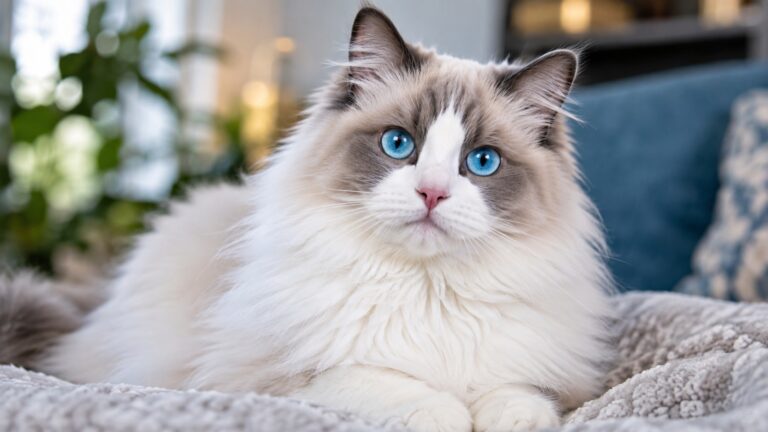
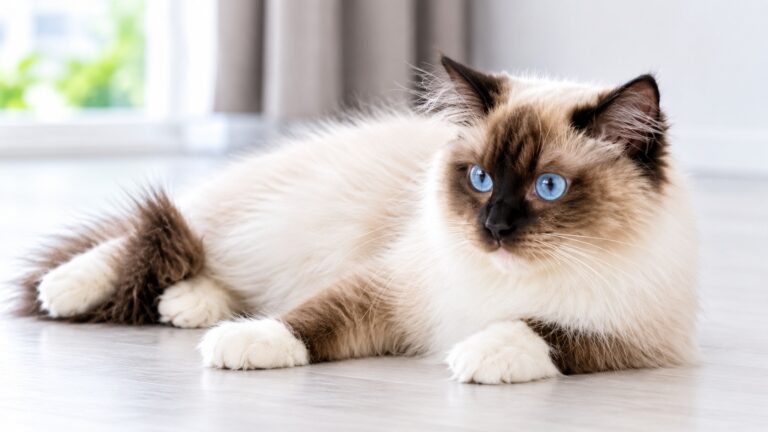
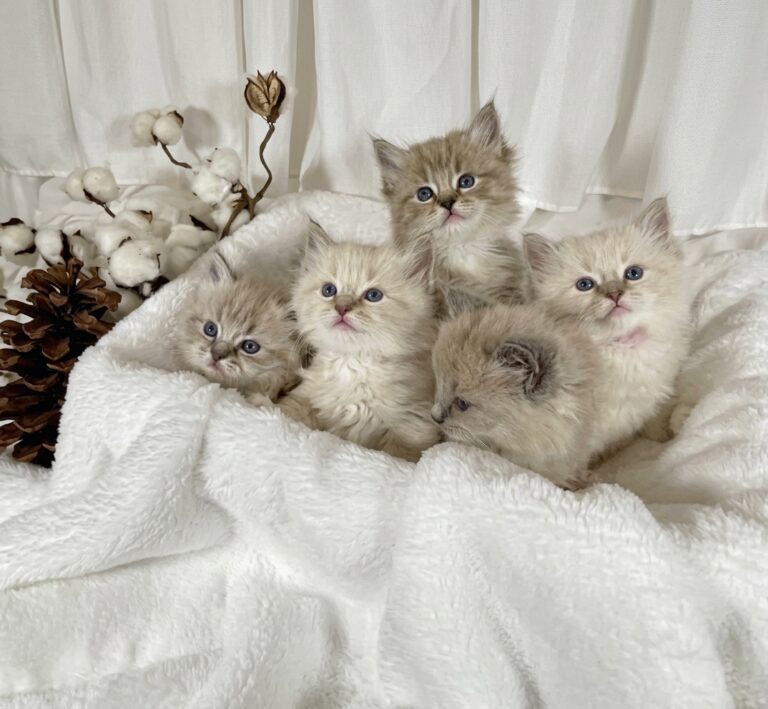
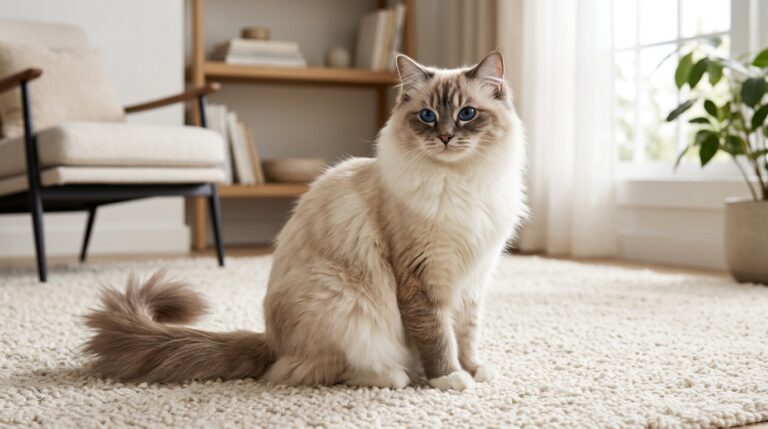
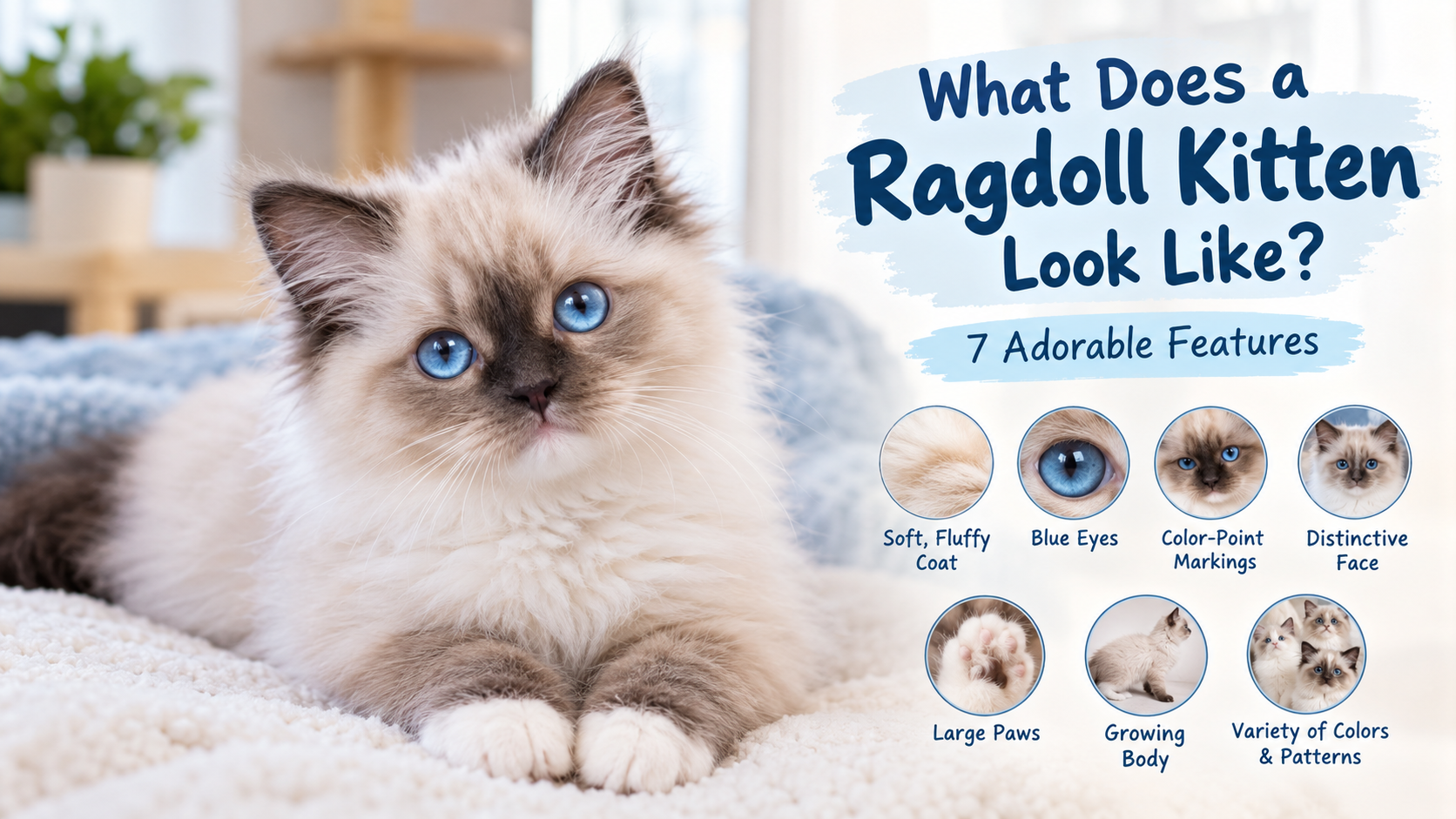
So, what does a Ragdoll kitten look like? A typical Ragdoll kitten has a soft, semi-long coat, blue eyes, a developing color-point pattern, a rounded face, large paws, and a long body that gradually becomes more noticeable as the kitten grows. Their coat and markings can look lighter when they are young and become more defined over time. Understanding these characteristics can make it easier to recognize the distinctive appearance of this popular breed.
Ragdoll kittens are also known for their gentle-looking expressions and fluffy appearance. Their bodies may appear somewhat disproportionate during early growth because their legs, paws, head, and body develop at different rates. As they mature, these features become more balanced and their characteristic appearance becomes easier to recognize. Their slow physical development is one reason their appearance can continue changing long after the kitten stage begins.
What Does a Ragdoll Kitten Look Like?
A Ragdoll kitten generally has a fluffy, soft coat, striking blue eyes, a broad face, medium-sized ears, large paws, and a body that gradually becomes long and substantial. One of the most interesting characteristics is their color-point pattern. Ragdoll kittens are born with their body color relatively light, while darker coloration develops around the ears, face, legs, and tail as they grow.
The exact appearance of a Ragdoll kitten depends on its color and pattern. Some kittens may have very subtle markings when they are young, while others develop visible points more quickly. Their coats can also become darker as they mature. Temperature-sensitive pigmentation plays an important role in this development, which is why the cooler areas of their bodies generally become darker.
Their eyes are another important feature. Purebred Ragdolls are known for blue eyes, although the exact shade can vary. A young kitten’s eyes may appear lighter or slightly different during early development, but the characteristic blue coloration becomes increasingly recognizable as the kitten matures.
Ragdoll Kittens Have Soft, Fluffy Coats
One of the first things people notice about a Ragdoll kitten is its coat. Ragdolls have semi-long fur that feels soft and silky rather than extremely dense and woolly. A young kitten can look especially fluffy because its developing coat creates a soft outline around the body, face, legs, and tail.
The texture of the coat is an important part of the breed’s appearance. Ragdoll fur generally has a smooth, silky quality, and the coat can become fuller as the kitten grows. The fur around the neck and chest may gradually become more noticeable, while the tail can develop a beautiful plume-like appearance.
A Ragdoll kitten’s coat may not look exactly like an adult Ragdoll’s coat. Young kittens are still developing their mature fur, so their coat can appear shorter, softer, or less substantial than the coat they will have later. As the kitten grows, the texture, length, and fullness can become more apparent.
The coat also contributes to the kitten’s overall rounded appearance. Fluffy fur can make a young Ragdoll look larger or more substantial than its actual body size. This soft appearance is particularly noticeable around the cheeks, chest, legs, and tail.
Ragdoll kittens generally benefit from regular grooming because their semi-long coats can collect loose hair and may develop tangles if they are not maintained. Gentle brushing can help keep the coat clean and comfortable while also allowing owners to become familiar with changes in the kitten’s skin and fur.
Their Blue Eyes Are a Signature Feature
The blue eyes of a Ragdoll kitten are among its most recognizable characteristics. Ragdolls are famous for their striking blue eyes, which create a strong contrast against their developing coat color. The eyes can appear especially large and expressive because of the kitten’s small face and fluffy surrounding fur.
Ragdoll kittens can have different shades of blue. Some may have a lighter, softer blue, while others develop a deeper and more vivid shade. The precise appearance can vary between individual cats, but blue eyes are a defining feature associated with the breed.
During early kitten development, eye color can change as the eyes mature. This is normal for many kittens. Ragdoll kittens gradually develop their characteristic appearance as they grow, and the blue coloration becomes more established with age.
Their eye shape also contributes to their distinctive facial expression. The eyes are generally large and oval-shaped, giving Ragdoll kittens an alert but gentle appearance. Combined with their soft facial fur, these eyes can make the kitten look particularly expressive.
The contrast between blue eyes and darker facial points can become even more noticeable as the kitten grows. As the ears, face, and other points become darker, the blue eyes can stand out more strongly against the coat.
Ragdoll Kittens Develop Color-Point Markings
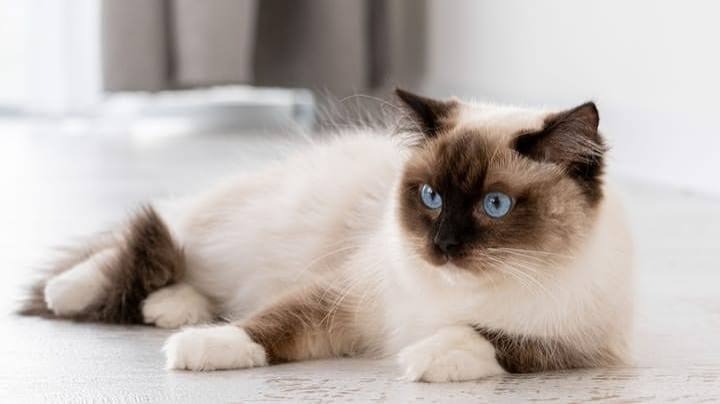
A major characteristic of a Ragdoll kitten is its color-point pattern. Color-point cats have darker coloration on areas of the body that are naturally cooler, such as the ears, face, legs, paws, and tail. The main body remains comparatively lighter.
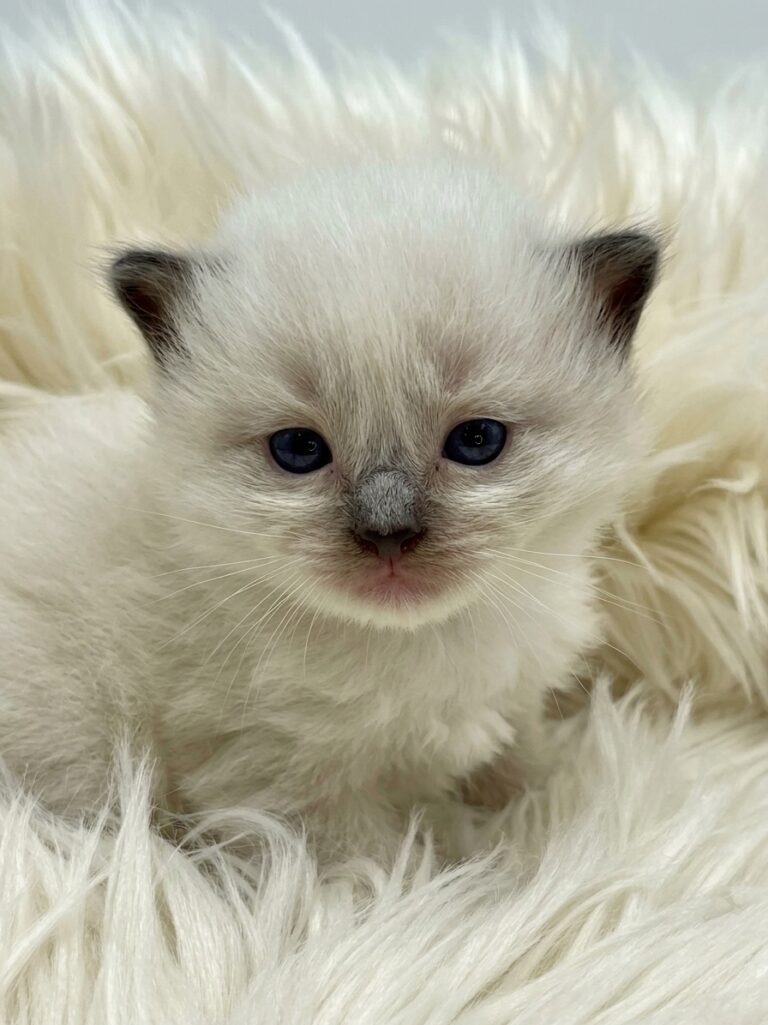
Ragdoll kittens are often born with very light coats because their color-point pigmentation develops gradually. During the first weeks and months, darker areas begin to become increasingly visible. This means a young Ragdoll can look considerably different from the same cat several months later.
The face is one of the areas where developing coloration can be particularly noticeable. Darker fur may begin appearing around the ears and gradually extend toward the mask area of the face. The exact pattern depends on the kitten’s genetic color and pattern.
The ears are often among the easiest places to notice developing color. As the kitten matures, the ears may become visibly darker than the rest of the body. The tail and legs can also develop stronger coloration.
Temperature has an important connection to this pigmentation. The enzyme involved in producing the darker pigment is affected by body temperature, so cooler parts of the body tend to develop stronger coloration. This biological feature is responsible for the characteristic pointed appearance.
Because the coloration develops gradually, the appearance of a Ragdoll kitten can change significantly during its first year. The kitten you see at an early age may have much lighter markings than the same cat later in development.
Their Faces Have a Distinctive Appearance
Ragdoll kittens have soft and distinctive facial features. Their faces are generally broader than those of some other long-haired cat breeds, and their developing cheeks can give them a rounded, gentle appearance.
The muzzle is another noticeable feature. As the kitten grows, the face gradually becomes more defined. The nose, muzzle, cheeks, and chin develop together, creating the characteristic facial structure associated with adult Ragdolls.
Their ears are medium-sized and typically have a broad base. The ears can appear somewhat large on a young kitten because the rest of the head and body are still developing. As the kitten grows, the proportions become more balanced.
Facial fur can also make the head appear larger and softer. The fur around the cheeks and sides of the face contributes to the fluffy appearance that many people associate with Ragdoll kittens.
The facial markings become more obvious as the color points develop. A kitten with very light early coloration may gradually develop darker fur around the face, creating stronger contrast between the face and body.
A Ragdoll kitten’s expression is often one of its most appealing characteristics. Its large blue eyes, soft fur, developing points, and rounded facial structure combine to create a gentle appearance that remains recognizable throughout its development.
Ragdoll Kittens Have Large Paws
Large paws are another noticeable feature of Ragdoll kittens. Their paws can look surprisingly big compared with the rest of their body, especially during periods of rapid growth. This is partly because different parts of a kitten’s body do not always develop at exactly the same rate.
Ragdolls are a large breed, so their paws are naturally expected to become substantial as they mature. Even when they are young, their paw structure can give an indication of the larger body they will eventually develop.
The paws are usually covered with fur, and tufts of hair may appear between the toes. These small details add to the fluffy appearance of the kitten.
During growth periods, the paws may temporarily look oversized compared with the legs and body. As the kitten grows taller and longer, the proportions gradually become more balanced.
The size of a kitten’s paws alone should not be used to determine whether it is a Ragdoll. Breed identification involves multiple characteristics, including coat, eye color, body structure, markings, and pedigree. Still, large paws are an interesting physical feature commonly associated with the breed.
Their Bodies Become Larger as They Grow
Ragdolls are known as a large cat breed, and their body structure becomes increasingly noticeable as they mature. A young Ragdoll kitten may initially look small and somewhat rounded, but its body gradually becomes longer and more substantial.
Their body tends to develop a long, sturdy appearance. The legs also become more proportionate as the kitten grows. During early development, the body may appear slightly awkward because the kitten is growing rapidly and different features are developing at different speeds.
The chest can become broader with age, while the shoulders and hips develop greater definition. The body gradually takes on the more substantial appearance associated with adult Ragdolls.
Ragdolls are also known for relatively slow maturation compared with many other cat breeds. Their physical development can continue for several years, meaning that a kitten’s appearance at a few months old does not necessarily represent its final adult size or structure.
Male Ragdolls are generally larger than females, although individual cats vary considerably. Genetics, nutrition, health, and overall development can all influence a cat’s final size.
The tail is another important part of their overall appearance. Ragdoll tails are long and covered with fluffy fur. As the kitten matures, the tail can become fuller and more prominent, adding to the breed’s elegant appearance.
Ragdoll Kittens Come in Several Patterns and Colors
Ragdoll kittens are available in several recognized color and pattern variations. This means that not every Ragdoll kitten looks the same. While blue eyes and pointed coloration are important breed characteristics, the distribution and shade of the coat markings can differ.
Color-point Ragdolls have darker points on the ears, face, legs, paws, and tail while the body remains lighter. This creates the classic pointed appearance associated with the breed.
Mitted Ragdolls have color-point markings combined with lighter areas on the paws. Their front and back legs can have distinctive white markings, and the pattern can extend toward the body depending on the individual cat.
Bicolor Ragdolls have a more noticeable amount of white on the face and body. Their facial pattern can create a characteristic inverted V-shaped appearance on the face, although the exact shape varies between cats.
Lynx patterns can also appear in Ragdolls. These cats have additional tabby-like markings within their point coloration. The result is a more patterned appearance around the face, ears, legs, and tail.
The major color variations include seal, blue, chocolate, lilac, red, and cream, along with additional combinations recognized within Ragdoll breeding standards. The intensity of the color can change as the kitten develops.
Because Ragdoll coloration develops gradually, it is important to remember that a young kitten’s coat may not reveal its final appearance. The points can become darker and more defined over time.
How Does a Ragdoll Kitten Change as It Grows?
A Ragdoll kitten can change significantly during its development. Newborn kittens are generally very light in color, and their distinctive point coloration becomes more visible as they grow. The changes can be gradual, making the transformation easy to notice when comparing the kitten at different ages.
During the early weeks, the kitten’s coat may appear relatively pale. The ears, face, legs, and tail gradually begin showing more pigmentation. By the time the kitten is several months old, the points can be much easier to recognize.
The body also changes considerably. The legs become longer, the body becomes more substantial, and the paws become more proportionate to the rest of the cat. The head and facial structure mature as well.
The coat can become fuller and longer with age. The tail may become increasingly fluffy, while the chest and neck can develop more visible fur. Regular grooming becomes more important as the coat becomes more mature.
Growth does not necessarily happen evenly. A kitten can go through periods where its legs look long, its paws look large, or its body appears unusually slender. These temporary proportions are part of normal growth and can change as the kitten matures.
Ragdoll Kitten Appearance by Age
During the newborn stage, Ragdoll kittens generally have very light coloration. Their characteristic point markings are not yet strongly developed, although subtle differences may begin to appear as the first days and weeks pass.
At around four to eight weeks, the developing points can become easier to see. The ears may start showing darker coloration, and the face, tail, and legs can gradually develop stronger pigmentation.
Between two and four months, many Ragdoll kittens begin looking more recognizably like the breed. Their blue eyes are prominent, their coat becomes fluffier, and their point coloration becomes increasingly obvious.
From around five to eight months, the body continues growing and the coat becomes more developed. The kitten can start taking on a more mature body shape, although significant growth may still remain.
As the cat approaches adulthood, the body becomes larger and more balanced. The coat can become fuller, the tail more prominent, and the facial structure more mature. Color points may also become deeper and more defined.
Ragdolls can continue developing for an extended period, so their final adult appearance may not be established during the first year. This slow maturation is an important characteristic when considering their overall appearance.
Are Ragdoll Kittens Born White?
Ragdoll kittens are typically born with very light coats because their point coloration develops after birth. Their pigmentation is influenced by temperature, which means the warmer environment inside the mother allows the kittens to remain relatively light before birth.
After birth, cooler areas of the kitten’s body begin developing darker pigmentation. The ears, face, paws, legs, and tail gradually become more strongly colored.
This process is one of the fascinating aspects of Ragdoll development. A kitten’s appearance can change noticeably during the first few months, and the points can continue becoming more prominent as the cat ages.
The final color is influenced by genetics. Different genetic combinations can produce different point colors and patterns, so two Ragdoll kittens can have noticeably different appearances even when they belong to the same breed.
How Can You Tell if a Kitten Looks Like a Ragdoll?
Recognizing a Ragdoll kitten requires looking at several physical characteristics together. Blue eyes, pointed coloration, semi-long fur, a developing large body, large paws, and a distinctive facial structure can all contribute to the overall appearance.
However, appearance alone cannot always confirm a cat’s breed. Many cats can have blue eyes, fluffy coats, or pointed markings without being Ragdolls. Similar physical characteristics can occur in other breeds and mixed-breed cats.
A pedigree from a reputable breeder is a much more reliable way to establish whether a kitten is a purebred Ragdoll. Breed registration and documented lineage provide information that visual appearance cannot provide by itself.
When looking at a young kitten, it is also important to remember that some breed characteristics may not yet be fully developed. The coat, color points, body size, and facial structure can all change as the kitten grows.
Do Ragdoll Kittens Have Long Hair?
Ragdoll kittens have semi-long coats rather than extremely long coats. Their fur is generally soft and silky, and it can become fuller as they mature.
The coat is often particularly noticeable around the neck, chest, hind legs, and tail. The amount of fur can vary between individual cats, and seasonal changes can also influence how full the coat looks.
Young kittens may not have the same coat volume as adults. Their mature coat develops gradually, so a kitten that looks moderately fluffy can become much more heavily coated later in life.
Regular grooming helps maintain the coat and reduce loose hair. Gentle brushing is particularly useful as the kitten becomes older and its fur becomes longer.
Why Do Ragdoll Kittens Look So Fluffy?
Several characteristics contribute to the fluffy appearance of Ragdoll kittens. Their semi-long fur surrounds the body, while additional hair around the face, chest, legs, and tail creates a soft outline.
Their developing coat can also make their body appear rounder than it actually is. The combination of fluffy fur and a developing body gives young Ragdolls a particularly soft appearance.
The tail is often one of the fluffiest parts of the cat. As the kitten grows, the tail can become increasingly full, creating a beautiful plume-like appearance.
Grooming can also influence how the coat looks. Clean, well-maintained fur tends to appear smoother and more defined, while tangled or loose fur can make the coat look less organized.
What Makes a Ragdoll Kitten Different From an Adult Ragdoll?
The biggest difference is that a kitten is still developing nearly every major physical characteristic. The coat is not fully mature, the body is still growing, and the color points are continuing to develop.
An adult Ragdoll generally has a larger and more substantial body, a fuller coat, a more developed facial structure, and stronger point coloration. The eyes remain blue, but the overall facial proportions become more mature.
A kitten’s paws may look unusually large relative to its body, while an adult’s proportions are more balanced. Similarly, a kitten’s ears may appear prominent because its head is still developing.
These changes are completely normal. Ragdolls are a slow-maturing breed, so owners should expect gradual physical development rather than a rapid transition from kitten to adult appearance.
How to Care for a Ragdoll Kitten’s Appearance
Maintaining a Ragdoll kitten’s appearance starts with appropriate grooming and general care. Regular gentle brushing can help remove loose hair and prevent tangles, especially as the kitten’s coat becomes longer.
The eyes should also be monitored regularly. Because Ragdoll kittens have prominent blue eyes, any unusual discharge, redness, swelling, or persistent irritation should be taken seriously and discussed with a veterinarian.
The ears should be kept clean and checked regularly. Excessive scratching, unusual odor, or visible debris can indicate a problem that needs professional attention.
A healthy diet and proper veterinary care also contribute to healthy skin and coat development. Nutrition affects growth, so kittens should receive food appropriate for their age and developmental needs.
Handling should be gentle, particularly during the early months. Regular calm handling can help kittens become comfortable with grooming and routine care.
For more information about Ragdoll cats, their breed characteristics, appearance, and general care, readers can visit the The International Cat Association (TICA). TICA provides detailed information about the Ragdoll breed, including its physical characteristics and recognized traits. This can be a useful resource for anyone who wants to learn more about how Ragdoll kittens develop and how their appearance changes as they mature.
Do All Ragdoll Kittens Look the Same?
No, Ragdoll kittens can look quite different from one another. Although they share breed characteristics, individual kittens can have different colors, patterns, facial markings, coat density, and body proportions.
Some kittens may develop darker points earlier, while others remain relatively pale for longer. Their coats can also differ in texture and fullness.
Pattern variations can make an even bigger difference. A color-point kitten may have a very different facial appearance from a bicolor or mitted Ragdoll.
Genetics plays a major role in these differences. Parents can pass different combinations of genes to their kittens, resulting in variation in color and pattern.
Even kittens from the same litter can have noticeably different appearances. This is one of the reasons Ragdoll cats can be visually interesting as they develop.
Are Ragdoll Kittens Easy to Recognize?
Some Ragdoll kittens are relatively easy to recognize once their characteristic features have developed. Blue eyes, pointed coloring, semi-long fur, and a large developing body can create a recognizable appearance.
Very young kittens can be more difficult to identify visually because their point coloration may still be subtle. Their final body structure and coat may also not yet be developed.
As the kitten gets older, the combination of characteristics becomes clearer. The points darken, the coat becomes fuller, and the body starts taking on its larger breed-specific structure.
Even then, visual identification should not be considered definitive proof of breed. Documentation and pedigree information remain important when determining whether a cat is a registered purebred Ragdoll.
FAQ
What does a Ragdoll kitten look like?
A Ragdoll kitten typically has a soft, semi-long coat, striking blue eyes, large paws, and a developing color-point pattern. Its ears, face, legs, and tail gradually become darker as the kitten grows.
Are Ragdoll kittens born white?
Yes, Ragdoll kittens are generally born with very light-colored coats. Their darker point coloration develops gradually after birth, especially around the ears, face, legs, paws, and tail.
Do all Ragdoll kittens have blue eyes?
Yes, blue eyes are a defining characteristic of Ragdoll cats. The exact shade can vary from lighter blue to deeper blue, but blue eyes are expected in the breed.
When do Ragdoll kittens get their color?
Ragdoll kittens begin developing their point coloration after birth. Their ears, face, legs, paws, and tail gradually become darker during the first weeks and months of life.
How can you tell if a kitten is a Ragdoll?
A Ragdoll kitten may have blue eyes, semi-long fur, pointed markings, large paws, and a developing large body. However, appearance alone cannot reliably confirm the breed; pedigree or breeder documentation provides stronger evidence.
Do Ragdoll kittens have long hair?
Ragdoll kittens have a semi-long, soft, and silky coat. Their fur generally becomes fuller and more developed as they mature, particularly around the chest, legs, and tail.
Why are Ragdoll kittens so fluffy?
Their semi-long coat, fluffy tail, and developing fur around the body and face give Ragdoll kittens their soft and fluffy appearance. Their coat can become even fuller as they grow.
Do Ragdoll kittens get darker as they grow?
Yes. Ragdoll kittens usually develop darker coloration on their cooler body areas as they mature. The ears, face, legs, paws, and tail can become increasingly defined over time.
What colors can Ragdoll kittens be?
Ragdoll kittens can develop several recognized colors, including seal, blue, chocolate, lilac, red, and cream. Their patterns can include color-point, mitted, bicolor, and lynx variations.
When does a Ragdoll kitten look like an adult?
A Ragdoll kitten gradually takes on its adult appearance as its body, coat, facial structure, and color points develop. Ragdolls are slow-maturing cats, so their appearance can continue changing for several years.
Final Thoughts
So, what does a Ragdoll kitten look like? A Ragdoll kitten typically has a soft semi-long coat, beautiful blue eyes, developing color-point markings, a rounded and gentle-looking face, large paws, and a body that gradually becomes long and substantial. These features combine to create the distinctive appearance that makes Ragdoll kittens so recognizable and appealing.
One of the most fascinating things about Ragdoll kittens is that their appearance changes as they grow. They are often born with very light coats, while darker points gradually develop around the ears, face, legs, paws, and tail. Their coat becomes fuller, their body becomes larger, and their facial structure becomes more mature over time.
The seven major features that stand out are their fluffy coat, blue eyes, developing color points, distinctive face, large paws, growing body, and variety of colors and patterns. Each feature contributes something different to their overall appearance.
If you are trying to understand what a Ragdoll kitten looks like, it is best to consider the complete picture rather than focusing on a single characteristic. Their appearance is a combination of coat texture, eye color, body structure, markings, facial features, and gradual development.
Ragdoll kittens are especially interesting because their appearance is not fixed from the moment they are born. Their physical characteristics continue developing as they grow, making each stage of kittenhood slightly different. Watching the coat become fuller, the points become darker, and the body become more substantial is part of what makes raising a Ragdoll so fascinating.
Ultimately, a Ragdoll kitten is recognizable for its combination of softness, color, proportion, and expression. Its blue eyes and developing pointed coat immediately attract attention, while its fluffy body, large paws, and gentle facial appearance create the classic look associated with the breed. As the kitten matures, these characteristics become increasingly defined, revealing the beautiful adult cat hidden beneath the early kitten coat.