
How to Identify a Ragdoll Cat: Amazing Signs to Know
If you have ever seen a beautiful, fluffy cat with striking blue eyes, a soft coat, and a calm personality, you may have wondered whether it is a Ragdoll cat. Ragdolls are one of the most recognizable long-haired cat breeds, but identifying one correctly can be more difficult than it first appears. Several cat breeds share similar features, including blue eyes, pointed coloring, long hair, and gentle personalities. Because of this, it is important to look at several characteristics together instead of relying on a single feature.
Learning how to identify a Ragdoll cat starts with understanding the breed’s overall appearance, body structure, coat pattern, eye color, and temperament. Ragdolls are known for their large size, semi-long coat, color-point patterns, and affectionate nature. Their development can also be gradual, meaning a young Ragdoll may not immediately display all of the characteristics associated with a mature adult.
A cat’s appearance can provide useful clues, but visual identification does not always prove that a cat is a purebred Ragdoll. Pedigree documentation from a reputable breeder or recognized cat registry is much more reliable when determining breed status. Still, knowing the physical and behavioral characteristics of the breed can help you recognize whether a cat has the typical traits associated with Ragdolls.
How to Identify a Ragdoll Cat
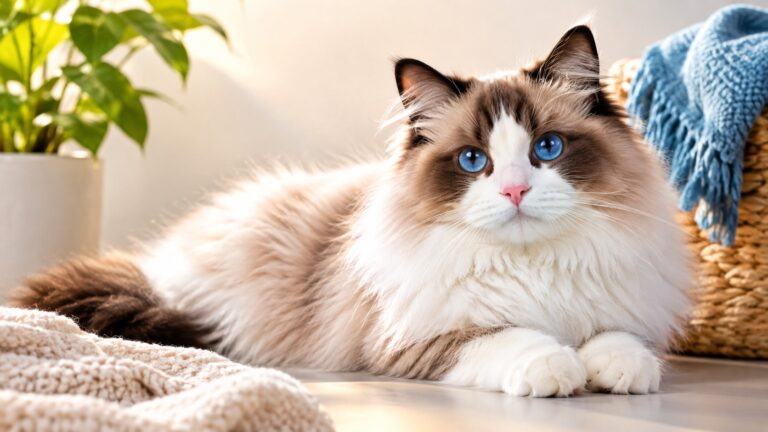
The best way to identify a Ragdoll cat is to examine several characteristics at the same time. Ragdolls generally have a large and substantial body, a broad head, expressive blue eyes, a soft semi-long coat, and darker coloration on the ears, face, legs, and tail. Their personality is also commonly described as calm, affectionate, and people-oriented.
Ragdolls have a distinctive combination of features rather than one single identifying characteristic. Their blue eyes are particularly famous, but eye color alone is not enough to establish the breed. Their coat pattern, body structure, head shape, and overall proportions provide additional information.
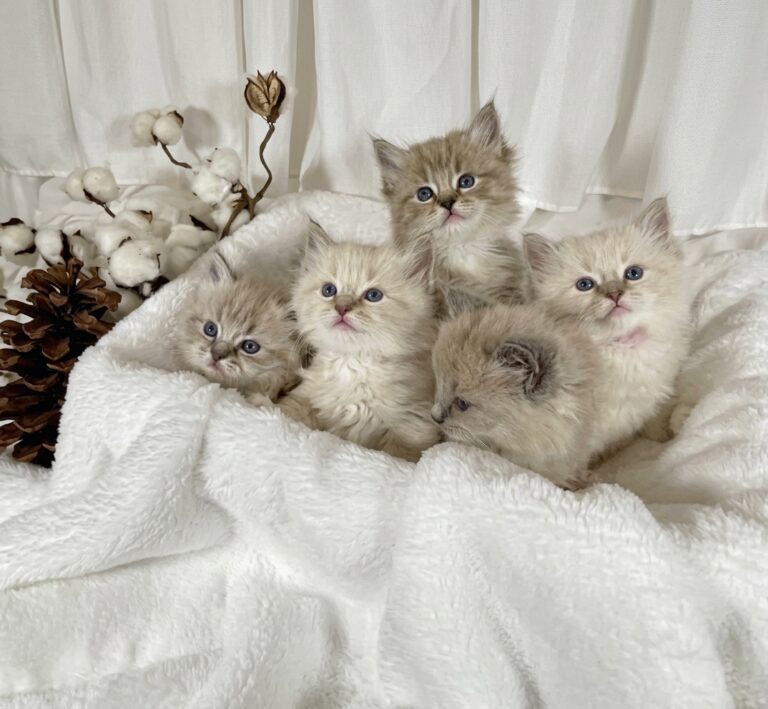
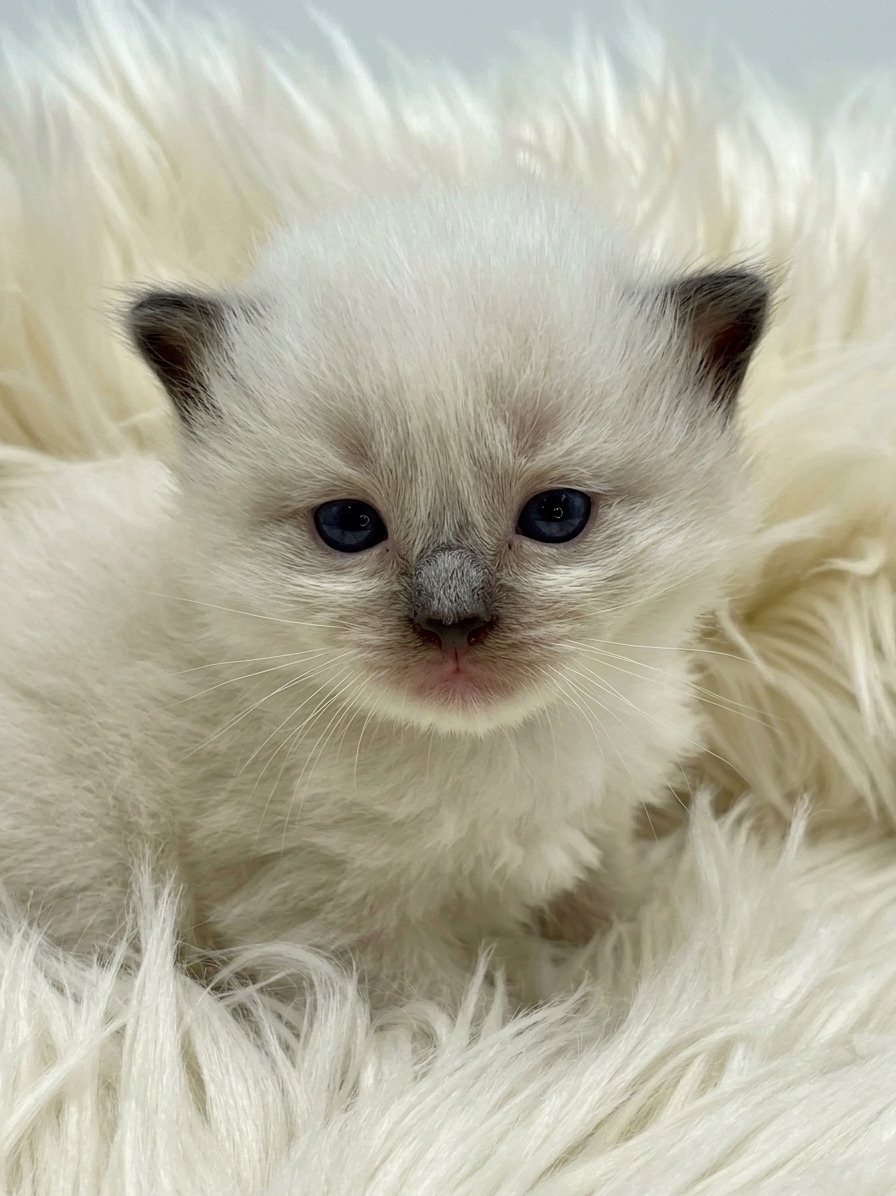
Age is another important factor to consider. Ragdolls are known for developing relatively slowly compared with many other cat breeds. A kitten may look smaller and less developed than an adult while still showing important breed characteristics. Coat length, body size, and facial proportions can change as the cat matures.
Understanding the breed as a whole makes identification much easier. Instead of asking whether one feature matches, look at whether the cat displays a combination of traits that are commonly associated with Ragdolls.
Check the Ragdoll Cat’s Distinctive Blue Eyes
One of the most recognizable characteristics of a Ragdoll cat is its blue eyes. Traditional Ragdolls have blue eyes, and the intensity of the blue can vary. The eyes may appear light blue, medium blue, or a deeper shade depending on the individual cat and lighting conditions.
Ragdoll eyes are generally large and expressive, which contributes significantly to the breed’s distinctive appearance. Their eye shape and facial structure create a soft and appealing expression. When combined with a pointed coat pattern and long, fluffy fur, the blue eyes can make a Ragdoll particularly easy to recognize.
However, eye color should not be used as the only method of identification. Other cats can also have blue eyes, especially breeds and mixes that carry genes associated with color-point patterns. A blue-eyed cat may therefore share an important Ragdoll characteristic without actually being a purebred Ragdoll.
The eyes should instead be considered as one part of a larger identification process. If the cat has blue eyes along with a large body, semi-long coat, pointed markings, broad head, and typical Ragdoll proportions, the combination becomes more informative.
As a kitten grows, its appearance can also change. Ragdoll kittens develop their characteristic coloration gradually, and their overall appearance becomes more defined as they mature. This means that age should always be considered when evaluating physical characteristics.
Examine the Long, Soft Coat
The Ragdoll coat is another important feature when learning how to identify a Ragdoll cat. Ragdolls have a semi-long coat that is typically soft and silky. Their fur is generally longer around the neck, body, and tail, giving them a luxurious appearance.
Unlike some long-haired breeds, the Ragdoll coat does not usually have an extremely dense undercoat. This can affect how the fur feels and how easily it becomes tangled. Regular grooming is still important because longer hair can collect loose fur and form knots if it is not maintained.
The texture of a Ragdoll’s coat contributes strongly to its overall appearance. The fur tends to lie relatively smoothly against the body while creating a fluffy appearance around the tail and other areas. The coat can become particularly impressive as the cat reaches adulthood.
Seasonal changes can also influence how a Ragdoll looks. Cats may shed more heavily during certain periods, which can temporarily make the coat appear less full. This does not necessarily mean the cat lacks typical Ragdoll characteristics.
Color and pattern should be considered along with coat texture. A cat with long hair but without the characteristic pointed coloration may not match the typical appearance of a Ragdoll. Likewise, a pointed cat with short hair may not fit the standard Ragdoll appearance.
The coat is therefore useful as part of the identification process, but it should be evaluated together with the cat’s body size, eye color, facial structure, and markings.
Look at the Color-Point Pattern
Another major characteristic of Ragdoll cats is their color-point pattern. This means that certain areas of the body, especially the ears, face, legs, and tail, are darker than the main body. The central body is usually lighter in comparison.
The pointed pattern is caused by temperature-sensitive pigmentation. The cooler areas of the body tend to develop darker coloration, while warmer areas remain lighter. This creates the distinctive contrast associated with color-point cats.
Ragdolls can have different colors and patterns, so not every individual will look the same. The basic point pattern can be modified by additional markings and genetic variations. This creates considerable visual variety within the breed.
The face is usually one of the most noticeable areas of darker coloration. The ears are also typically darker than the body. The legs and tail commonly show stronger pigmentation as well. The exact distribution and intensity of these markings can vary.
Because several breeds can have color-point coats, this characteristic should not be treated as definitive proof. It becomes much more useful when combined with other Ragdoll traits.
A cat with a pointed pattern, blue eyes, long soft fur, large body, and characteristic facial structure may strongly resemble a Ragdoll. However, confirmation of pedigree requires documentation rather than appearance alone.
Observe the Large, Strong Body
Ragdolls are known for being relatively large cats. Their substantial body is one of the characteristics that can help distinguish them from smaller long-haired breeds.
The body is generally broad and muscular while maintaining a balanced appearance. Ragdolls have strong bones and substantial proportions, which contribute to their impressive size. Their large frame becomes more obvious as they mature.
Male Ragdolls are typically larger than females, although individual size can vary. A female can still be a substantial cat, while some males may develop more slowly. Therefore, body weight alone should not be used to determine whether a cat is a Ragdoll.
Ragdolls also mature slowly compared with many other cat breeds. Their full adult size may take several years to develop. This is important when identifying a young cat because a kitten or adolescent may not yet have the substantial proportions of a mature adult.
The body should be considered in terms of overall structure rather than simply weight. Look at the relationship between the torso, legs, head, and tail. A balanced, substantial frame is more meaningful than a single number on a scale.
Nutrition, health, genetics, and lifestyle can also influence body size. A cat that is smaller than expected is not automatically excluded from consideration, particularly if it is young or has other strong breed characteristics.
Examine the Face and Head Shape
The shape of the head can provide another useful clue when identifying a Ragdoll cat. Ragdolls generally have a broad head with a rounded appearance and a noticeable muzzle. Their facial structure contributes to the soft expression for which the breed is known.
The ears are generally medium-sized and positioned in proportion to the head. They may have a slight outward angle rather than appearing extremely upright. Ear furnishings can also contribute to the fluffy appearance of the face.
The chin is another part of the facial structure. A well-developed chin helps create the balanced appearance associated with the breed. The muzzle is also noticeable without appearing extremely narrow.
The overall facial expression is often one of the most appealing characteristics of a Ragdoll. Their large blue eyes, broad head, soft coat, and gentle facial proportions create a distinctive appearance.
However, facial features can vary between individual cats. Age, genetics, and breeding lines can all influence appearance. Mixed-breed cats can also inherit some Ragdoll-like facial characteristics.
For this reason, the face should be considered alongside the rest of the cat’s body. A broad head alone cannot establish breed identity, but it can strengthen identification when combined with the other characteristic traits.
Consider the Ragdoll’s Personality
Physical characteristics are important, but temperament can also provide useful supporting information. Ragdolls are widely known for being affectionate, gentle, and strongly interested in human companionship.
Many Ragdolls enjoy staying near their owners and participating in household activities. They can be calm and social without necessarily being constantly demanding. Their relaxed personality is one of the reasons the breed has become popular as a companion cat.
Ragdolls can also develop strong bonds with their human families. They may enjoy being handled, receiving attention, and spending time in the same room as their owners. Their generally gentle temperament can make them appealing to households looking for a companion-oriented cat.
However, personality is not a reliable way to prove breed identity. Individual cats have their own personalities, and environmental experiences can strongly influence behavior. A Ragdoll can be more independent than expected, while a non-Ragdoll cat can be extremely affectionate.
Behavior should therefore be treated as supporting evidence rather than a definitive test. A cat that behaves calmly and enjoys human companionship may have a personality commonly associated with Ragdolls, but temperament alone cannot confirm its breed.
When personality matches the physical characteristics, it can provide a more complete picture. The combination of appearance and behavior can help you understand whether the cat resembles the typical Ragdoll breed profile.
Check the Paws, Tail, and Overall Markings
Small physical details can also help when learning how to identify a Ragdoll cat. Ragdolls generally have large paws that are proportionate to their substantial body. Their paws may also have tufts of fur that add to their fluffy appearance.
The tail is another noticeable feature. Ragdolls typically have a long, fluffy tail that contributes significantly to their overall silhouette. The tail may have darker coloration toward the end in cats with traditional point patterns.
The legs can also display important markings. Depending on the pattern, the paws and legs may show specific areas of white or darker pigmentation. These markings can differ between individual Ragdolls.
Mitted and bicolor Ragdolls, in particular, have distinctive white markings that can make them visually different from traditional colorpoint cats. This is why it is important to understand that Ragdolls do not all have identical markings.
The combination of large paws, a fluffy tail, long fur, and characteristic coloration can provide useful clues. Nevertheless, these features should still be considered alongside the eyes, head, body, and coat.
Ragdoll Cat Color and Pattern Types
Ragdoll cats can appear in several recognized color and pattern variations. Understanding these variations is useful because it prevents people from assuming that every Ragdoll must have exactly the same appearance.
The colorpoint pattern is one of the most recognizable. In this pattern, the body remains lighter while the ears, face, legs, and tail become darker. The contrast can become more pronounced as the cat matures.
Mitted Ragdolls have additional white markings, particularly on the paws. The pattern can create the appearance of small white gloves on the feet. White markings may also appear in other parts of the body depending on the specific pattern.
Bicolor Ragdolls have a larger amount of white, especially around the face and body. Their appearance can therefore be quite different from a traditional colorpoint Ragdoll while still belonging to the same breed.
Lynx patterns introduce tabby-like markings into the coat. Tortie patterns can also create additional color variation. These differences demonstrate how broad the visual range of the Ragdoll breed can be.
Because of these variations, identification should focus on the underlying breed characteristics rather than expecting a single exact color pattern.
Ragdoll Cat vs. Similar-Looking Cats
Identifying a Ragdoll can be challenging because several other breeds share some of its most noticeable features. Blue eyes, pointed coloration, long fur, and gentle personalities are not exclusive to Ragdolls.
The Birman is one breed that can sometimes be confused with the Ragdoll. Both can have blue eyes, pointed coloring, and white markings. Differences in body proportions, coat characteristics, and overall breed structure can help distinguish them.
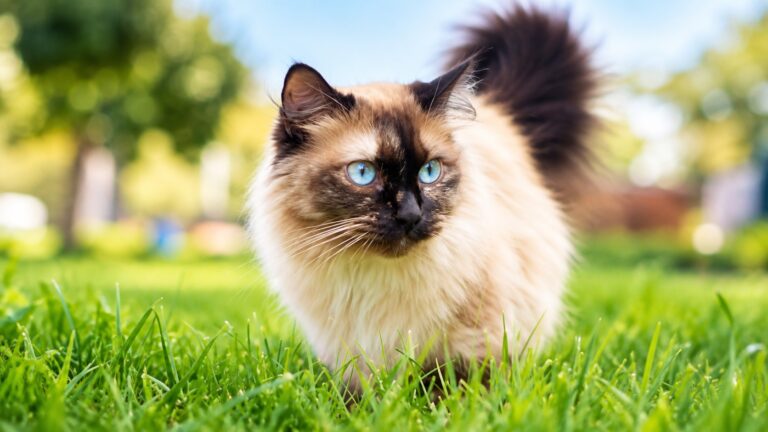
The Himalayan can also appear similar because of its pointed coloration and long coat. However, Himalayan cats have a different overall body and facial structure. Their faces can also be much more distinctly shaped depending on their breeding line.
Other long-haired color-point cats can also resemble Ragdolls. Mixed-breed cats may inherit several Ragdoll-like traits without being purebred Ragdolls.
This is why a combination of characteristics is so important. Instead of focusing on a single visual trait, consider the complete appearance of the cat.
Can You Identify a Ragdoll Cat Without Papers?
It is possible to recognize characteristics associated with Ragdolls without having pedigree documents, but it is not possible to establish purebred status with complete certainty through appearance alone.
A cat may strongly resemble a Ragdoll because it has blue eyes, a pointed coat, long fur, and a large body. However, physical resemblance does not prove ancestry. Mixed-breed cats can share many of the same characteristics.
Pedigree documentation is much more useful when determining whether a cat is a registered purebred Ragdoll. Documentation can provide information about the cat’s parents, lineage, and registration.
If documentation is unavailable, a knowledgeable veterinarian or experienced cat-breed professional may be able to help assess the cat’s physical characteristics. Their assessment can be useful, although visual evaluation still has limitations.
Breed identification becomes especially important when someone is buying a cat and paying a price associated with a purebred animal. Buyers should be cautious about relying only on verbal claims about breed.
Common Mistakes When Identifying a Ragdoll Cat
One of the most common mistakes is assuming that every blue-eyed pointed cat is a Ragdoll. Blue eyes and pointed coloration occur in several breeds and mixed-breed cats, so these characteristics should not be considered definitive.
Another mistake is focusing entirely on coat color. Ragdolls can have different colors and patterns, and their appearance changes as they grow. A cat that looks different from a familiar Ragdoll image may still have other characteristics associated with the breed.
Ignoring body structure is another common problem. Ragdolls are known for their substantial size and balanced proportions, so body structure provides important information.
Some people also rely too heavily on personality. A friendly, relaxed cat may seem like a Ragdoll because of its temperament, but behavior alone cannot determine breed.
Age can create another source of confusion. Young Ragdolls may not have developed their full adult size or coat. Their appearance can become more recognizable over time.
Finally, people sometimes assume that a cat must be purebred because it resembles a particular breed. Breed resemblance and confirmed pedigree are not the same thing.
How to Confirm Whether a Cat Is a Ragdoll
If you want to determine whether a cat is genuinely a Ragdoll, start by examining its overall physical characteristics. Look at the eyes, coat, color pattern, body structure, head shape, paws, tail, and markings.
Next, consider the cat’s age. A young Ragdoll may still be developing many of its mature characteristics, so identification based on appearance can become easier as the cat grows.
If the cat came from a breeder, ask for appropriate pedigree documentation. A reputable breeder should be able to provide information about the cat’s lineage and registration where applicable.
If documentation is unavailable, professional guidance can provide additional information. A veterinarian can evaluate the cat’s general physical condition, while someone with experience in recognized cat breeds may be able to assess whether its appearance is consistent with a Ragdoll.
It is important to understand that even experienced professionals may not be able to guarantee a cat’s pedigree solely through physical appearance. Genetic testing may provide additional information about ancestry, but the usefulness and interpretation of breed DNA tests can vary.
The most reliable approach is therefore to combine physical assessment with reliable documentation.
Why Ragdoll Cats Are Easy to Recognize
Ragdolls have a distinctive combination of characteristics that makes them particularly memorable. Their large bodies, blue eyes, pointed coat patterns, soft fur, and gentle appearance create a recognizable overall look.
Their slow physical development also makes them interesting compared with many other domestic cats. A young Ragdoll may look quite different from the large, fluffy adult it eventually becomes.
The breed’s personality also contributes to its reputation. Ragdolls are often associated with calm and affectionate behavior, which complements their relaxed physical appearance.
However, the popularity of Ragdolls has also led to many cats being described as Ragdolls simply because they share a few characteristics. Understanding the breed properly can help prevent confusion between purebred Ragdolls, Ragdoll mixes, and unrelated cats with similar appearances.
Does a Ragdoll Cat Always Have Blue Eyes?
Traditional Ragdolls are recognized for their blue eyes, and blue eyes are one of the breed’s most important visual characteristics. The exact shade can vary from lighter to deeper blue.
Lighting conditions can sometimes change how the eyes appear to a person. Photographs can also alter perceived color because of exposure, camera settings, and surrounding colors.
If a cat does not have blue eyes, it may not fit the typical appearance of a Ragdoll. However, eye color should still be evaluated in combination with other characteristics rather than used as the sole test.
Breed standards and recognized variations should also be considered when evaluating individual cats.
When learning how to identify a Ragdoll cat, it is helpful to compare its characteristics with recognized breed information. The Cat Fanciers’ Association provides detailed information about Ragdoll appearance, personality, coat, and breed characteristics. Reviewing recognized breed information can help you better understand which features are commonly associated with Ragdolls.
Do Ragdoll Cats Always Have Long Hair?
Ragdolls are generally recognized as a semi-long-haired breed. Their coat is one of their defining physical characteristics and contributes to their soft, fluffy appearance.
The coat can vary in fullness depending on age, season, genetics, and grooming. Young cats may have less impressive coats than mature adults, while seasonal shedding can temporarily reduce the appearance of fullness.
A cat with very short hair would not typically match the standard Ragdoll appearance. A medium or semi-long coat combined with other characteristic features is much more consistent with the breed.
How Age Affects Ragdoll Identification
Age is particularly important when identifying Ragdolls because they mature relatively slowly. Their body size, coat, and overall proportions can continue developing for an extended period.
A kitten may have the basic pointed pattern and blue eyes but lack the large body and full coat associated with mature Ragdolls. As the cat grows, these characteristics can become more pronounced.
This means that identifying a young cat based only on size can be misleading. A smaller young cat may still develop into a large adult.
When evaluating a kitten, it is better to consider its current characteristics together with information about its parents and pedigree whenever available.
Ragdoll Cat Identification Checklist
When trying to identify a Ragdoll cat, consider the complete combination of characteristics. Look for blue eyes, a soft semi-long coat, pointed coloration, a substantial body, a broad head, large paws, and a fluffy tail.
Also consider the cat’s markings. Colorpoint, mitted, bicolor, lynx, and tortie variations can create different appearances within the breed.
Temperament can provide additional supporting information. A calm, affectionate, and people-oriented personality is commonly associated with Ragdolls, but individual behavior varies.
Finally, consider documentation. If the cat is claimed to be a purebred Ragdoll, pedigree records provide much stronger evidence than appearance alone.
FAQ
How can you tell if a cat is a Ragdoll?
You can look for several characteristics, including bright blue eyes, a semi-long and soft coat, pointed coloring, a large body, broad head, fluffy tail, and distinctive markings. Personality can provide an additional clue, but appearance alone cannot confirm that a cat is a purebred Ragdoll.
What are the main signs of a Ragdoll cat?
The main signs include blue eyes, a color-point coat, semi-long fur, a large and muscular body, broad facial structure, large paws, and a long fluffy tail. Ragdolls are also commonly known for their calm and affectionate temperament.
Do all Ragdoll cats have blue eyes?
Traditional Ragdoll cats have blue eyes, and this is one of their most recognizable characteristics. The exact shade can vary from light blue to deeper blue, but blue eyes are an important feature of the breed.
How can I tell if my kitten is a Ragdoll?
Look at the kitten’s eye color, coat pattern, fur length, body structure, and markings. Keep in mind that Ragdolls mature slowly, so a kitten may not yet have the large body or full coat of an adult. Pedigree information is more reliable for confirming breed.
What color is a real Ragdoll cat?
Ragdolls can have several recognized colors and patterns. Their coats commonly feature darker coloration on the ears, face, legs, and tail with a lighter body. Color variations can include colorpoint, mitted, bicolor, lynx, and tortie patterns.
Can a Ragdoll cat have green eyes?
A typical Ragdoll has blue eyes. Green eyes are not characteristic of the breed and may suggest that the cat is not a typical purebred Ragdoll, although unusual appearance alone should not be used as definitive proof of ancestry.
Are Ragdoll cats always big?
Ragdolls are generally large cats, but they develop slowly. Young Ragdolls may appear relatively small before reaching their mature size. Males are typically larger than females, although individual cats can vary considerably.
How do I know if my Ragdoll is purebred?
The most reliable way to confirm that a Ragdoll is purebred is through appropriate pedigree or registration documentation. Physical characteristics can show that a cat resembles a Ragdoll, but appearance alone cannot establish purebred status.
What does a Ragdoll cat’s face look like?
Ragdolls generally have a broad head, rounded facial appearance, large blue eyes, a noticeable muzzle, and a well-developed chin. Their soft facial features contribute to their distinctive and gentle appearance.
Are Ragdoll cats friendly?
Ragdolls are commonly known for being affectionate, gentle, and people-oriented. Many enjoy spending time with their owners and staying close to people. However, individual personalities can vary, so temperament should not be used as the only way to identify the breed.
Final Thoughts
Learning how to identify a Ragdoll cat requires looking beyond one attractive feature. Blue eyes may immediately attract attention, but the breed is defined by a broader combination of characteristics. The coat, body structure, color pattern, head shape, paws, tail, and personality all contribute to the overall Ragdoll appearance.
The seven major signs are especially useful when considered together. Blue eyes, a soft semi-long coat, pointed coloration, a large body, distinctive facial structure, affectionate temperament, and characteristic paws and tail can help you recognize a cat that closely resembles the breed.
At the same time, it is important to remember that appearance does not guarantee pedigree. Other cats can share individual Ragdoll characteristics, and mixed-breed cats can look remarkably similar. A cat that resembles a Ragdoll may not necessarily be a registered purebred.
If confirming breed status is important, reliable pedigree documentation should be given greater weight than visual appearance. Professional guidance can also help when documentation is unavailable.
Ultimately, the most effective way to identify a Ragdoll is to look at the complete picture. When several characteristic traits appear together, you can develop a much clearer understanding of whether a cat has the appearance commonly associated with this beautiful and affectionate breed.