Do All Ragdoll Cats Have Blue Eyes? Discover Their Eye Color, Genetics, Breed Standards & Kitten Changes
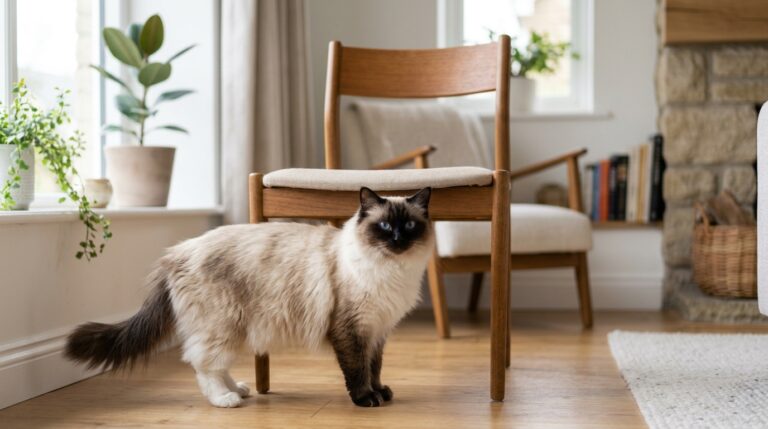
Ragdoll cats are famous for many beautiful features, including their soft coats, relaxed personalities, large size, and striking eyes. Among all of these characteristics, their blue eyes are probably one of the first things people notice. A Ragdoll looking at you with bright blue eyes can have an unforgettable appearance, especially when those eyes contrast with a darker color-point face.
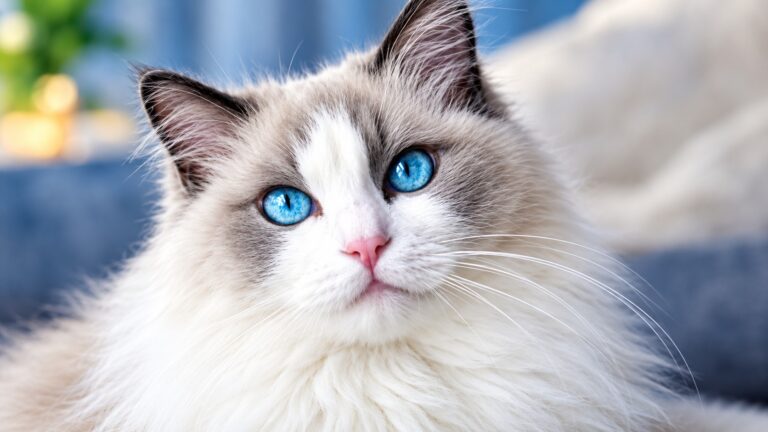
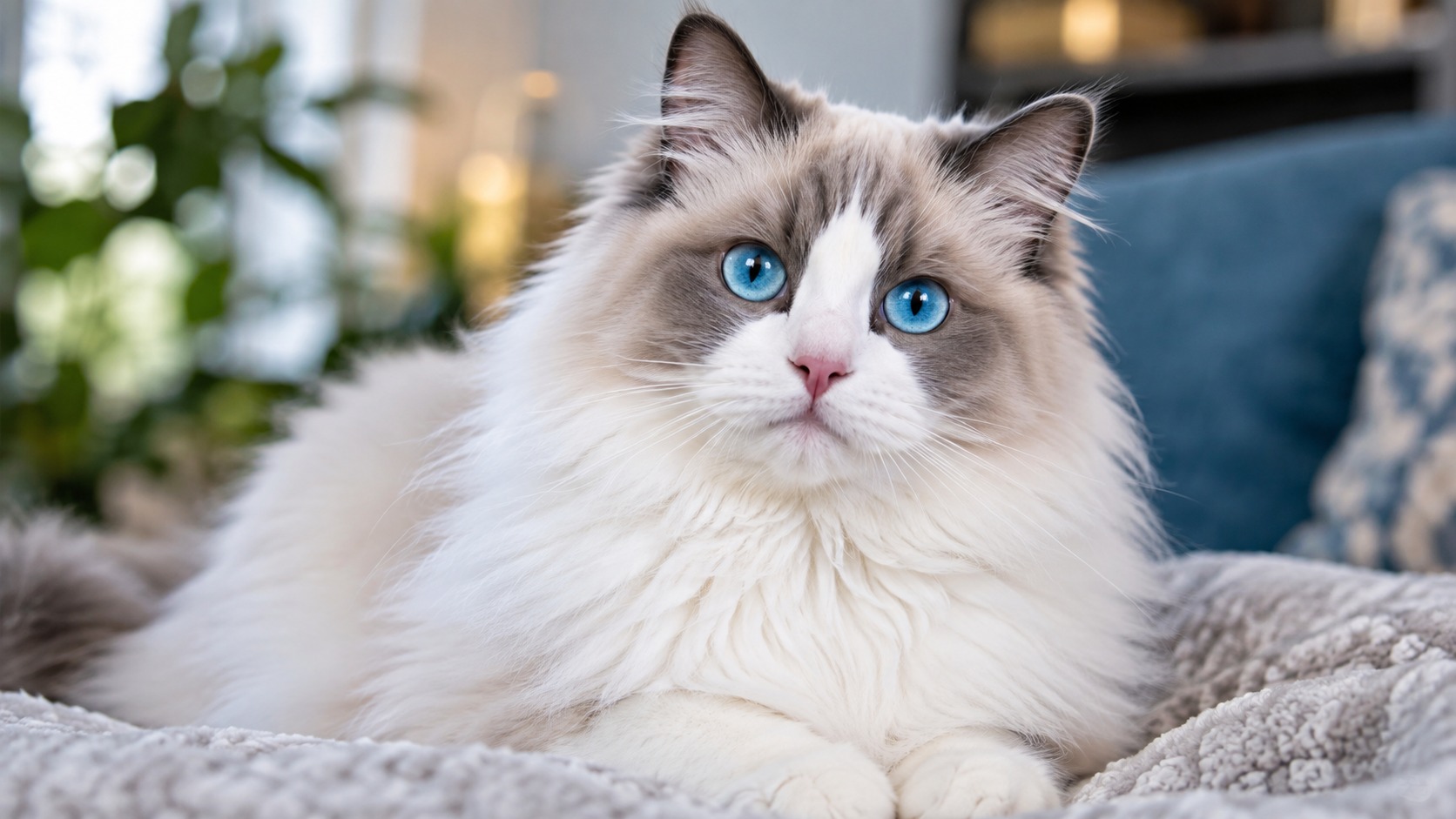
But do all Ragdoll cats have blue eyes? In general, yes. Blue eyes are a defining characteristic of the Ragdoll breed, and recognized Ragdolls are expected to have blue eyes. However, the exact shade can vary from one cat to another. Some may have a pale icy blue appearance, while others can have a richer or deeper blue shade.
Understanding Ragdoll eye color becomes even more interesting when you look at their genetics. Their famous blue eyes are closely connected to the genetics responsible for their color-point coat pattern. Ragdoll kittens also go through changes as they grow, so their appearance during the early weeks of life may look different from that of an adult cat.
If you are considering buying or adopting a Ragdoll, learning about their eye color can help you understand what to expect. It can also help you distinguish normal variation from characteristics that may suggest a cat is not a typical purebred Ragdoll.
Do All Ragdoll Cats Have Blue Eyes?
Yes, blue eyes are a standard characteristic of Ragdoll cats. Unlike some breeds where several eye colors are accepted, Ragdolls are known specifically for their blue eyes.
The shade of blue does not necessarily look identical in every individual cat. One Ragdoll may have relatively light blue eyes, while another may have a stronger, more vivid blue appearance. Lighting can also influence how the eyes look in photographs.
The important point is that the eyes should fall within the blue range associated with the breed. A cat being called a Ragdoll does not automatically mean that every physical feature will match the breed standard, particularly when its ancestry is unknown.
This is why eye color should be considered alongside other characteristics such as body structure, coat pattern, size, facial features, and documented pedigree.
Blue eyes are not simply a fashionable feature of the breed. They are closely connected to the genetic traits that produce the Ragdoll’s distinctive color-point appearance.
Why Do Ragdoll Cats Have Blue Eyes?
The reason Ragdolls have blue eyes is connected to their genetics and the way pigmentation develops in their bodies.
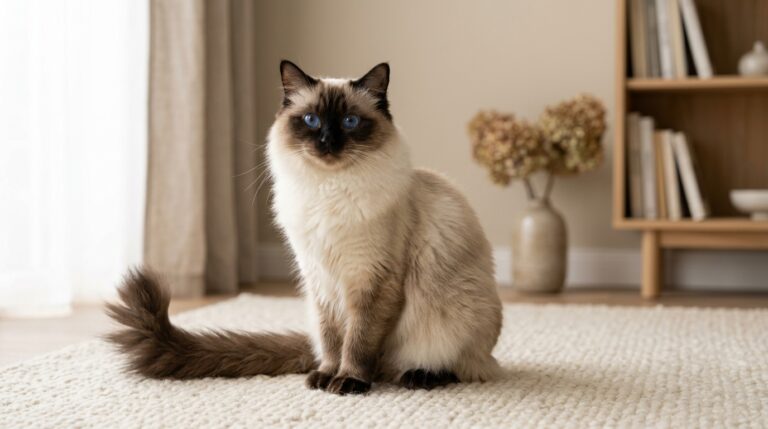
Ragdolls have a color-point pattern. This means that their bodies are generally lighter, while areas such as the ears, face, legs, and tail develop darker coloration. The same genetic mechanism involved in this pattern is associated with their characteristic blue eyes.
The color-point gene affects the production and distribution of pigment. Because of this genetic relationship, the iris of a typical Ragdoll remains blue rather than developing the green, gold, copper, or hazel shades seen in many other cats.
The blue appearance is related to the physical structure of the eye and the limited amount of pigment in the iris. Light entering and scattering through the eye contributes to the color that we see.
This is one reason Ragdoll eyes can appear especially bright. Their blue eyes often stand out strongly against their darker facial markings.
The Role of Color-Point Genetics
Ragdoll coloration is fascinating because the darker points develop differently from the lighter body.
The genetic process involved in color-point patterns is temperature-sensitive. Areas of the body that are naturally warmer tend to have less visible pigment, while cooler areas such as the ears, paws, face, and tail can develop stronger coloration.
This explains why Ragdoll kittens are generally born very light in color. Their darker points become more noticeable as they grow.
The same genetic system is associated with the breed’s blue eyes. Rather than producing heavy pigmentation in the iris, the genetics of the color-point pattern result in the characteristic blue appearance.
Genetics can become complicated when different traits are inherited together, but the basic idea is fairly simple. The genes responsible for the Ragdoll’s distinctive appearance influence both its coat pattern and its recognizable eye color.
Why Do Ragdoll Eyes Look So Bright Blue?
Ragdoll eyes can look remarkably vivid because of their structure and the way light interacts with the iris.
A blue iris does not contain a layer of blue dye or blue pigment in the same way that a colored object might. Instead, the appearance is strongly influenced by how light interacts with the tissues within the eye.
This can make the same Ragdoll’s eyes look slightly different depending on the surroundings.
Natural daylight may make the eyes appear brighter and clearer. Indoor lighting can make them look darker or softer. Camera exposure, background color, and even the angle of a photograph can also influence how blue the eyes appear.
This is why two photographs of the same Ragdoll may seem to show slightly different eye colors.
What Color Are Ragdoll Cats’ Eyes?
The typical eye color of a Ragdoll is blue.
However, blue is not necessarily one single shade. Ragdoll eyes can appear in different tones, ranging from relatively light blue to a deeper and more intense blue.
Some cats may have eyes that look almost icy or pale in certain lighting. Others can have a stronger blue appearance that is particularly noticeable around the darker markings of the face.
The perceived shade can also change with age. A young kitten’s eyes may not immediately have the same visual intensity as those of an older cat.
Photography can make this even more confusing. Bright lighting may wash out a subtle blue, while a darker background can make the same eyes look more saturated.
For this reason, judging a Ragdoll’s eye color from a single photograph is not always reliable.
Do Ragdoll Kittens Always Have Blue Eyes?
Ragdoll kittens are known for developing their characteristic blue eyes, but their eyes can look different during the earliest stages of development.
Like other kittens, newborn Ragdolls begin life with immature eyes. As their vision develops, their eyes gradually become more defined in appearance.
This means you should not expect a newborn kitten to immediately display the same intense blue eyes that you see in photographs of adult Ragdolls.
As the kitten grows, the blue color becomes more apparent. The coat also begins developing its characteristic point coloration, making the kitten increasingly recognizable as a Ragdoll.
This development is one of the most interesting parts of watching a Ragdoll kitten mature.
When Do Ragdoll Kittens Develop Their Blue Eyes?
The eyes become increasingly recognizable as the kitten matures. During the early weeks, their appearance can change as the eyes develop.
By the time the kitten is older, the characteristic blue color is generally much easier to see.
Breeders and experienced Ragdoll owners understand that kittens are still developing during this period. Therefore, judging a very young kitten solely from its early appearance can be misleading.
A responsible breeder will usually provide information about the kitten’s parents, pedigree, health, and expected development rather than relying on appearance alone.
Can Ragdoll Cats Have Eyes That Aren’t Blue?
A typical purebred Ragdoll is expected to have blue eyes. Therefore, a Ragdoll-looking cat with clearly green, yellow, copper, or brown eyes would not match the usual breed characteristic.
However, there are several reasons why people may encounter cats advertised as Ragdolls that do not look exactly like the breed standard.
The cat may be a mixed-breed cat with some Ragdoll ancestry. It may have been incorrectly identified by its previous owner. In some cases, a seller may use the word “Ragdoll” simply because the cat has a similar appearance.
This is why eye color should not be used as the only method of identifying a breed.
A cat can look remarkably similar to a Ragdoll while not being a documented purebred. Conversely, individual Ragdolls can have differences in coat pattern, facial appearance, and other physical characteristics while still belonging to the breed.
Does Ragdoll Coat Color Affect Eye Color?
Ragdolls come in several recognized color and pattern variations. Their coat can look quite different depending on the point color and pattern, but the characteristic blue eyes remain an important part of the breed’s appearance.
Seal Point Ragdolls
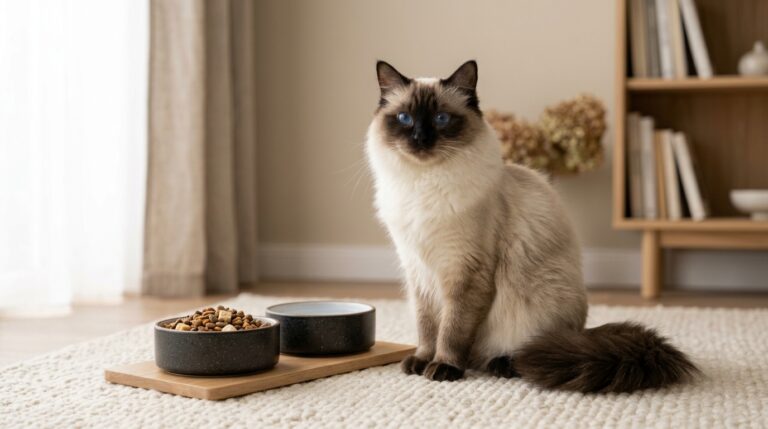
Seal Point Ragdolls have rich, dark brown markings on areas such as the face, ears, legs, and tail.
Their darker points create a dramatic contrast with their lighter body and blue eyes. This combination is one of the classic Ragdoll appearances.
Blue Point Ragdolls
Blue Point Ragdolls have softer gray-blue point coloration.
Their lighter markings can create a more subtle appearance, especially around the face. Their blue eyes can blend beautifully with the overall cool tones of their coat.
Chocolate and Lilac Ragdolls
Chocolate and Lilac Ragdolls have different point colors, giving them distinctive appearances.
Chocolate points tend to have warmer brown tones, while Lilac points are softer and more delicate in appearance.
Despite these coat differences, their characteristic eye color remains blue.
Lynx and Tortie Ragdolls
Lynx and Tortie patterns can add additional visual detail to the coat.
A Lynx Ragdoll may have striped or tabby-like markings within its point pattern. Tortie Ragdolls can have a mixture of colors within certain areas of the coat.
These patterns can make the face particularly interesting, but they do not change the basic expectation of blue eyes for the breed.
What Is the Rarest Ragdoll Eye Color?
Blue is the characteristic Ragdoll eye color, so it would be misleading to describe blue as rare within the breed.
What can vary is the particular shade and intensity of blue.
Some Ragdolls have a softer blue appearance, while others have strikingly deep blue eyes. Individual genetics, age, lighting, and photography can all influence how the color is perceived.
People sometimes see a Ragdoll’s eyes appearing slightly gray, violet, or another shade in photographs. In many cases, this is simply the result of lighting or camera processing rather than a genuinely different eye color.
When evaluating a Ragdoll, it is better to consider the overall appearance and breed characteristics rather than searching for an unusual eye color.
How to Tell if a Ragdoll Has Healthy Eyes
Blue eyes are beautiful, but eye color alone does not tell you whether a cat’s eyes are healthy.
Healthy-looking cat eyes are generally clear and bright. The eyes should not normally have persistent discharge, obvious swelling, severe redness, or a cloudy appearance.
You should also pay attention to sudden changes.
If a Ragdoll develops noticeable redness, excessive tearing, swelling, cloudiness, unusual sensitivity to light, or a significant change in the appearance of one or both eyes, veterinary advice is appropriate.
Eye problems can occur in cats for many different reasons, and they are not necessarily connected to the cat’s breed or eye color.
Regular veterinary care is therefore much more important than simply checking whether the eyes look blue.
Ragdoll Eye Color Compared With Other Cat Breeds
Ragdolls are not the only cats that can have blue eyes.
Several other cat breeds can also display blue eyes, especially breeds with color-point genetics.
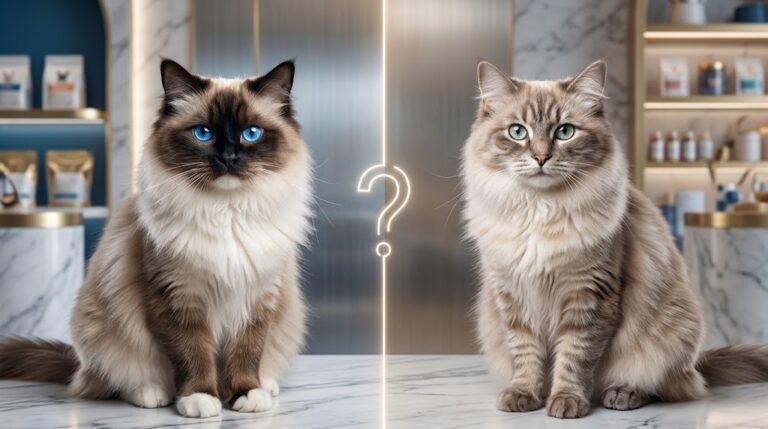
For this reason, blue eyes alone cannot prove that a cat is a Ragdoll.
If you notice persistent redness, discharge, cloudiness, or another unusual change in your cat’s eyes, consulting a veterinarian is important. The Cornell Feline Health Center provides additional information about eye disorders in cats.
The overall appearance matters. Ragdolls are generally recognized by a combination of traits, including their large body, semi-long coat, color-point pattern, facial structure, and famously relaxed temperament.
Other blue-eyed breeds may have very different body shapes, coat textures, or personalities.
This is an important point for anyone shopping for a kitten. A seller showing you a blue-eyed cat does not automatically establish that the kitten is a purebred Ragdoll.
Do Blue Eyes Prove a Cat Is a Ragdoll?
No. Blue eyes are an important Ragdoll characteristic, but they are not enough to confirm breed identity.
Many cats can have blue eyes. A mixed-breed cat can also have beautiful blue eyes and resemble a Ragdoll.
If you are specifically looking for a purebred Ragdoll, documentation is more useful than appearance alone. A reputable breeder should be able to provide appropriate pedigree information and answer questions about the kitten’s parents.
You should also look at the kitten’s overall characteristics.
The coat pattern, body structure, growth expectations, facial features, and other breed traits can provide additional context.
A kitten’s appearance can change significantly as it matures, so responsible breeders should also be willing to discuss how the kitten is expected to develop.
Why Do Some Ragdoll Eyes Look Different in Photos?
Photography can be surprisingly misleading when it comes to eye color.
The same cat can have eyes that appear light blue in one photograph and much darker in another.
Lighting is one of the biggest reasons.
Direct sunlight can create bright reflections across the eyes. Indoor lighting can make them appear softer. A camera’s white balance can also shift the apparent color.
The surrounding colors matter too.
If a Ragdoll is photographed against a dark background, its eyes may appear more vivid. A very bright background can have the opposite effect.
Editing and filters can further change the appearance.
For this reason, photographs should not be used as the only evidence when trying to determine the exact eye color of a Ragdoll.
Can a Ragdoll’s Eye Color Change With Age?
The appearance of a kitten’s eyes can change as the kitten grows and develops.
Young kittens do not necessarily show the same mature appearance immediately. Their eyes develop during early life, and their coat also changes as the point coloration becomes stronger.
Once a Ragdoll reaches maturity, dramatic natural changes in its normal eye color are not expected.
However, a sudden change in eye appearance later in life should not simply be assumed to be a normal age-related change.
If an adult cat’s eyes suddenly become cloudy, unusually dark, unusually pale, red, or otherwise different, a veterinarian should evaluate the change.
FAQs
Do all purebred Ragdolls have blue eyes?
Blue eyes are a defining characteristic of the Ragdoll breed. A typical purebred Ragdoll should have blue eyes, although the exact shade can vary.
What shade of blue should Ragdoll eyes be?
Ragdoll eyes can range from lighter blue to deeper, more vivid blue. Lighting and photography can also influence how the shade appears.
When do Ragdoll kittens’ eyes turn blue?
Kittens’ eyes develop during their early weeks of life. The characteristic blue color becomes easier to recognize as the kitten matures.
Can a Ragdoll’s eye color change with age?
A kitten’s eye appearance can develop as it grows. Once mature, however, a Ragdoll’s characteristic blue eye color should remain relatively consistent.
Why do some Ragdoll eyes look darker in photos?
Lighting, camera settings, background colors, reflections, and image processing can all affect how blue eyes appear in photographs.
Can a Ragdoll have green or yellow eyes?
Green or yellow eyes would not match the typical Ragdoll breed characteristic. If a cat advertised as a Ragdoll has clearly different eye coloration, its breed background may need further verification.
Do all Ragdoll colors have blue eyes?
Ragdolls can have many different coat colors and patterns, but blue eyes remain a characteristic feature across the recognized variations.
Are blue eyes normal for Ragdoll cats?
Yes. Blue eyes are one of the most recognizable and expected features of Ragdoll cats.
Can you identify a Ragdoll by its eyes alone?
No. Blue eyes can occur in other cats as well. Breed identification should consider the cat’s overall physical characteristics and, for a documented purebred, pedigree information.
Final Thoughts
So, do all Ragdoll cats have blue eyes? Blue eyes are one of the defining characteristics of the Ragdoll breed, and typical purebred Ragdolls are expected to have them. What makes these eyes especially fascinating is that their color is closely connected to the genetics behind the breed’s famous color-point coat pattern. The exact shade can vary, ranging from softer blue tones to deeper and more vivid shades, while lighting can make the same eyes look different from one photograph to another.
Ragdoll kittens also need time to develop. Their appearance changes as they grow, and their eyes and coat become more recognizable during their early development. This is why judging a very young kitten based only on a photograph may not provide the complete picture.
It is also important to remember that blue eyes alone do not prove that a cat is a Ragdoll. Other cats can have blue eyes, and mixed-breed cats may share several Ragdoll-like features. If you are looking for a purebred Ragdoll, consider the complete appearance, breeder information, pedigree documentation, and health records rather than relying on eye color alone.
Ultimately, those beautiful blue eyes are an important part of what makes Ragdolls so distinctive. Whether pale and delicate or deep and striking, they remain one of the breed’s most recognizable features.