
How Big Is a Ragdoll Cat? Size, Weight & Growth Guide
If you are wondering how big is a Ragdoll cat, you are looking at one of the larger domestic cat breeds. Ragdolls are famous for their impressive size, long bodies, substantial bone structure, and soft, fluffy coats. They can look especially large because their semi-long fur creates a fuller appearance around the body, neck, legs, and tail. However, their actual size depends on several factors, including genetics, sex, age, nutrition, and overall health.
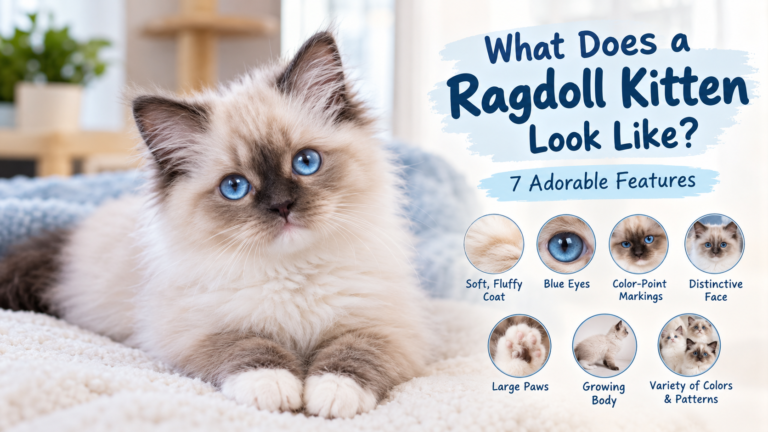
Ragdoll cats are also known for developing more slowly than many other domestic cats. A young Ragdoll may look like an ordinary-sized kitten for quite some time before reaching its full adult proportions. Their bodies continue developing well beyond the first year, and many Ragdolls take several years to reach their mature size and weight. This slower development is one reason people are often surprised by how large a fully grown Ragdoll can become.
Understanding Ragdoll size is useful for anyone considering bringing one into the home. Their larger bodies require enough space to move comfortably, appropriately sized furniture and litter boxes, and a balanced diet that supports steady growth without excessive weight gain. Knowing what is normal for the breed can also help owners monitor changes in weight and body condition throughout the cat’s life.
How Big Is a Ragdoll Cat?
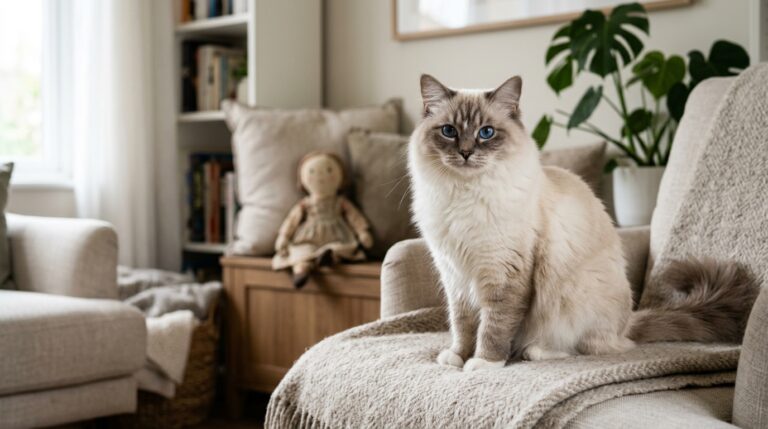
So, how big is a Ragdoll cat when fully grown? Ragdolls are generally considered a large domestic cat breed, with males usually being larger and heavier than females. Adult males commonly reach a substantial body weight, while females tend to have a lighter but still impressive build. Their body length can also be considerable, particularly when their long tail is included.
A healthy adult male Ragdoll may commonly weigh around 15 to 20 pounds, although individual cats can fall outside this range. Adult females often weigh around 10 to 15 pounds. These figures are general ranges rather than strict requirements because cats can naturally differ in body structure, muscle mass, bone size, and genetics.
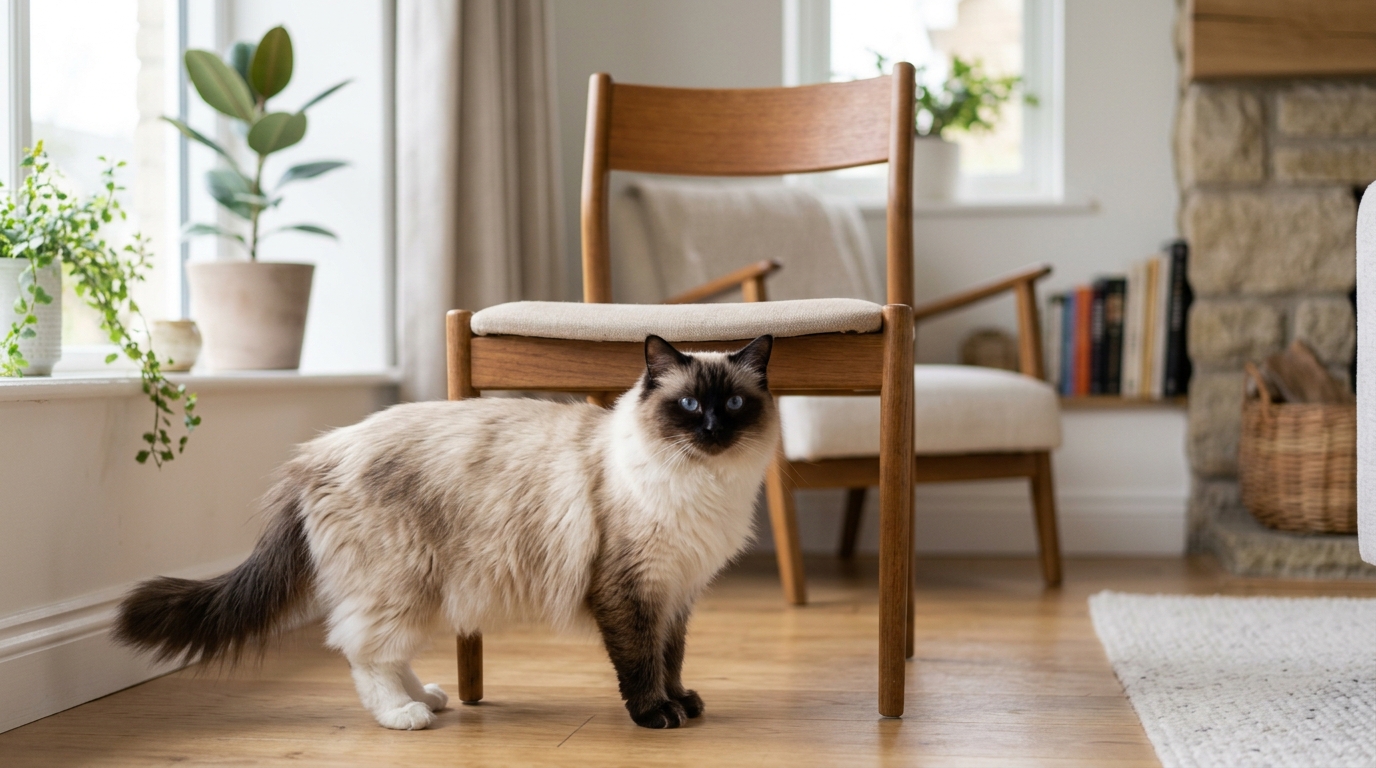
Ragdolls also have a long, muscular body rather than a compact shape. Their legs are moderately long, their chest is broad, and their paws are large and rounded. Their tail is long and heavily furnished with fur, adding to their overall visual size. When a Ragdoll stretches out completely, the cat can appear considerably larger than its standing height would suggest.
Another important factor is their coat. Ragdolls have a soft, semi-long coat that can make their bodies appear wider and heavier than they actually are. The fur around the neck, chest, hind legs, and tail can create an especially fluffy silhouette. Therefore, judging a Ragdoll’s health by appearance alone is not always accurate. Body condition, muscle tone, and veterinary assessment are more useful indicators.
Ragdoll Cat Size and Weight
Weight is one of the easiest ways to understand the overall size of a Ragdoll cat, but it should not be considered independently from body condition. A large-framed Ragdoll can naturally weigh more than a smaller-framed cat without being overweight. Likewise, a cat with a smaller frame may have a healthy weight that is below the typical breed range.
Male Ragdolls are generally the larger sex. A mature male can develop a broad chest, strong shoulders, substantial legs, and a heavier overall frame. Females are usually smaller, although they can still be quite large compared with many average domestic cats.
Ragdoll kittens also gain weight gradually. Their growth does not necessarily happen at the same speed throughout their development. Periods of rapid growth can be followed by slower periods as their bodies mature. Because of this, kitten weight should be evaluated according to age, body condition, growth pattern, and veterinary guidance rather than by comparing a young cat with an adult.
The quality of nutrition also matters. A balanced diet provides the protein, fats, vitamins, minerals, and other nutrients needed for healthy development. Overfeeding does not guarantee a larger or healthier adult Ragdoll. Excess calories can instead contribute to unnecessary body fat and increase the risk of weight-related health problems.
How Tall Is a Ragdoll Cat?
Ragdoll cats have a substantial vertical presence, but their height is not the only feature that makes them appear large. Their body length, chest width, leg structure, and coat all contribute to their overall appearance.
An adult Ragdoll can have a noticeable shoulder height, especially when standing upright. Their legs are proportionate to their long bodies, giving them a balanced appearance. The hind legs are slightly longer than the front legs, which contributes to the breed’s characteristic posture.
Height can vary considerably between individual cats. Genetics play an important role, and males are generally larger than females. Age is also important because a young Ragdoll may continue developing for years after reaching much of its adult height.
When assessing a Ragdoll’s size, it is better to consider the complete body rather than focusing only on shoulder height. A cat with a long torso and tail may have a much greater overall length than its height suggests.
How Long Can a Ragdoll Cat Get?
Ragdolls are known for their long, elegant bodies. Their overall length can be impressive, particularly when the tail is included. The exact measurement varies between individuals, and measuring a cat accurately can be difficult because cats rarely remain perfectly straight.
The body itself is long and substantial. The tail adds significant length and is usually well covered with soft fur. This long tail is one of the breed’s recognizable physical features and contributes to the Ragdoll’s graceful appearance.
A Ragdoll’s long body also affects how much space it needs. Owners may notice that a Ragdoll takes up considerable room when lying down or stretching. Beds, climbing structures, scratching posts, and other furniture should therefore be large and sturdy enough to accommodate the cat comfortably.
Male vs. Female Ragdoll Cat Size
One of the clearest differences in Ragdoll size is between males and females. Male Ragdolls are generally larger and heavier, with broader heads, larger bodies, and more substantial bone structures. Females usually have a slightly smaller frame, although they remain large cats compared with many breeds.
Adult males commonly reach weights in the mid-teens and may sometimes reach around 20 pounds or more depending on their individual genetics and body structure. Females commonly remain within a lower weight range, but healthy variation is normal.
Sex alone does not determine a cat’s final size. Genetics can have a major influence. Two male Ragdolls of the same age can have noticeably different body sizes, while a larger female may be similar in size to a smaller male.
The most important consideration is whether the individual cat maintains a healthy body condition. A heavier cat is not automatically healthier, and a lighter cat is not necessarily underweight. Veterinary assessment and regular monitoring provide a much better way to determine whether a Ragdoll is developing appropriately.
Ragdoll Kitten Growth
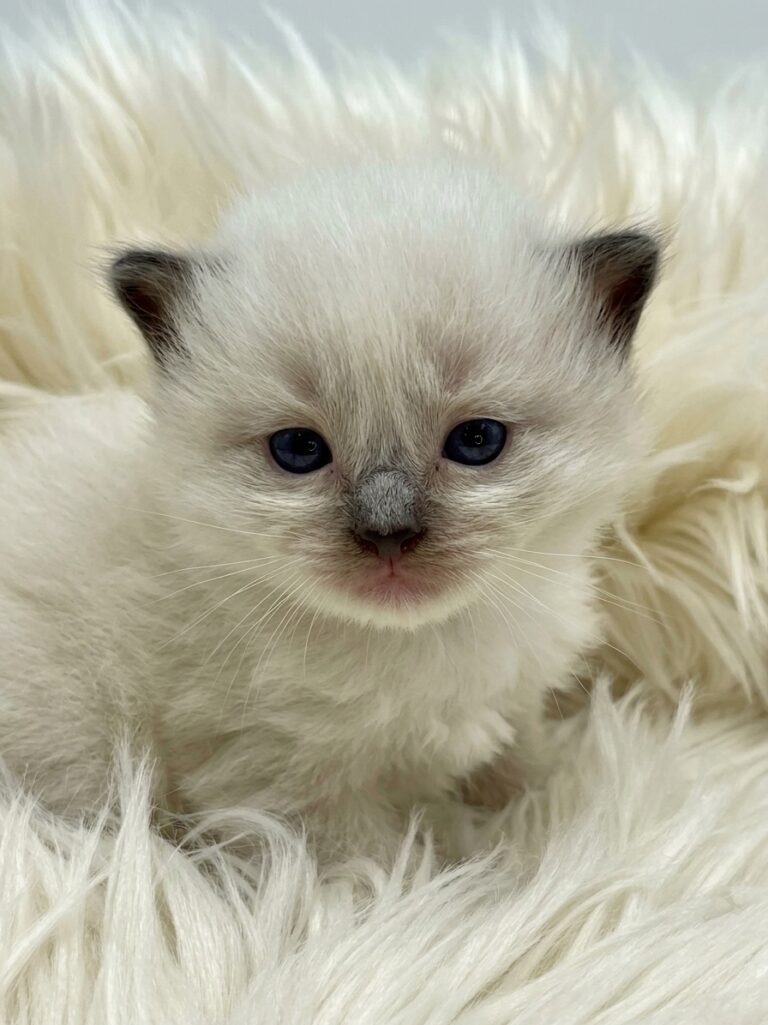
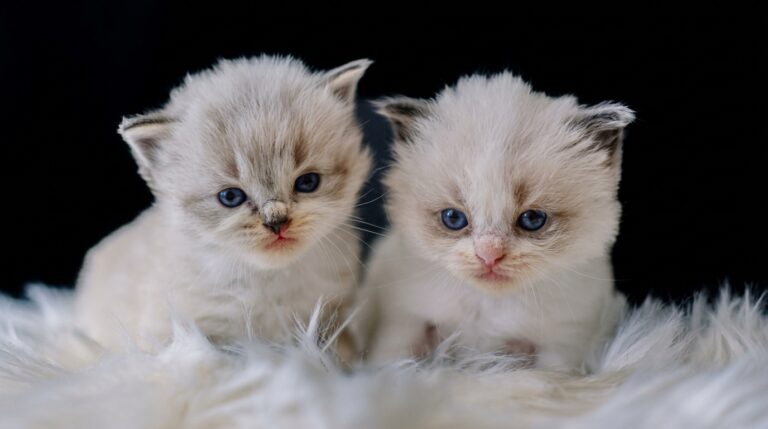
Ragdoll kittens begin life as small, delicate animals, but their growth journey can continue for a surprisingly long time. During the early months, they experience rapid physical development as their bones, muscles, organs, and nervous system mature.
Nutrition is especially important during kittenhood. Growing Ragdolls need an appropriately balanced diet that provides sufficient energy and essential nutrients. Feeding a kitten food formulated for growth can help support healthy development when recommended by a veterinarian.
As the kitten grows, its body gradually becomes longer and more muscular. The legs become stronger, the paws appear larger, and the face begins developing the characteristics associated with an adult Ragdoll. Coat development also changes over time, contributing to a progressively fuller appearance.
Growth rates are not identical for every kitten. Genetics, health, nutrition, and individual development all influence the process. Some kittens may appear larger at a particular age and then grow more slowly later, while others may have a more gradual pattern.
When Do Ragdoll Cats Stop Growing?
Ragdolls are considered slow-maturing cats. Unlike some domestic cats that reach most of their adult size relatively early, Ragdolls can continue developing for several years.
Many Ragdolls reach a significant portion of their adult size during the first year, but their bodies may continue filling out afterward. Muscular development, bone structure, chest width, and overall body proportions can continue changing as the cat matures.
Full physical maturity is therefore different from simply reaching a certain weight. A young Ragdoll may already look large but still have years of development ahead. This extended growth period is one of the defining characteristics that makes the breed interesting to cat owners.
It is important not to encourage excessive feeding in an attempt to speed up growth. Healthy development should be gradual and supported by appropriate nutrition, regular veterinary care, exercise, and adequate rest.
What Affects the Size of a Ragdoll Cat?
Several factors determine how large an individual Ragdoll will become. Genetics is one of the strongest influences. A kitten inherits physical characteristics from its parents, including body structure, bone size, growth potential, and general build.
Sex is another major factor. Male Ragdolls are usually larger than females, although individual variation exists. The size of the parents can also provide useful information about potential adult development, although it cannot guarantee a particular final size.
Nutrition plays an important supporting role. A kitten that receives adequate nutrients can develop normally, while poor nutrition may interfere with healthy growth. At the same time, excessive calorie intake can cause unwanted fat accumulation.
Health conditions can also influence growth. Chronic illness, digestive problems, parasites, nutritional deficiencies, and other medical issues may affect a young cat’s development. Regular veterinary examinations can help identify potential problems before they significantly affect growth.
Activity level and lifestyle influence body composition as well. Regular movement helps support healthy muscles and an appropriate body condition. Indoor Ragdolls can remain healthy and active when they have opportunities for play, climbing, scratching, and exploration.
Does a Ragdoll Cat’s Coat Make It Look Bigger?
Yes, the coat can make a Ragdoll appear considerably larger than its actual body size. Ragdolls have semi-long fur that creates volume around the body. Their neck and chest can look especially full because of the longer hair in these areas.
The tail can also appear very large because of its dense fur. When the cat sits or lies down, the tail may spread around the body and make the entire animal look even bigger.
This visual effect can sometimes make it difficult for owners to judge body condition. A fluffy Ragdoll can appear heavier than it actually is, while weight gain underneath the coat may be difficult to notice.
Regular weighing, gentle body checks, and veterinary examinations can provide a more accurate assessment. Owners should pay attention to changes in body shape and muscle condition rather than relying only on how fluffy the cat looks.
Ragdoll Body Shape and Structure
The Ragdoll’s body structure is an important reason the breed appears so impressive. These cats generally have a long, substantial torso supported by strong legs. Their chest is broad, and their paws are large compared with those of many average-sized domestic cats.
Their heads are medium to large in proportion to their bodies and have a characteristic shape. Their ears are medium-sized and set apart, while their large blue eyes contribute to the breed’s distinctive appearance.
The combination of a long body, broad chest, strong legs, and flowing coat creates a balanced but substantial appearance. A Ragdoll may not look bulky in the same way as some stockier breeds because its body is elongated and graceful.
The tail is another major part of the breed’s proportions. It is long, well furnished, and usually carried in a way that emphasizes the cat’s elegant body structure.
How Big Is a Ragdoll Cat Compared With a Normal Cat?
When people ask how big is a Ragdoll cat, they are often comparing the breed with the average domestic cat. Ragdolls are generally larger and heavier than many typical domestic cats.
An average domestic cat can have a relatively compact body and lighter frame. Ragdolls, by contrast, tend to have longer bodies, heavier bone structures, larger paws, and more substantial overall proportions.
The difference becomes particularly noticeable when an adult Ragdoll is standing beside a smaller cat. However, there is significant variation among domestic cats, so not every Ragdoll will be dramatically larger than every other cat.
Breed size should therefore be viewed as a general tendency rather than a strict measurement. Individual genetics can create considerable differences even within the same breed.
Is a Large Ragdoll Cat Automatically Overweight?
A large Ragdoll is not necessarily overweight. Because the breed is naturally large, a healthy adult can have a substantial body weight without carrying excessive fat.
Body condition is more useful than weight alone. A veterinarian can assess whether a cat has an appropriate amount of body fat and muscle. Owners can also learn how to recognize the basic signs of healthy body condition.
The ribs should not be extremely difficult to feel because of excessive fat, but they should not be sharply visible in a healthy cat either. The abdomen should also have an appropriate shape rather than appearing excessively rounded.
Because Ragdolls have thick coats, visual assessment can be difficult. Regular hands-on checks and periodic weighing can help owners notice gradual changes.
If a Ragdoll’s weight changes significantly over a short period, veterinary advice is appropriate. Sudden weight gain or weight loss can sometimes indicate an underlying issue rather than a normal change in size.
How to Maintain a Healthy Weight in a Ragdoll Cat
Maintaining a healthy weight begins with appropriate nutrition. Ragdolls need a diet that matches their age, activity level, and individual nutritional needs. Portion sizes should be based on the cat’s condition and veterinary recommendations rather than simply filling the food bowl whenever it becomes empty.
Treats should also be included in the overall daily calorie intake. Excessive treats can contribute to gradual weight gain even when the main diet is nutritionally balanced.
Exercise is another important part of weight management. Ragdolls may have a calm and relaxed personality, but they still benefit from regular physical and mental activity. Interactive play can encourage movement and help maintain muscle tone.
Climbing structures, scratching posts, toys, and supervised play sessions can help indoor cats stay active. The goal is not intense exercise but consistent opportunities for movement throughout the day.
Ragdoll Growth During the First Year
The first year is an important period in a Ragdoll’s development. During the early months, the kitten grows rapidly and begins developing the physical characteristics that will eventually define its adult body.
The body becomes longer, the legs become stronger, and the paws become more substantial. Muscle development also increases as the kitten becomes more active and coordinated.
Coat development continues during this period as well. The texture, length, and fullness of the fur may change as the kitten matures.
Owners should avoid comparing their kitten’s growth too closely with another Ragdoll. Even kittens from the same breed can develop at different rates. Consistent growth and good health are generally more meaningful than reaching a specific weight at a particular age.
Ragdoll Growth During the Second Year
The second year can involve continued physical development. Although a Ragdoll may already look like a large adult cat, its body can continue filling out.
Muscle mass and overall body proportions may become more mature. The chest can appear broader, and the body can develop greater substance. The cat may also become more physically coordinated and confident.
This extended maturation is one reason Ragdolls should not be judged solely by their appearance during adolescence. Their final adult proportions may not become obvious until later.
During this period, maintaining an appropriate diet is especially important. A cat that is still growing needs adequate nutrition, but its energy requirements should be adjusted as its growth rate changes.
Ragdoll Growth Beyond Two Years
Some Ragdolls continue to mature beyond their second year. The exact timing varies between individuals. A cat may reach much of its adult size relatively early while continuing to develop muscle and body substance afterward.
Genetics have a strong influence on this process. Some bloodlines may produce particularly large cats, while others may produce more moderately sized individuals.
The important goal is healthy maturity rather than achieving the largest possible body size. Excessive weight should never be treated as a sign of successful growth.
A healthy adult Ragdoll should have good muscle tone, appropriate body condition, normal energy levels, and a diet suited to its lifestyle.
How to Tell if Your Ragdoll Is Growing Normally
Monitoring growth over time is more useful than focusing on one isolated measurement. Regular weighing can help owners identify whether their cat is gaining weight gradually or experiencing an unexpected change.
A kitten’s growth should generally follow a consistent pattern. If growth suddenly stops, accelerates unusually, or reverses, veterinary advice may be necessary.
Other signs of healthy development include normal appetite, good energy, healthy coat condition, regular digestion, and appropriate activity. Changes in these areas can sometimes provide early clues that something is wrong.
Regular veterinary visits are particularly important during kittenhood. A veterinarian can monitor growth, body condition, dental development, vaccinations, parasite prevention, and general health.
Ragdoll Size and Nutrition
Nutrition has a direct relationship with healthy development, but feeding more food does not necessarily produce a larger or healthier Ragdoll. The body requires the right balance of nutrients rather than simply more calories.
Protein is important for muscle development and tissue maintenance. Fats provide concentrated energy and support various biological functions. Vitamins and minerals contribute to bone development, immune function, and overall health.
Kittens generally have different nutritional needs from adult cats. A diet designed for growth can provide the nutrients needed during development. As the cat matures, its nutritional needs change and the feeding plan may need to be adjusted.
Fresh water should also be available at all times. Proper hydration supports many aspects of normal health and is especially important for cats that consume primarily dry food.
Does a Bigger Ragdoll Need More Space?
Because Ragdolls are large cats, adequate living space is important. They need enough room to walk, stretch, play, rest, and move around without constantly encountering obstacles.
Large cat trees should have sturdy platforms that can safely support their weight. Scratching posts should also be tall and stable enough to allow the cat to stretch its entire body.
Litter boxes need to be appropriately sized. A large cat may find a small litter box uncomfortable, which can contribute to litter box avoidance.
Sleeping areas should also provide enough room for the cat to stretch comfortably. Ragdolls often enjoy relaxing in comfortable locations, so providing several suitable resting areas can make the home more accommodating.
Ragdoll Cat Size and Grooming
The Ragdoll’s size and coat also affect grooming requirements. Their semi-long fur needs regular attention to reduce tangles and maintain a healthy appearance.
Brushing can help remove loose hair and prevent mats. It also gives owners an opportunity to notice changes in the skin, coat, body shape, or weight.
Because a thick coat can hide the underlying body, grooming sessions can provide useful opportunities to assess the cat’s physical condition. Any unusual lumps, skin changes, or sudden changes in body shape should be discussed with a veterinarian.
Regular grooming can also help reduce the amount of loose hair around the home. The exact grooming frequency depends on the individual cat’s coat, lifestyle, and tendency to develop tangles.
Ragdoll cats are recognized as a large, slow-maturing cat breed with distinctive physical characteristics, including a substantial body, long proportions, and a semi-long coat. Their size can vary between individual cats, so breed information should be considered alongside the cat’s age, sex, genetics, and overall body condition. For additional information about Ragdoll breed characteristics and standards, readers can visit the The International Cat Association (TICA).
How Big Is a Ragdoll Cat at Different Ages?
There is no single size that every Ragdoll should reach at every age. Growth varies from kitten to kitten, and male and female Ragdolls generally follow different growth patterns.
Young kittens are naturally much smaller than adults. During the first year, they undergo major changes in body length, muscle development, and overall proportions. Their weight increases as their bones and muscles develop.
During adolescence, the cat may look somewhat lean or unevenly proportioned as different parts of the body mature at different rates. Later, the chest and body may become more substantial as the cat approaches adulthood.
By full maturity, a healthy Ragdoll should have developed the breed’s long, strong body. However, individual differences in size, weight, and body shape will still occur.
Why Some Ragdoll Cats Are Smaller
Not every Ragdoll becomes extremely large. Several factors can contribute to a smaller adult size, including genetics, sex, individual body structure, and health history.
Female Ragdolls are generally smaller than males. A cat from smaller-sized parents may also inherit a more moderate frame.
Being smaller does not automatically mean a cat is unhealthy. If the cat is maintaining a stable body condition, eating normally, remaining active, and receiving appropriate veterinary care, a smaller adult size can simply be natural variation.
Owners should focus on the individual cat’s health rather than trying to make it reach a specific weight.
Why Some Ragdoll Cats Are Larger
Larger Ragdolls may inherit a substantial frame from their parents. Male cats are also generally more likely to reach the upper end of the breed’s typical size range.
Genetics can influence bone structure, body length, muscle development, and overall growth potential. Nutrition and health support normal development but cannot completely change the genetic size potential of a cat.
A large Ragdoll can be perfectly healthy when its body weight is appropriate for its frame. The important distinction is between a naturally large body and excessive body fat.
FAQs
How big can a Ragdoll cat get?
A fully grown Ragdoll can become a large domestic cat, with adult males often reaching around 15 to 20 pounds and females commonly weighing around 10 to 15 pounds. Individual cats can fall outside these ranges because genetics, sex, body structure, nutrition, and health all influence adult size.
Are Ragdoll cats bigger than normal cats?
Ragdolls are generally larger than many average domestic cats. Their long bodies, substantial bone structure, large paws, and fluffy coats contribute to their impressive appearance. However, individual domestic cats can vary significantly in size.
How much should a full-grown Ragdoll cat weigh?
There is no single ideal weight for every adult Ragdoll. Adult males commonly fall around 15 to 20 pounds, while females are often around 10 to 15 pounds. A veterinarian should evaluate body condition and frame size when determining whether an individual cat has a healthy weight.
At what age is a Ragdoll cat fully grown?
Ragdolls mature slowly compared with many domestic cats. They may reach much of their adult size during the first couple of years but can continue developing their body structure and muscle mass for several years. The exact timing varies between individuals.
Are male Ragdolls bigger than females?
Yes, male Ragdolls are generally larger and heavier than females. Males tend to have broader bodies, heavier bone structures, and greater overall body mass. However, individual genetics can cause considerable variation.
How long can a Ragdoll cat get?
Ragdolls have long bodies and long, heavily furnished tails. Their exact total length varies between individual cats, and measurements can be difficult because cats do not always remain completely straight. Their long body proportions are an important part of their distinctive appearance.
Is a 20-pound Ragdoll cat normal?
A 20-pound Ragdoll can be within the upper end of a healthy adult male’s natural size range, but weight alone cannot determine whether a cat is healthy. Body frame, muscle mass, body condition, and overall health should be considered. A veterinarian can provide the most accurate assessment.
Do Ragdoll cats keep growing after one year?
Yes. Ragdolls are slow-maturing cats and can continue developing after their first year. Their body may become longer, broader, and more muscular as they mature. Growth patterns vary between individuals.
Final Thoughts
If you have been asking how big is a Ragdoll cat, the answer is that Ragdolls are naturally large, long-bodied cats with substantial bone structure and a distinctive fluffy coat. Adult males are generally larger than females, and some individuals can reach impressive weights while remaining healthy.
Ragdoll growth also takes longer than many people expect. A kitten may appear relatively small during its early months and continue developing for several years. Genetics, sex, nutrition, health, activity, and individual body structure all contribute to the final adult size.
It is important to remember that there is no single perfect size for every Ragdoll. A healthy cat may be smaller or larger than the commonly discussed breed ranges. Weight should always be considered alongside body condition, muscle development, age, and overall health.
Providing balanced nutrition, regular activity, appropriate living space, grooming, and routine veterinary care gives a Ragdoll the best foundation for healthy development. Rather than trying to make a Ragdoll as large as possible, owners should focus on helping the cat maintain a healthy body throughout its growth and adult life.
The impressive size of the Ragdoll is only one part of what makes this breed special. Their long bodies, beautiful coats, large paws, striking blue eyes, and generally relaxed nature have made them popular among cat lovers. Understanding their natural growth pattern can help owners appreciate how their Ragdoll changes from a small kitten into a magnificent adult cat.