
When Do Ragdoll Cats Stop Growing? Fascinating Growth Facts
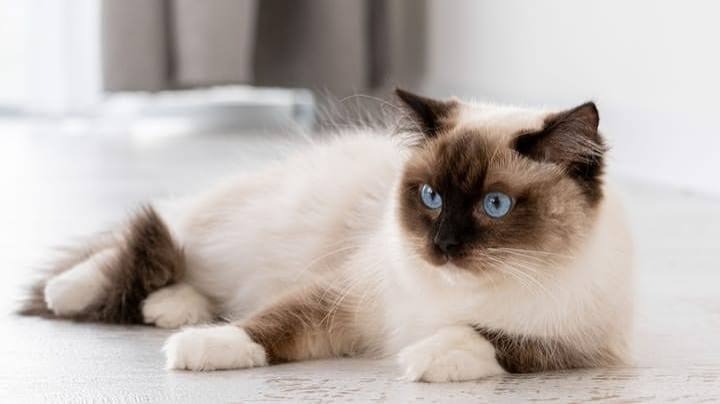
Ragdoll cats are famous for their gentle personalities, beautiful blue eyes, soft coats, and surprisingly large bodies. One of the most interesting things about this breed is that Ragdolls do not mature as quickly as many other domestic cats. If you have a Ragdoll kitten, you may notice that your cat continues getting longer, heavier, and more muscular even after reaching the age when many other cats are already considered fully grown. This naturally raises an important question: when do Ragdoll cats stop growing?
Most Ragdoll cats reach their full physical maturity between about three and four years of age. Some may reach most of their adult size earlier, while others continue developing gradually toward the later part of this range. Their slow growth is one of the characteristics that makes the breed unique. A Ragdoll can look like an adult cat during its first or second year while still having considerable physical development ahead.
Understanding the Ragdoll growth timeline can help owners know what to expect as their kitten becomes an adult. Growth is not simply about gaining weight. Bones, muscles, body length, chest width, head shape, and coat development can all change as a Ragdoll matures. Genetics, nutrition, health, activity, and overall care can also influence how quickly an individual cat develops.
When Do Ragdoll Cats Stop Growing?
Ragdoll cats generally stop growing around three to four years of age. This is considerably slower than the development of many other domestic cat breeds. While an average cat may reach most of its adult size within the first year or two, Ragdolls can continue developing well beyond that period.
The important thing to understand is that growth does not happen at the same speed throughout the entire four-year period. Ragdoll kittens experience their fastest physical changes during kittenhood, particularly during their first year. After that, growth usually becomes more gradual. During the second year, a Ragdoll may continue gaining body mass and developing stronger muscles. During the third and fourth years, the changes may become less obvious but can still contribute to the cat’s final adult appearance.
A Ragdoll reaching its adult size does not necessarily mean that every part of its appearance stops changing at exactly the same time. Its body may reach a mature size while its coat continues becoming fuller, its muscles become more developed, and its overall appearance becomes more substantial.
Male Ragdolls are generally larger than females, although individual variation is considerable. Genetics play an important role in determining the eventual size of a particular cat. A kitten from large parents may have a different growth pattern from one whose parents are smaller.
Ragdoll Cat Growth Timeline
Understanding the different stages of development makes it easier to appreciate why Ragdoll cats take several years to mature. Their growth happens gradually, with different physical characteristics developing at different times.
Birth to 3 Months
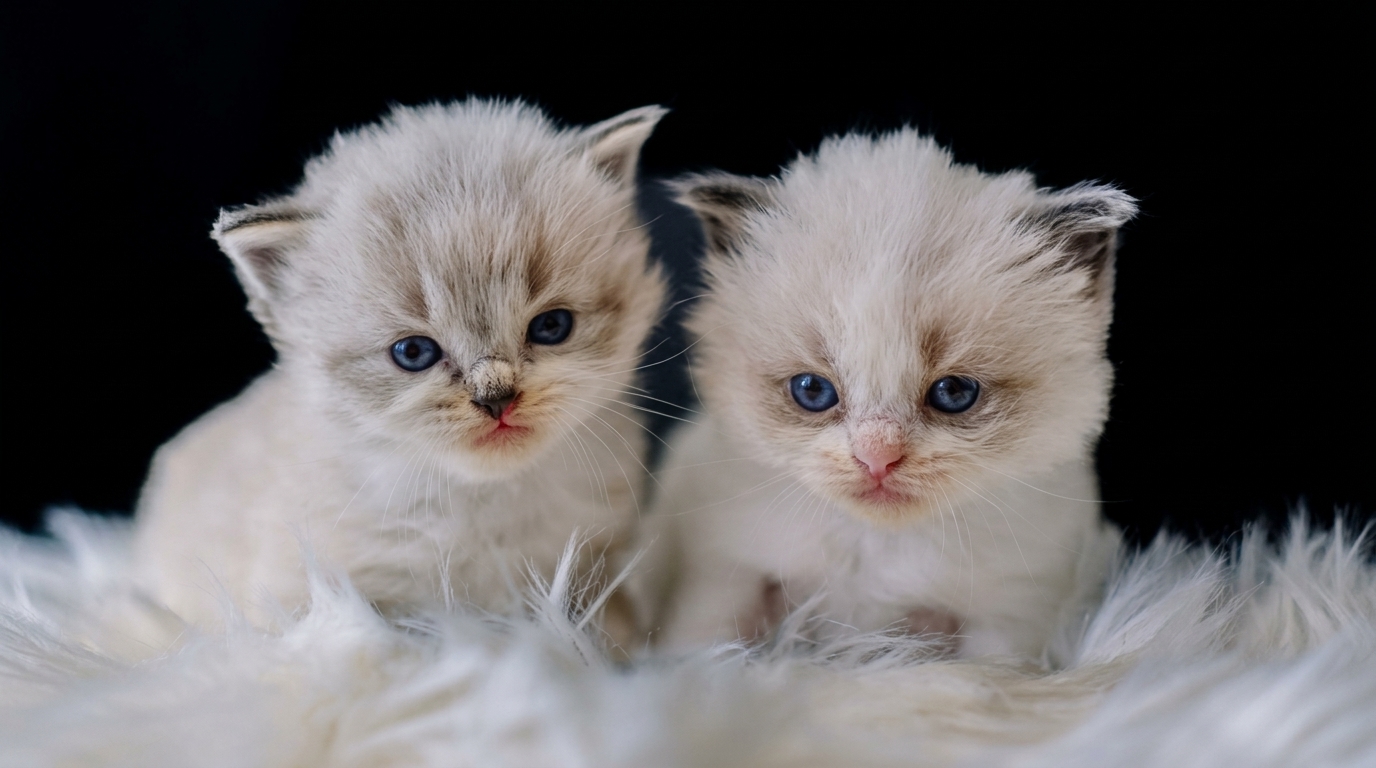
The first three months of a Ragdoll’s life are a period of rapid development. Newborn kittens are extremely dependent on their mother and spend much of their early life feeding and sleeping. Their bodies change quickly as they gain strength and begin exploring their surroundings.
During this stage, a kitten develops coordination, balance, and basic movement skills. Its muscles become stronger as it starts walking and playing. Social development also begins during these early months, making appropriate interaction and a safe environment important.
Nutrition is particularly important at this age because the kitten’s body is building bones, muscles, organs, and other tissues. A healthy diet designed for growing kittens provides the nutrients necessary for normal development.
By three months, a Ragdoll kitten can look noticeably different from its newborn appearance. Its body becomes more proportionate, its movements become more confident, and its personality starts becoming easier to recognize.
3 to 6 Months
Between three and six months, Ragdoll kittens continue growing rapidly. Their legs become stronger, their bodies become longer, and their activity levels often increase. This is a stage when owners may notice significant changes from month to month.
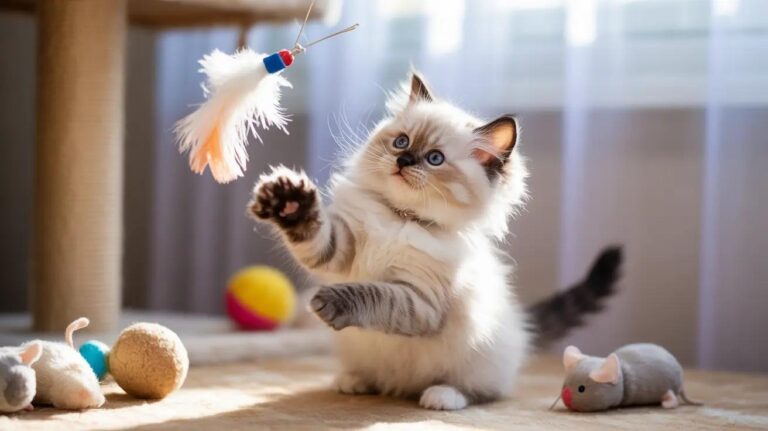
Play becomes an important part of physical development. Running, climbing, jumping, and interacting with toys help kittens develop coordination and muscle strength. Although Ragdolls are often known for their relaxed personalities, young Ragdolls can still be energetic and playful.
During this period, the kitten’s body may appear somewhat lean compared with its eventual adult form. This is not necessarily a sign that the cat will remain small. Ragdolls have a long growth period, so their final size cannot be judged accurately based only on their appearance at a few months of age.
Regular veterinary care is also important during kittenhood. Routine health checks allow potential developmental concerns to be identified early and help owners maintain an appropriate vaccination and preventive-care schedule.
6 to 12 Months
The period from six months to one year represents another important stage in Ragdoll development. The kitten may become considerably larger and stronger while still maintaining youthful behavior.
By the end of the first year, many Ragdolls have reached a substantial portion of their eventual adult size. However, they are generally not finished growing. Their bodies can continue becoming longer, wider, heavier, and more muscular over the following years.
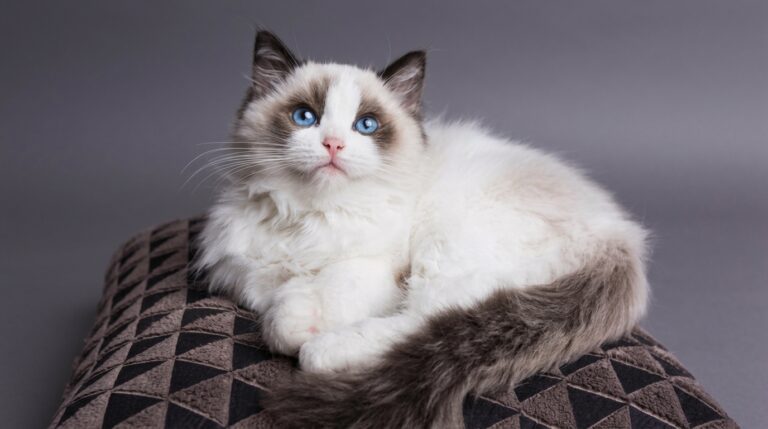
A Ragdoll at one year can therefore look like a large adult cat while still being physically immature. This is one reason owners sometimes underestimate how much additional development may occur.
The coat may also become more impressive as the cat matures. Ragdolls are long-haired cats, and their full adult coat can take time to develop. Changes in coat texture, fullness, and overall appearance may continue as the cat gets older.
1 to 2 Years
The second year is especially interesting because the dramatic kitten growth begins to slow, but development continues. A Ragdoll that seemed to grow rapidly during its first year may now appear to be changing more gradually.
During this period, the cat may continue gaining muscle and body mass. Its chest can become broader, its shoulders may appear more developed, and its overall body can look more substantial.
The face and head may also develop a more mature appearance. Instead of having the softer proportions associated with a young kitten, the adult structure gradually becomes more noticeable.
Although the cat may already behave like an adult, physical maturity is still progressing. This is one of the defining characteristics of the breed.
2 to 3 Years
Between two and three years, many Ragdolls continue filling out. The rate of growth is slower than during kittenhood, but the cat can still become noticeably heavier and more muscular.
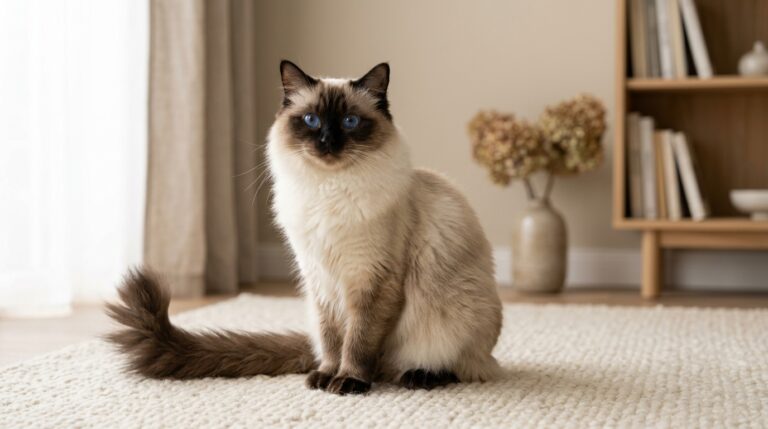
At this age, owners may start seeing the mature proportions that make Ragdolls so recognizable. Their long bodies, substantial frames, large paws, and full coats can become increasingly prominent.
This stage also highlights the importance of distinguishing healthy development from excessive weight gain. A large breed cat naturally needs to develop significant body mass, but additional weight is not automatically healthy growth. A veterinarian can help determine whether a cat’s body condition is appropriate.
3 to 4 Years
By three to four years of age, most Ragdolls are approaching or have reached full physical maturity. Growth may become difficult to notice because changes are much slower than during kittenhood.
The cat’s adult body structure should now be well established. Muscle development, body length, chest size, and overall proportions have generally reached their mature form.
Some individual Ragdolls may continue making subtle physical changes beyond four years, particularly in body condition and coat appearance. However, the major growth period is generally considered complete by this stage.
How Big Do Ragdoll Cats Get?
Ragdoll cats are among the larger domestic cat breeds. Their size is one of the features that attracts many people to them, but their impressive appearance is not determined by weight alone.
Adult male Ragdolls are typically larger and heavier than females. Males can develop a particularly substantial frame, while females are generally somewhat smaller but can still be large compared with many other domestic cats.
Body length also contributes to the breed’s large appearance. Ragdolls have long bodies and relatively large frames, which can make them look bigger than their weight alone might suggest.
Their large paws, broad chest, muscular body, and long coat further contribute to their overall appearance. A healthy Ragdoll should have a balanced body rather than simply being as heavy as possible.
Because individual cats vary, there is no single weight that every Ragdoll should reach. Genetics, sex, nutrition, health, and body composition all influence adult size.
Why Do Ragdoll Cats Take So Long to Mature?
The slow maturation of Ragdoll cats is closely associated with the breed’s natural characteristics. Unlike many cats that reach physical maturity relatively quickly, Ragdolls have a prolonged development period.
Their large body structure requires time for bones and muscles to develop. A kitten cannot simply become a fully mature large cat overnight. The body gradually builds the structure needed to support its adult size.
Genetics are another major factor. Growth patterns are inherited, meaning the size and development of a Ragdoll can be influenced by its parents and broader genetic background.
The breed’s coat also contributes to the perception of maturity. Ragdolls can develop a fuller and more impressive coat as they age, so their appearance may continue changing even after their primary skeletal growth has slowed.
Slow maturation is not necessarily a sign of a developmental problem. In a healthy Ragdoll, gradual growth is an expected part of the breed’s development.
Seven Fascinating Ragdoll Growth Facts
Ragdolls Can Grow for Several Years
One of the most remarkable facts about Ragdoll cats is that their growth period can last much longer than many people expect. Reaching one year of age does not mean a Ragdoll has finished growing.
The cat may continue developing for another two or even three years. This extended growth period contributes to the breed’s impressive adult size and mature appearance.
Male Ragdolls Are Usually Larger
Male Ragdolls generally develop larger frames than females. Their bodies can become particularly substantial as they move through adulthood.
However, sex does not determine size by itself. Genetics and individual development also matter, which means there can be considerable variation between cats.
Ragdolls Continue Filling Out After Kittenhood
A Ragdoll can appear fully grown while still developing muscle and body mass. This filling-out process can continue well after the first birthday.
The change may be gradual enough that owners do not notice it immediately. Comparing photographs taken several months apart can sometimes reveal how much the cat has matured.
Weight Alone Does Not Define Growth
A healthy Ragdoll should not be judged by weight alone. Two cats can have different weights while both having healthy body conditions.
Muscle mass, frame size, body length, and overall proportions are important when assessing physical development. Excess body fat should not be mistaken for normal breed growth.
Genetics Have a Major Influence
A Ragdoll’s eventual size and development pattern are strongly influenced by genetics. Parents with larger frames may produce kittens that grow into larger adults, although genetics can produce variation even within the same litter.
This means that kitten size alone cannot provide a perfect prediction of final adult size.
Nutrition Supports Healthy Development
Proper nutrition is essential throughout the Ragdoll’s growth period. Growing cats require balanced nutrition to support bones, muscles, organs, and other tissues.
Feeding should be appropriate for the cat’s life stage, while portion sizes should be adjusted according to the cat’s individual needs and body condition.
Nutrition is especially important for a large breed because excessive weight can put unnecessary stress on developing joints and the overall body.
Ragdolls Mature Slowly but Do Not Grow at the Same Rate Forever
Although Ragdolls may continue developing until around three or four years, their growth rate gradually slows. The rapid changes seen during the first year are not maintained throughout the entire growth period.
Instead, development becomes progressively more subtle. By the later stages, changes may involve muscle development, body proportions, and coat maturity rather than dramatic size increases.
What Factors Affect Ragdoll Cat Growth?
Several factors can influence how quickly and how large a Ragdoll develops. Genetics are among the most important, but they are not the only consideration.
Nutrition has a direct role in healthy development. A kitten that receives balanced nutrition has the dietary foundation needed to support normal growth. Poor nutrition can interfere with development, while excessive calorie intake can contribute to unhealthy weight gain.
Health conditions can also affect growth. Chronic illness, digestive problems, parasites, or other health concerns can interfere with normal development. A kitten that consistently fails to gain weight or shows other concerning symptoms should be evaluated by a veterinarian.
Activity levels can influence body composition as well. Regular age-appropriate activity helps kittens develop coordination and muscle strength. Ragdolls may be calm compared with some other cats, but they still benefit from opportunities for movement and play.
Spaying or neutering can also influence body weight and energy requirements. After these procedures, some cats may require adjustments to their food intake because their calorie needs can change.
How Can You Tell If a Ragdoll Is Still Growing?
There are several signs that can indicate a Ragdoll is still developing. Changes in body length are one of the most noticeable signs during the earlier stages. A young cat may gradually become longer and more substantial as it matures.
Weight can also increase during normal development, although weight should always be considered alongside body condition. A gradual increase in healthy body mass is different from rapid fat accumulation.
Muscle development is another important sign. As a Ragdoll matures, the shoulders, chest, legs, and other areas can become more developed.
The cat’s coat can also change. Adult Ragdolls often have a fuller and more developed coat than young kittens. Coat development may continue even when the cat’s skeletal growth has slowed.
Behavior is less useful for determining physical maturity. A Ragdoll may behave like an adult long before its body has completed its development.
Do Male and Female Ragdoll Cats Grow at Different Rates?
Male and female Ragdolls generally differ in adult size, with males usually being larger. However, their overall growth pattern follows the same broad principle of slow maturation.
Female Ragdolls may reach a substantial adult size without becoming as heavy as males. Males often continue developing a particularly large frame and greater body mass.
Individual genetics can create exceptions to general patterns. A smaller male may weigh less than a particularly large female, so sex should not be used as the only way to estimate adult size.
The most useful approach is to monitor the individual cat’s growth over time. Regular veterinary examinations can help determine whether development is progressing appropriately.
How Much Should a Growing Ragdoll Cat Eat?
Growing Ragdolls need sufficient nutrition to support their developing bodies, but feeding should be balanced carefully. A kitten’s nutritional requirements differ from those of a mature adult cat.
High-quality kitten food formulated for growth can provide important nutrients during the early developmental stages. As the cat becomes older, feeding requirements can gradually change.
Portion size should not be determined solely by the breed’s potential adult size. A Ragdoll kitten needs enough food to support normal growth, but unrestricted feeding can contribute to excessive weight gain in some cats.
Fresh water should always be available. Hydration is an important part of maintaining overall health and supporting normal bodily functions.
Because nutritional needs can vary according to age, activity, body condition, and health, discussing feeding with a veterinarian can help establish an appropriate plan.
When Should You Be Concerned About a Ragdoll’s Growth?
Slow growth by itself is not necessarily concerning because Ragdolls naturally mature gradually. However, significant changes in appetite, energy, body condition, or weight may require attention.
A kitten that repeatedly fails to gain weight may need veterinary assessment. Sudden weight loss is also different from the normal slowing of growth that occurs as a Ragdoll gets older.
Other signs such as persistent digestive problems, unusual tiredness, poor appetite, changes in drinking behavior, or visible physical abnormalities should not simply be attributed to the breed’s slow growth.
Regular veterinary checkups provide an opportunity to monitor development over time. A veterinarian can assess body condition and determine whether the cat’s growth pattern appears appropriate.
Ragdoll Cat Growth Compared With Other Cat Breeds
Ragdolls are known for their slow maturation, which distinguishes them from many domestic cats. While many cats reach their mature size relatively early, Ragdolls can continue developing for several years.
This difference is particularly noticeable when comparing a one-year-old Ragdoll with a mature Ragdoll. The younger cat may already be large but can still have a narrower body and less developed muscle structure.
The extended growth period is part of what gives mature Ragdolls their distinctive substantial appearance. Their adult bodies can be long, muscular, and broad while remaining proportionate.
Other large cat breeds can also have extended development periods, so Ragdolls are not unique in being slow to mature. However, their three-to-four-year development timeline is an important characteristic for prospective owners to understand.
Can a Ragdoll Cat Grow After Two Years?
Yes, a Ragdoll can continue developing after two years of age. Although growth is much slower by this point, the cat may still gain muscle, body mass, and mature physical proportions.
The changes may not be as dramatic as they were during kittenhood. Instead, the cat gradually becomes more substantial and develops the mature characteristics associated with the breed.
Some owners may assume their two-year-old Ragdoll is finished growing because the cat already looks large. However, additional development can occur during the following year or two.
Proper nutrition is an important part of healthy development for every growing Ragdoll cat. Owners who want reliable information about feline nutrition can also consult the Cornell Feline Health Center, which provides educational resources about cat health, nutrition, and general care. Using trustworthy veterinary information alongside advice from your own veterinarian can help you make better decisions about your Ragdoll’s diet as it grows.
Can a Ragdoll Cat Grow After Four Years?
Major physical growth is generally complete by around four years of age, although individual cats can continue experiencing subtle changes afterward.
A mature Ragdoll may gain or lose weight depending on diet, activity, health, and lifestyle. Changes in body condition should not automatically be considered continued growth.
The coat can also change with age and seasonal cycles, making the cat appear different even when its skeletal size remains stable.
If a mature Ragdoll suddenly becomes much heavier or noticeably changes body shape, it is better to consider body condition and health rather than assuming the cat is still naturally growing.
How Can You Keep a Growing Ragdoll Healthy?
Supporting a growing Ragdoll involves more than providing enough food. The cat needs a balanced lifestyle that includes appropriate nutrition, regular veterinary care, physical activity, mental stimulation, and a safe living environment.
Play is useful for developing coordination and maintaining healthy muscle. Interactive toys can encourage movement while also providing mental stimulation.
Weight should be monitored throughout development. Because Ragdolls are naturally large, it can sometimes be difficult to distinguish normal breed size from excess body fat. Regular veterinary assessments can help owners understand whether their cat’s body condition is healthy.
Dental care, parasite prevention, vaccinations, grooming, and routine health checks are also important parts of responsible cat ownership.
FAQs
When do Ragdoll cats stop growing?
Most Ragdoll cats reach their full physical maturity at around three to four years of age. Growth slows considerably after the first year, but development can continue gradually for several more years.
At what age is a Ragdoll cat fully grown?
A Ragdoll is generally considered fully grown around three to four years old. Individual cats can mature at slightly different rates.
Do Ragdoll cats keep growing after two years?
Yes. Ragdolls can continue developing after their second birthday, particularly in muscle mass, body structure, and overall physical maturity.
How big does a Ragdoll cat get?
Ragdolls are a large domestic cat breed. Adult males are generally larger than females, but individual size varies according to genetics, sex, nutrition, health, and body composition.
Are male Ragdolls bigger than females?
Generally, yes. Male Ragdolls tend to have larger and heavier frames than females, although individual cats can vary considerably.
Can a Ragdoll cat grow after four years?
Major growth is usually complete by around four years. After that, changes in weight or body condition can still occur, but they should not necessarily be considered normal growth.
How can I tell if my Ragdoll is overweight?
Body condition is more useful than weight alone. A veterinarian can assess your cat’s body shape, muscle condition, and fat coverage and help determine whether its weight is appropriate.
Why is my Ragdoll still small at one year?
Ragdolls mature slowly, so a one-year-old cat may still have substantial growth ahead. Genetics, sex, nutrition, and individual development all influence final adult size.
Do Ragdoll cats grow bigger after being neutered?
Neutering does not mean that a Ragdoll will automatically become larger. Changes in metabolism and activity after neutering can affect body weight, so food portions and activity may need to be managed appropriately.
Does nutrition affect how big a Ragdoll becomes?
Nutrition supports healthy development, but it does not guarantee a particular adult size. Genetics have a major influence on final size, while balanced nutrition helps the cat reach its natural growth potential.
Conclusion
So, when do Ragdoll cats stop growing? Most Ragdolls reach their full physical maturity at around three to four years of age. Their development is much slower than that of many cats, which means a Ragdoll that looks like a large adult at one year may still have several years of physical development ahead.
The first year usually brings the fastest growth, while the second and third years involve more gradual changes in body mass, muscle development, proportions, and coat maturity. By around four years, most Ragdolls have reached their mature adult structure.
Genetics, nutrition, health, activity, and individual development all influence the way a Ragdoll grows. Male Ragdolls generally become larger than females, but individual variation means that no single size or weight applies to every cat.
The most important thing is not to rush the process or focus only on the number on a scale. Healthy development is about balanced body condition, proper nutrition, normal activity, and good overall health. With appropriate care and regular veterinary attention, a growing Ragdoll can gradually develop into the large, graceful, and affectionate adult cat that makes this breed so distinctive.