What Color Are Ragdoll Cats? Beautiful Coat Colors Explained
Ragdoll cats are famous for their beautiful appearance, soft coats, striking blue eyes, and calm personalities. One of the most interesting things about this breed is the wide range of coat colors and patterns that can appear across individual cats. If you are wondering what color are Ragdoll cats, the answer is more varied than simply saying white, gray, or brown. Ragdolls can have several recognized point colors, including seal, blue, chocolate, lilac, red, and cream, along with different patterns that make each cat look distinctive.
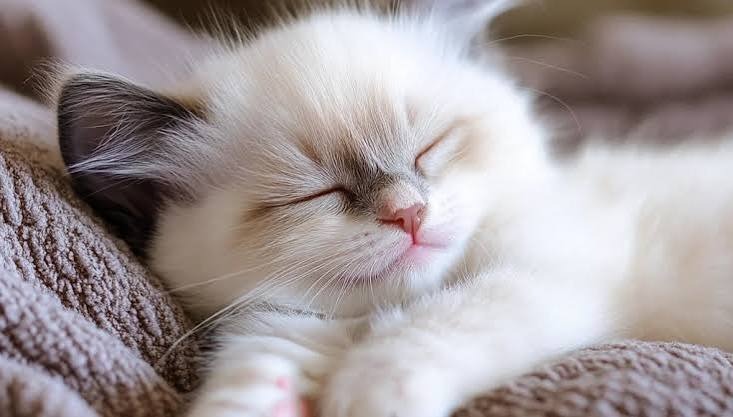
Ragdoll kittens also have an unusual way of developing their coloration. They are generally born with very light-colored coats, and their darker points become more visible as they grow. This happens because Ragdolls have a temperature-sensitive color gene that affects pigment production in cooler areas of the body. Their ears, face, legs, and tail tend to develop darker coloration, while the warmer central areas of the body remain lighter.
The final appearance of a Ragdoll depends on more than its basic color. Pattern, genetics, age, temperature, and individual variation can all influence how the coat looks. Some Ragdolls have sharply contrasting points, while others have softer or more blended coloration. Understanding the different colors and patterns can make it much easier to recognize and appreciate this beautiful breed.
What Color Are Ragdoll Cats?
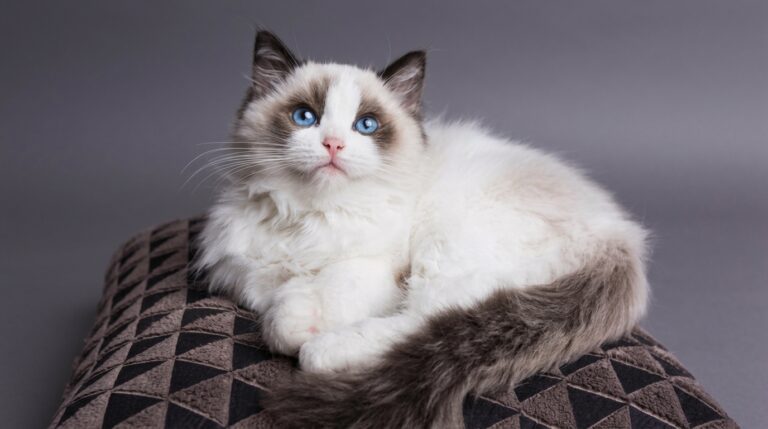
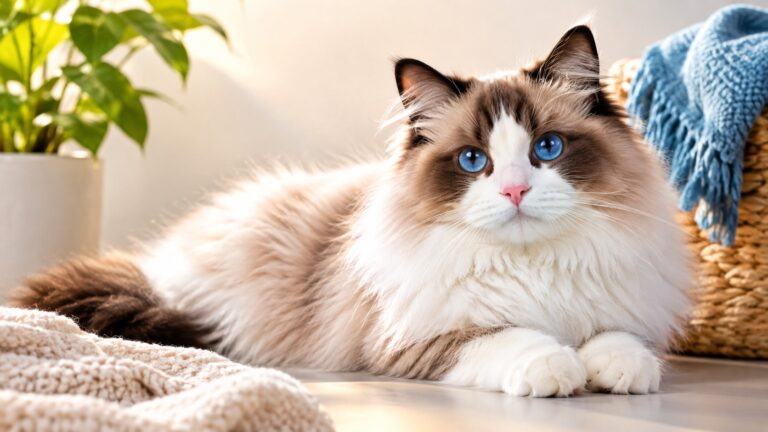
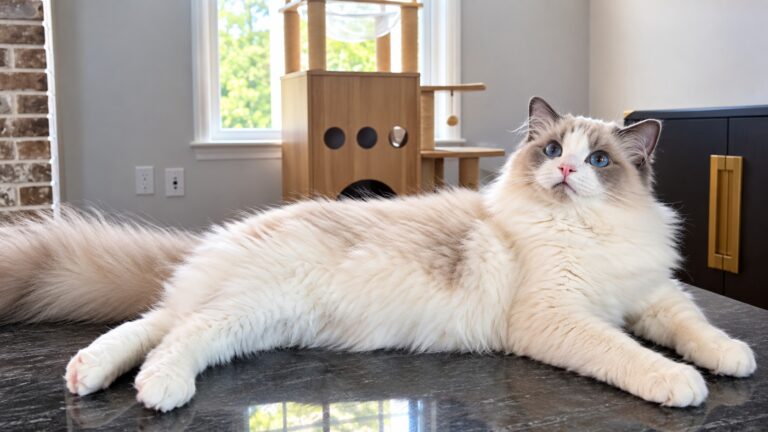
So, what color are Ragdoll cats? Ragdoll cats can have several different point colors, with seal and blue among the most familiar. Other recognized colors include chocolate, lilac, red, and cream. These colors usually appear most strongly on the cooler parts of the cat’s body, such as the ears, face, legs, paws, and tail.
The main body of a Ragdoll is usually lighter than its points. Depending on the individual cat, the body can range from an almost white shade to a soft cream or warm ivory tone. The contrast between the pale body and darker points is one of the defining visual characteristics of the breed.
Color alone does not completely describe a Ragdoll’s appearance. Two cats can have the same basic point color but look very different because of their patterns. A Ragdoll may be colorpoint, mitted, bicolor, lynx, tortie, or a combination of certain pattern characteristics. These patterns determine where the color appears and how it is distributed across the body.
Another important feature of Ragdoll coloration is that it develops gradually. A kitten can look dramatically different as it matures. The points generally become more noticeable during the first weeks and months of life, and the coat can continue developing throughout adulthood.
Why Do Ragdoll Cats Have Pointed Colors?
The pointed appearance of Ragdoll cats is connected to a form of temperature-sensitive pigmentation. The genetic mechanism responsible for the pointed pattern causes pigment production to be reduced in warmer parts of the body. Cooler areas are able to develop darker coloration.
This is why the ears, face, lower legs, paws, and tail usually have more pigment than the central body. The body remains relatively light because it is naturally warmer. The result is the characteristic contrast that people associate with pointed cats.
Temperature can also influence how dark the coat appears. Ragdolls living in colder environments may develop somewhat darker coloration, while warmer conditions can contribute to a lighter overall appearance. This does not mean that the cat changes from one basic color to another, but the intensity of the existing color can vary.
The temperature-sensitive nature of their coat is one reason Ragdoll coloration is so interesting. Their appearance is not simply determined by a fixed color placed evenly across the entire body. Instead, the interaction between genetics and body temperature creates the distinctive distribution of pigment.
Seal Ragdoll Cats
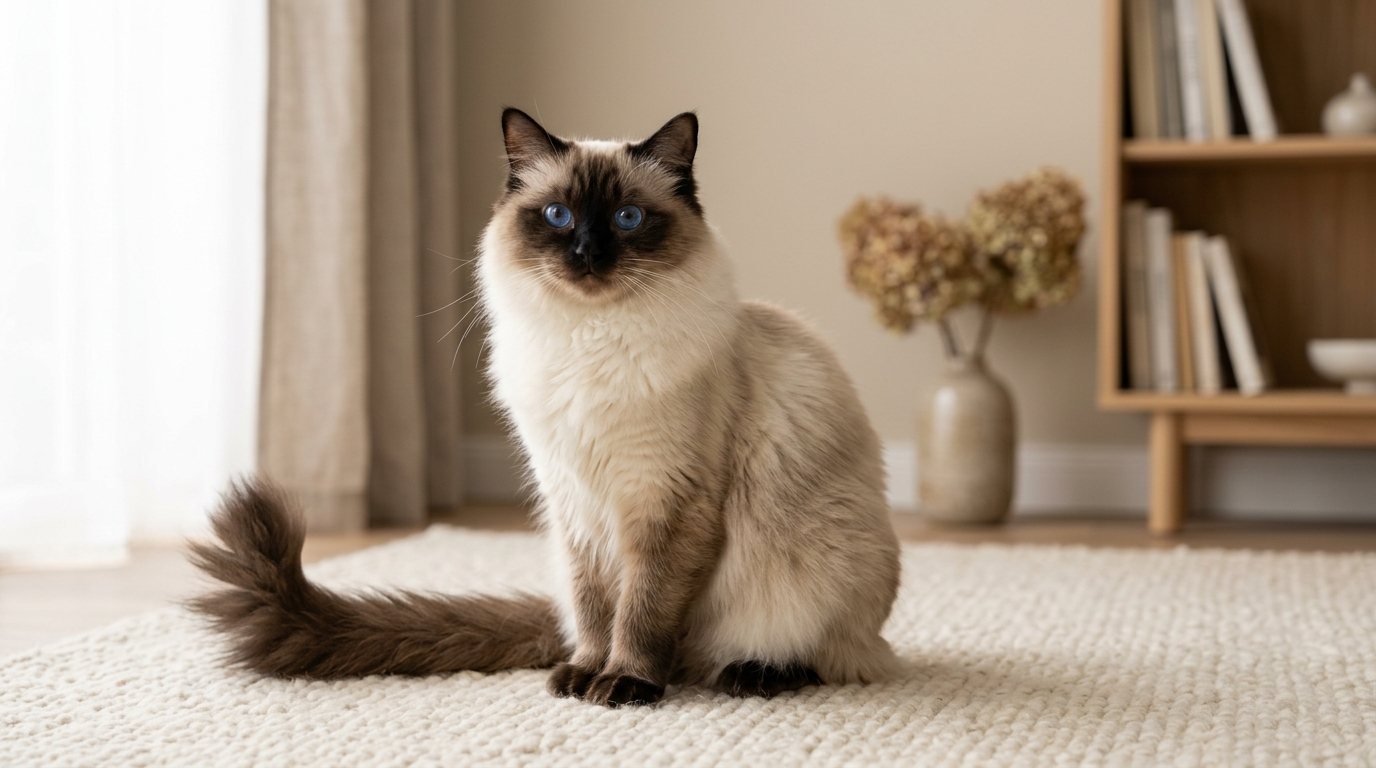
Seal is one of the most recognizable Ragdoll colors. Seal Ragdolls have very dark brown points that can appear almost black at first glance. The color is usually strongest around the ears, mask, legs, paws, and tail.
The body remains much lighter than the points. This creates a strong visual contrast that makes the darker areas stand out clearly. As the cat matures, the seal coloration can become richer and deeper, particularly around the cooler parts of the body.
Seal Ragdolls are often among the first cats people imagine when they think about the traditional appearance of the breed. Their dark points combined with a pale body and blue eyes create a classic Ragdoll look.
The intensity of seal coloration can vary between individual cats. Age, genetics, temperature, and coat development can all affect how the color appears. An older seal Ragdoll may have a deeper overall coat than a younger cat.
Blue Ragdoll Cats
Blue Ragdolls have soft blue-gray points rather than the deep brown points seen in seal Ragdolls. Despite the name, the color is not a bright or vivid blue. It is generally a muted gray with a cool bluish tone.
The blue coloration gives these cats a softer appearance. Their points may look smoky, silvery, or slate-like depending on lighting and individual genetics. The body typically remains much lighter, creating a gentle contrast.
Blue Ragdolls can be especially attractive because their coat often has a calm, soft visual quality. The cooler shade of their points works naturally with their characteristic blue eyes.
As with other Ragdoll colors, the exact appearance can change with age and temperature. A young blue Ragdoll may have relatively subtle points, while an adult can develop more noticeable and defined coloration.
Chocolate Ragdoll Cats
Chocolate Ragdolls have warm brown points that are lighter and richer in tone than seal points. Their coloration can have a warm, creamy, or milk-chocolate appearance.
The chocolate color is created by a different genetic combination from seal. Although both colors belong to the brown family, they are visually distinct when viewed carefully. Seal points tend to be much darker, while chocolate points have a warmer and lighter appearance.
Chocolate Ragdolls can have a particularly warm overall appearance because the brown points contrast with their pale body coat. Their coloration can become more defined as they mature.
Because lighting can affect how coat colors are perceived, it is sometimes difficult to identify subtle differences between chocolate and seal coloration from photographs alone. Looking at the tone of the points in natural light can provide a clearer impression.
Lilac Ragdoll Cats
Lilac is one of the lighter and softer Ragdoll colors. Lilac points are generally a pale, cool gray with a subtle pinkish or lavender quality. The color is delicate rather than intense.
A lilac Ragdoll can have a very soft visual appearance because both the body and points tend to have relatively subtle contrast. The points are still clearly distinguishable, but they do not have the strong dark appearance associated with seal.
Lilac is genetically related to chocolate coloration. The dilution of the underlying color produces the softer lilac appearance. This makes lilac one of the more distinctive colors within the Ragdoll breed.
The exact shade can vary from cat to cat. Some lilac Ragdolls may appear more silvery, while others have a warmer or slightly pinkish tone. Lighting conditions can also influence how the color is perceived.
Red Ragdoll Cats
Red Ragdolls have warm reddish or orange-colored points. Their coloration can range from a soft orange tone to a richer reddish shade.
Red is particularly interesting because the point coloration can appear quite warm against the pale body. The face, ears, legs, and tail may display noticeable reddish coloration, while the rest of the coat remains significantly lighter.
Red Ragdolls can also show variations in intensity. Some may have relatively soft coloration, while others develop stronger orange or red points as they mature.
Genetics play an important role in red coloration, and red Ragdolls can also occur with different patterns. This means that identifying the basic color is only part of understanding the cat’s complete appearance.
Cream Ragdoll Cats
Cream is a lighter version of the warm red color family. Cream points generally appear pale, soft, and slightly warm rather than strongly orange or red.
The difference between cream and red can sometimes be subtle, particularly when viewing photographs. Cream coloration tends to have a more diluted appearance, while red is usually more saturated.
Cream Ragdolls can have a very gentle overall look because their point color does not create as much contrast as darker colors. Their pale body and soft points can blend together in a harmonious way.
As with all Ragdoll colors, the coat may appear somewhat different depending on lighting, age, and temperature. Looking at the points in natural lighting is often useful when trying to understand their actual tone.
Ragdoll Coat Patterns
Color is only one part of a Ragdoll’s appearance. Pattern is equally important because it determines where the color is located on the body.
The most commonly discussed Ragdoll patterns include colorpoint, mitted, and bicolor. Additional pattern characteristics such as lynx and tortie can occur in combination with the primary patterns.
A colorpoint Ragdoll has colored points without the white markings associated with mitted or bicolor patterns. The face, ears, legs, and tail show the primary point color, while the body remains lighter.
Mitted Ragdolls have white markings on the paws and legs, along with other characteristic white areas. The combination of colored points and white markings creates a distinctive appearance.
Bicolor Ragdolls have more extensive white areas, particularly around the face and body. The distribution of color and white can create a striking visual contrast.
Pattern differences can make two Ragdolls with the same basic color look completely different. This is why describing a Ragdoll usually requires both its color and its pattern.
Lynx Ragdoll Cats
Lynx refers to a pattern characteristic that creates tabby-like markings within the colored areas of a Ragdoll’s coat. These markings can be visible around the face, legs, and tail.
A lynx Ragdoll may have stripes or lines that are more noticeable than those seen on a solid-pointed cat. The markings add additional detail to the coat and can make the face particularly distinctive.
Lynx patterning can occur with different Ragdoll colors. As a result, the cat’s overall appearance depends on both the underlying point color and the lynx markings.
The visibility of lynx markings can change as the coat develops. Young cats may have less obvious markings, while mature cats can show stronger pattern definition.
Tortie Ragdoll Cats
Tortie refers to tortoiseshell coloration, which combines areas of different colors within the points. Tortie Ragdolls can have a mixture of warm and darker tones, creating a varied appearance.
The distribution of tortie coloration can differ from one cat to another. Some cats may have more noticeable patches, while others have a softer blend of colors.
Tortie coloration is genetically linked to sex chromosomes, which is why it is strongly associated with female cats. Male tortie cats are extremely uncommon because of the genetic requirements involved.
When tortie characteristics combine with other Ragdoll patterns, the resulting coat can have considerable visual complexity. The basic point color, pattern, and tortie coloration all contribute to the final appearance.
What Color Are Ragdoll Cats When They Are Born?
One of the most interesting facts about Ragdoll cats is that their kittens are generally born very light in color. Their characteristic darker points become more noticeable after birth.
The reason is connected to the temperature-sensitive pigment system responsible for pointed coloration. Inside the mother’s womb, the kitten’s body temperature keeps the pigment from developing in the same way it does after birth.
Once the kitten is exposed to a cooler environment, pigment production begins to become more visible in the cooler areas of the body. The ears, face, legs, and tail gradually develop their characteristic color.
This process means that a Ragdoll kitten’s appearance can change considerably during early development. The coat color that eventually becomes obvious in adulthood may not be easy to identify immediately after birth.
For anyone interested in Ragdoll cats, this gradual development is one of the breed’s most fascinating physical characteristics.
Do Ragdoll Cats Change Color as They Grow?
Yes, Ragdoll cats can become darker as they grow. Their point coloration usually becomes more noticeable during kittenhood and can continue changing as they mature.
The body may also develop additional shading over time. Older Ragdolls can have more pronounced coloration than young adults, particularly in cooler environments.
This does not necessarily mean that the cat is changing its fundamental genetic color. Instead, the intensity and distribution of pigmentation can become more visible.
Temperature can also influence the appearance of the coat. Since pigment production is temperature-sensitive, colder conditions may result in darker-looking points.
Age is therefore an important factor when evaluating Ragdoll coloration. A kitten’s coat should not always be expected to look exactly like the coat it will have as a mature adult.
Why Are Ragdoll Cats Darker on Their Ears, Face, Legs, and Tail?
The darker coloration of these areas is directly related to temperature. The extremities of the body are generally cooler than the central torso.
Because the Ragdoll’s pigment-producing system is temperature-sensitive, these cooler areas are able to develop more visible pigment. This produces the classic pointed appearance.
The ears, face, legs, paws, and tail therefore become darker while the central body remains lighter.
This natural pattern is not something that happens because the cat’s coat is dirty or because the pigment is concentrated randomly. It is a genetically influenced characteristic of pointed coloration.
The contrast between the darker extremities and lighter body is one of the most recognizable visual features of Ragdoll cats.
Do All Ragdoll Cats Have Blue Eyes?
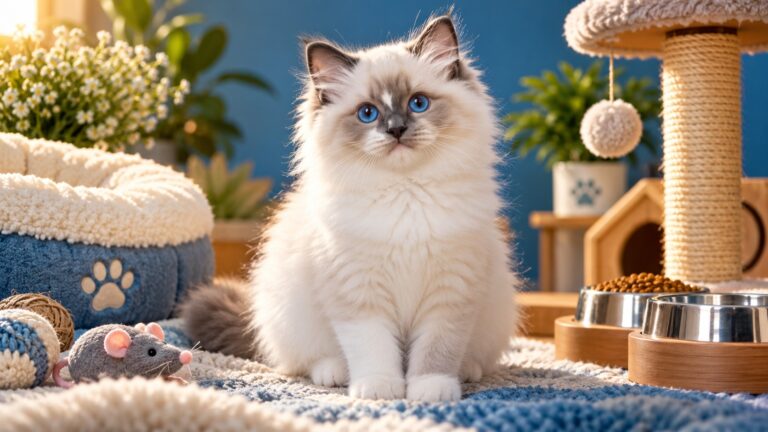
Traditional Ragdoll cats are known for their blue eyes. Eye color is an important part of the breed’s distinctive appearance.
The exact shade of blue can vary. Some Ragdolls have relatively pale blue eyes, while others have deeper or more vivid blue coloration.
Eye color can also appear different depending on lighting. Photographs may make the eyes look lighter or darker than they appear in person.
The blue eyes combined with pointed coloration contribute significantly to the classic Ragdoll appearance. When people picture the breed, they often imagine a pale-bodied cat with darker points and striking blue eyes.
Eye color and coat color are genetically related to the overall pigmentation characteristics of the breed, but they are separate traits that should be considered independently when describing an individual cat.
What Is the Most Common Ragdoll Cat Color?
Seal is one of the most familiar Ragdoll colors and is strongly associated with the traditional appearance of the breed. Its dark brown points provide a strong contrast against the lighter body.
However, Ragdolls are available in several other recognized colors, and popularity does not mean that one color represents the entire breed.
Blue, chocolate, lilac, red, and cream can all contribute to the remarkable diversity seen among Ragdolls. Patterns such as mitted, bicolor, lynx, and tortie add even more variation.
Therefore, when identifying a Ragdoll, it is useful to consider the complete combination of color and pattern rather than focusing on a single shade.
What Is the Rarest Ragdoll Cat Color?
The availability of Ragdoll colors can vary depending on breeding lines and regional populations. Some colors may be less frequently encountered than others.
Rarity can also be confused with unusual appearance. A particular pattern or combination of color and pattern may look uncommon without representing a separate color category.
Genetics determine which colors and patterns are possible. Responsible breeders generally pay close attention to health, pedigree, breed standards, and genetic characteristics rather than focusing only on producing unusual colors.
For this reason, the term rare should be used carefully when discussing Ragdoll coloration. Frequency can vary between populations, and an uncommon-looking cat is not necessarily genetically rare.
How to Identify a Ragdoll Cat’s Color
Identifying a Ragdoll’s color starts with examining the points. The ears, face, legs, paws, and tail usually provide the clearest indication of the basic point color.
A very dark brown point color generally indicates seal. A cooler blue-gray tone indicates blue, while warmer brown coloration can indicate chocolate. Pale grayish-lavender tones are associated with lilac, while warm reddish or orange points indicate red. Cream points are generally lighter and softer versions of the red color family.
After identifying the basic color, the pattern should be considered. White markings on the paws and legs may indicate a mitted pattern, while more extensive white areas may indicate bicolor characteristics.
Lynx markings can add tabby-like stripes, while tortie coloration can create a mixture of colors in the points.
Age should also be considered. A young Ragdoll may not have developed its final coat intensity yet, so identification can become easier as the cat matures.
How Temperature Affects Ragdoll Coat Color
Temperature is one of the most fascinating aspects of Ragdoll coat coloration. The gene responsible for pointed pigmentation is sensitive to temperature, which affects where pigment becomes visible.
Warmer parts of the body tend to remain lighter, while cooler areas develop more pigmentation. This creates the familiar pattern of darker ears, face, legs, and tail.
Environmental temperature can influence the intensity of this coloration. A Ragdoll living in a colder environment may develop darker points than one living in a warmer environment.
This does not mean owners should attempt to manipulate the cat’s temperature to change its coat. A comfortable, healthy environment should always be the priority.
The natural temperature sensitivity of the coat simply explains why Ragdoll coloration can appear different at different stages of life and under different environmental conditions.
Ragdoll cats are known for their distinctive pointed coats, blue eyes, and variety of recognized colors and patterns. Their appearance can vary considerably depending on their color and pattern, as described in established breed information from The Cat Fanciers’ Association
How Age Affects Ragdoll Coat Color
Ragdoll coat development is a gradual process. Kittens begin with very light coats, and their points become increasingly visible after birth.
During the early months, the face, ears, legs, and tail can become noticeably darker. As the cat continues growing, the overall coat may become richer and more developed.
Adult Ragdolls can have considerably more color than they had during kittenhood. Some cats continue to develop deeper coloration for an extended period.
Older cats may also develop additional body shading. This is particularly noticeable in some darker-colored Ragdolls.
Because of these changes, judging the final appearance of a very young Ragdoll can be difficult. Genetics provide important clues, but the coat needs time to develop fully.
Can Ragdoll Cats Be Completely White?
Ragdolls are generally associated with pointed coloration rather than being completely white throughout the body. Their characteristic coat pattern involves pigmentation on cooler areas of the body.
Some Ragdolls can have extensive white markings depending on their pattern. Bicolor Ragdolls, in particular, may have substantial white areas.
However, a completely white-looking cat should not automatically be identified as a Ragdoll. Breed identification requires consideration of multiple characteristics, including body structure, coat type, eye color, pattern, pedigree, and other physical traits.
Color by itself cannot reliably establish a cat’s breed.
Why Ragdoll Colors Look Different in Photographs
Photography can significantly affect how coat colors appear. Lighting, camera settings, screen displays, and image processing can all change the perceived shade.
A seal Ragdoll may appear nearly black in a poorly lit photograph even though its points are actually dark brown. Similarly, blue coloration can sometimes appear gray or even slightly silver depending on the lighting.
Natural daylight usually provides a more reliable impression of coat color than strong artificial lighting.
Photographs should therefore be treated as visual references rather than perfect representations of exact coat shades.
Ragdoll Color and Grooming
Ragdoll cats have semi-long coats that require regular grooming. Keeping the coat clean and free of mats helps maintain its natural appearance.
Regular brushing can remove loose hair and prevent tangles. It can also help distribute natural oils throughout the coat, allowing the fur to remain soft and healthy-looking.
Grooming does not fundamentally change a Ragdoll’s genetic color. However, a clean, well-maintained coat can make the natural differences between the body and points easier to see.
Owners should use gentle grooming techniques and choose appropriate tools for a long- or semi-long-haired cat.
Does Ragdoll Coat Color Affect Personality?
Coat color does not determine a Ragdoll’s personality. Individual temperament is influenced by genetics, early socialization, environment, experiences, and the individual cat.
Ragdolls are widely known for their relaxed and affectionate reputation, but every cat has its own personality.
It is therefore better to appreciate color as a physical characteristic rather than assuming that a particular color guarantees a particular temperament.
A seal Ragdoll, blue Ragdoll, lilac Ragdoll, or any other color can have a wide range of individual personality traits.
Choosing a Ragdoll Based on Color
People naturally have different preferences when it comes to cat appearance. Some may prefer the dramatic contrast of seal points, while others may like the softer appearance of blue or lilac.
Color preference is a personal choice, but anyone considering a Ragdoll should look beyond appearance. Health, responsible breeding practices, temperament, socialization, living conditions, and long-term care requirements are all important considerations.
The coat color should be only one part of the decision when bringing a cat into the home.
A healthy and well-socialized Ragdoll can be a wonderful companion regardless of its specific color or pattern.
FAQ
What color are Ragdoll cats usually?
Ragdoll cats can have several point colors, including seal, blue, chocolate, lilac, red, and cream. Their bodies are generally much lighter than their points.
What is the most common Ragdoll cat color?
Seal is one of the most commonly recognized and familiar Ragdoll colors. Its dark brown points create the classic pointed appearance associated with the breed.
Are Ragdoll cats always white?
No. Ragdoll cats generally have a lighter body with darker points, and their coat can develop in several different colors and patterns.
What color are Ragdoll kittens at birth?
Ragdoll kittens are usually born with very light coats. Their darker points develop after birth as they are exposed to cooler temperatures.
Do Ragdoll cats get darker with age?
Ragdoll cats can become darker as they mature. Their points often become more noticeable during kittenhood and may continue developing into adulthood.
Why are Ragdoll cats darker on their face and ears?
The pointed color pattern is associated with temperature-sensitive pigmentation. Cooler parts of the body develop more pigment than warmer central areas.
Are blue Ragdoll cats actually blue?
The term blue refers to a soft blue-gray coat color rather than a bright blue shade. Their points generally have a cool grayish appearance.
Are lilac Ragdoll cats purple?
Lilac Ragdolls do not have a strong purple coat. Their points are usually a very pale gray with subtle lavender or pinkish undertones.
Can Ragdoll cats have orange points?
Yes. Red and cream are warm-colored Ragdoll point colors, with red generally appearing more intense and cream appearing softer and lighter.
Do all Ragdoll cats have blue eyes?
Ragdolls are characteristically known for blue eyes, which are an important part of the breed’s appearance.
Does Ragdoll color change in cold weather?
Temperature can influence the intensity of pointed coloration because the pigment system is temperature-sensitive. Cooler conditions can contribute to darker-looking points.
What are the main Ragdoll patterns?
The main patterns commonly discussed include colorpoint, mitted, and bicolor, with additional characteristics such as lynx and tortie occurring in some cats.
Final Thoughts
So, what color are Ragdoll cats? Ragdoll cats come in a beautiful range of point colors, including seal, blue, chocolate, lilac, red, and cream. Their lighter bodies and darker extremities create the distinctive pointed appearance that makes the breed so recognizable.
Color is only one part of a Ragdoll’s appearance. Patterns such as colorpoint, mitted, bicolor, lynx, and tortie can create significant differences between individual cats. This combination of color and pattern means that no two Ragdolls necessarily look exactly alike.
Their coloration is also unusual because it develops gradually. Ragdoll kittens are born very light, and their points become more visible as they grow. Temperature-sensitive pigmentation explains why the ears, face, legs, and tail tend to be darker than the warmer central body.
Age, genetics, environment, and lighting can all influence how a Ragdoll’s coat looks. Understanding these factors makes it easier to appreciate the natural variation within the breed.
Whether a Ragdoll has dark seal points, soft blue-gray points, warm chocolate coloration, delicate lilac tones, or red and cream points, each color contributes to the unique appearance of this popular cat breed. The combination of coat color, pattern, blue eyes, and luxurious fur is what gives Ragdoll cats their distinctive and memorable look.