
Can Ragdoll Cats Be Black? Essential Facts & Stunning Color Guide
Ragdoll cats are known for their beautiful blue eyes, soft coats, gentle personalities, and distinctive color-point patterns. Their appearance can vary considerably depending on their color, pattern, age, and genetics. Because some Ragdolls have very dark brown markings, many people naturally wonder, can Ragdoll cats be black? The short answer is that a traditional Ragdoll is not typically a solid-black cat. However, some Ragdolls can have extremely dark markings that may look almost black, especially on the face, ears, legs, and tail.
Understanding Ragdoll coloration requires looking beyond the overall appearance of the coat. Ragdoll color is strongly influenced by genetics, particularly the genes responsible for color-point patterns. These genes cause pigmentation to develop differently across the body. The result is a cat with a lighter body and darker areas on the cooler parts of the body, including the ears, face, paws, and tail.
A dark seal-point Ragdoll can sometimes appear remarkably dark, especially as the cat grows older. In certain lighting conditions, the deepest seal coloring may look nearly black to the human eye. However, this does not necessarily mean the cat is genetically a solid-black cat. The distinction between a truly black coat and very dark point coloration is important when discussing Ragdoll colors.
Can Ragdoll Cats Be Black?
The question can Ragdoll cats be black is usually connected to the difference between a solid-black coat and a very dark point coloration. Traditional Ragdolls are recognized for pointed coloration rather than a completely solid-black body. Their coats generally show a contrast between a lighter main body and darker points.
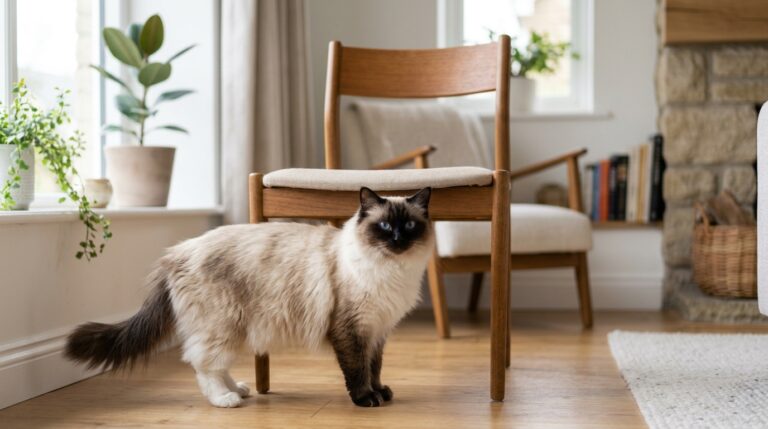
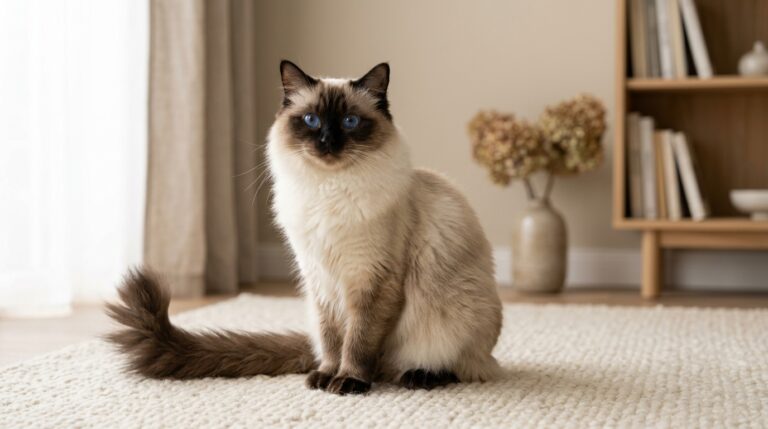
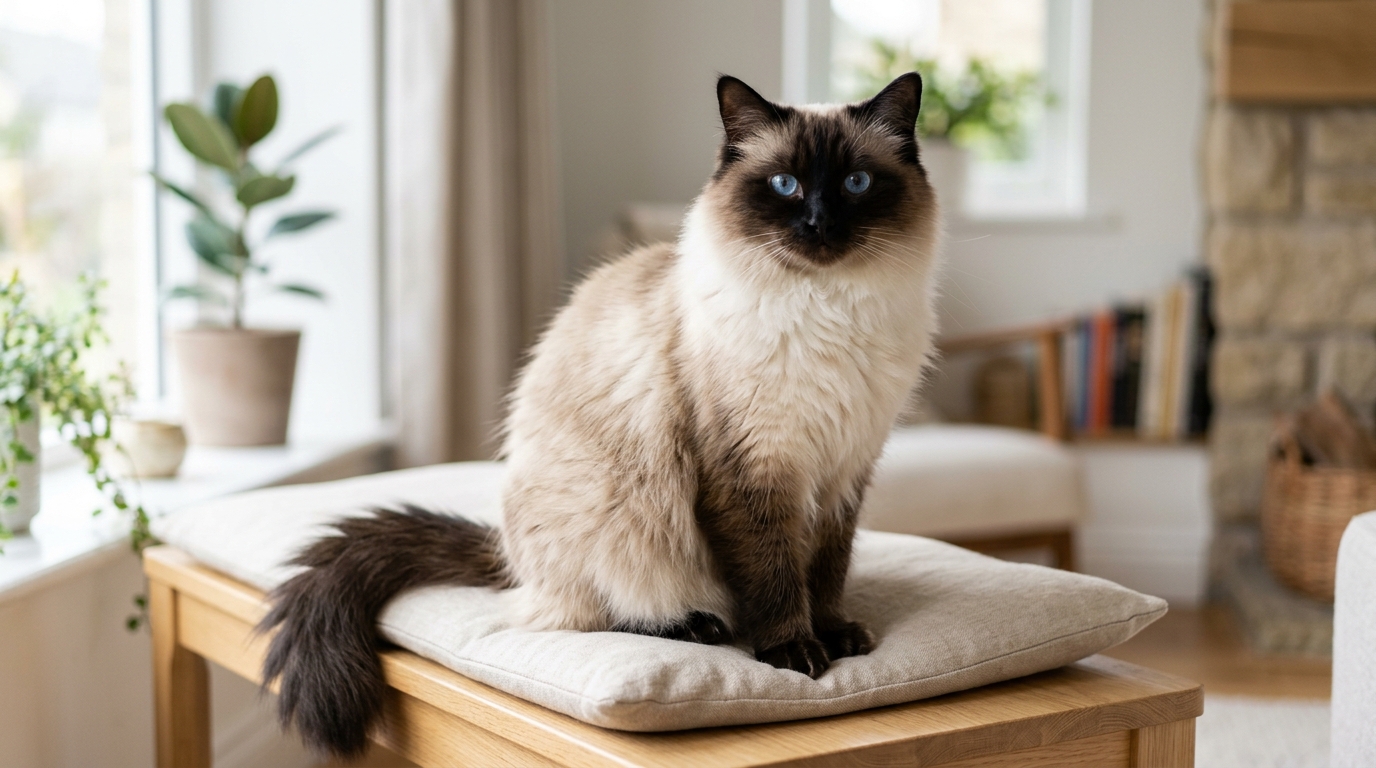
Seal-point Ragdolls have the darkest traditional point coloration. Their ears, mask, legs, paws, and tail can become a deep seal-brown shade. Depending on lighting, coat condition, and the individual cat, these areas can look extremely dark. This is one reason people may mistake a seal-point Ragdoll for a black cat.
A true solid-black appearance is different. A completely black cat would normally have black pigmentation throughout the coat rather than the characteristic lighter body and darker points associated with traditional Ragdolls. Therefore, when someone describes a Ragdoll as black, it is important to determine whether they mean a genuinely solid-black coat or a Ragdoll with very dark seal points.
The answer also depends on what is meant by “Ragdoll.” Breed standards and recognized colors can vary somewhat between cat associations, and newer or nontraditional color varieties may be discussed differently by breeders and registries. This means that color terminology should be considered alongside pedigree, breed standards, and genetic information.
Why Are Ragdoll Cats Usually Not Solid Black?
Ragdoll cats have a distinctive genetic pattern that affects how their coat pigmentation develops. The breed is famous for color-point patterns, which means the body is generally lighter while the extremities are darker. This pattern is related to a temperature-sensitive form of pigmentation.
The areas of the body that are naturally cooler tend to develop stronger pigmentation. This includes the ears, face, paws, legs, and tail. The warmer central areas of the body remain lighter. This creates the characteristic Ragdoll appearance that many cat lovers recognize.
Because of this genetic mechanism, a traditional Ragdoll does not normally develop a completely uniform black coat from head to tail. Instead, darker pigmentation is concentrated in specific areas. The contrast can be especially dramatic in darker color varieties.
Seal-point Ragdolls demonstrate this effect particularly well. Their points can become deep and rich in color while their bodies remain substantially lighter. As the cat matures, the body coat may also become darker, making the overall appearance less sharply contrasted than it was during kittenhood.
This natural development can make an adult Ragdoll look much darker than people expect. Nevertheless, the cat’s underlying color pattern remains important when determining whether the coat is actually black or simply very dark.
What Color Is a Seal-Point Ragdoll?
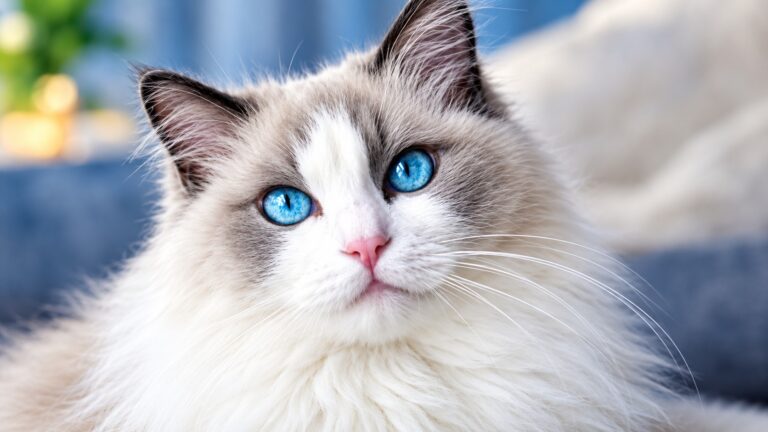
Seal is one of the darkest and most recognizable traditional Ragdoll color varieties. Seal-point Ragdolls have dark brown points that contrast with a lighter body. Their facial mask, ears, legs, paws, and tail can develop deep coloration as they mature.
The word “seal” can sometimes cause confusion because people may associate it with black. In Ragdoll terminology, however, seal generally refers to a very dark brown coloration rather than a genetically solid-black coat. The shade can be so deep that distinguishing brown from black visually may be difficult under certain lighting.
A seal-point Ragdoll can therefore answer part of the question can Ragdoll cats be black. While the cat is not necessarily a solid-black Ragdoll, its darkest areas can appear almost black. This is particularly noticeable in photographs with strong contrast or low lighting.
The facial mask is often one of the darkest areas. The ears and tail may also appear very dark, while the body remains lighter. This combination gives the seal-point Ragdoll a dramatic appearance without making the entire coat solid black.
Can a Seal-Point Ragdoll Look Black?
Yes, a seal-point Ragdoll can look black in certain circumstances. Coat color is affected by lighting, photography, age, grooming, and individual pigmentation. A dark seal point may look black when viewed indoors or under limited light.
Photography can make the difference even harder to recognize. Camera exposure, shadows, screen settings, and image processing can change how dark a coat appears. A seal-brown coat may therefore look nearly black in a photograph while appearing clearly brown in natural daylight.
Age is another important factor. Ragdoll kittens are often born with relatively light coloration, and their points become more noticeable as they mature. Older cats can develop deeper coloration across their bodies and points.
For this reason, identifying a Ragdoll’s color from a single photograph is not always reliable. A breeder, veterinarian, or experienced cat professional may be able to provide more useful information when coat color is important for identification or breeding records.
What Colors Can Ragdoll Cats Have?
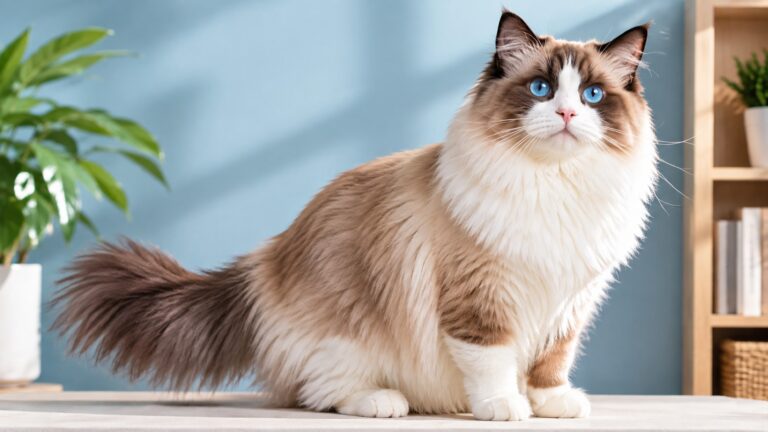
Ragdolls are associated with several recognized colors and patterns. The traditional color groups commonly discussed for the breed include seal, blue, chocolate, and lilac, with additional variations such as red, cream, and tortie depending on the registry and breeding line.
Seal is generally the darkest traditional color and is therefore the one most likely to be confused with black. Blue produces a softer grayish appearance, while chocolate creates a warmer brown coloration. Lilac is generally much lighter and has a soft, muted appearance.
Red and cream can produce warmer tones, while tortie patterns combine different colors in a more varied coat pattern. Ragdoll patterns can also include color-point, mitted, and bicolor characteristics, among others recognized by different organizations.
The combination of color and pattern creates considerable visual diversity. Two Ragdolls can look quite different even though both belong to the same breed.
Understanding these differences is useful because coat color alone should not be used to determine whether a cat is a Ragdoll. Breed identification involves physical characteristics, ancestry, pedigree information, and, where relevant, registration documentation.
Why Does a Ragdoll’s Coat Get Darker With Age?
Ragdoll coloration often changes as the cat grows. Young kittens can have relatively pale bodies and less developed point coloration. As they mature, their darker areas become more pronounced.
The temperature-sensitive nature of their color-point genetics contributes to this development. Cooler parts of the body tend to show more pigment, while warmer areas remain lighter. As the cat grows, the overall appearance can become deeper and more defined.
This means a Ragdoll that looks relatively pale during kittenhood may have considerably darker coloration as an adult. The change can be particularly noticeable in seal-point cats.
Body temperature is not the only factor that influences appearance. Genetics, age, individual variation, and environmental conditions can all contribute to differences in coat coloration. The exact appearance of an individual Ragdoll should therefore be considered on a case-by-case basis.
Can Ragdoll Cats Have Black Markings?
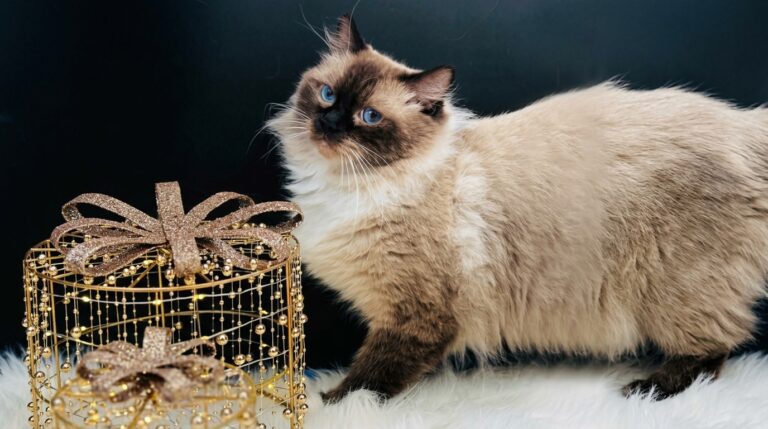
Ragdoll cats can have very dark markings, particularly in seal-point coloration. The face, ears, legs, paws, and tail may have strong pigmentation. These markings can create a visually striking contrast against the lighter body.
The facial area may contain a dark mask around the eyes, nose, and cheeks. Depending on the cat’s pattern, this mask can appear especially deep in color. The ears and tail often carry similarly dark pigmentation.
Mitted and bicolor Ragdolls can have additional white areas that change the overall visual impression. These white markings can make the dark points appear even more prominent.
Therefore, a Ragdoll can certainly have areas that look black. The important distinction is whether those areas are truly black or are very dark seal pigmentation.
What Makes a Ragdoll Different From a Solid-Black Cat?
The most obvious difference is the distribution of pigmentation. A solid-black cat generally has black coloration across its entire coat. A traditional color-point Ragdoll has a lighter body with darker points.
A Ragdoll’s eyes are also an important breed characteristic. Traditional Ragdolls are known for blue eyes, although exact shade and intensity can vary. Coat pattern, body structure, coat texture, and overall breed characteristics are also considered when identifying a Ragdoll.
A black cat from another breed may have a completely uniform coat, while a seal-point Ragdoll shows a clear contrast between its body and extremities.
This distinction is particularly useful when looking at kittens. Young Ragdolls may not immediately display the full intensity of their adult coloration, so their final appearance can take time to develop.
Can a Black-Looking Ragdoll Be Purebred?
A dark-looking coat does not automatically determine whether a Ragdoll is purebred. Breed status is based on ancestry and recognized breed characteristics rather than simply the color seen in a photograph.
If a cat is advertised as a purebred Ragdoll, pedigree documentation from a recognized registry is more useful than coat appearance alone. Responsible breeders generally maintain records that document the ancestry of their breeding cats.
Color can provide clues, but it cannot independently establish pedigree. A cat may look very similar to a Ragdoll without having documented Ragdoll ancestry. Conversely, an authentic Ragdoll may look different from what someone expects because coat color and pattern can vary.
This is why prospective owners should consider breeder documentation, registration information, health records, and the cat’s physical characteristics rather than relying only on color.
Can Genetics Produce a Truly Black Ragdoll?
Genetics play a central role in determining coat color. Ragdoll coloration involves multiple genes that influence both pigmentation and pattern. The color-point gene is particularly important because it affects pigmentation in a temperature-sensitive way.
The genetic combination inherited by a kitten determines its potential color and pattern. Breeders who work with Ragdolls carefully consider the genetics of their breeding cats when planning litters.
A solid-black coat and a seal-point coat are not simply two visual versions of the same color. They involve different patterns of pigment distribution.
This is why a very dark Ragdoll should not automatically be classified as black. Genetic terminology and breed standards provide a more accurate way to describe the cat’s color.
Genetic testing can sometimes provide additional information about inherited coat-color traits, but visual appearance and pedigree remain important parts of breed identification.
Does the Environment Affect Ragdoll Color?
The temperature-sensitive nature of point coloration means that environmental and body-temperature factors can influence how the coat appears. Cooler areas tend to develop stronger pigmentation, while warmer body areas remain lighter.
This does not mean that a Ragdoll will suddenly become black because of a change in room temperature. Instead, temperature is one part of the biological mechanism that determines how the color-point pattern develops.
Seasonal changes may also influence the appearance of some color-point cats. Owners sometimes notice that their Ragdoll’s coat looks somewhat different during colder periods compared with warmer periods.
These changes are generally related to the biology of pigmentation rather than an indication that the cat is changing into a completely different color.
Do Ragdoll Kittens Start Out Dark?
Ragdoll kittens are typically born with their point coloration less developed than it becomes later. As they grow, the darker areas become more visible.
This gradual development is one of the fascinating features of color-point cats. The ears, face, legs, and tail progressively show stronger pigmentation.
A kitten that appears relatively light can therefore develop a much more dramatic appearance as it reaches adulthood. Seal-point kittens are particularly interesting because their points can become extremely dark over time.
This gradual change can also explain why owners sometimes believe their Ragdoll has become black. In reality, the cat may simply be developing its mature seal-point coloration.
Can a Ragdoll’s Body Become Darker?
Yes, the body of a Ragdoll can become darker with age. Adult Ragdolls often have more body coloration than young kittens. This can reduce the contrast between the body and the points.
The change does not necessarily mean the cat is developing a solid-black coat. Instead, it reflects the natural maturation of color-point pigmentation.
Older Ragdolls can therefore look considerably different from their kitten photographs. The coat may become deeper, fuller, and more richly colored.
The amount of darkening varies from cat to cat. Genetics, age, environment, and individual variation all contribute to the final appearance.
Are Black Ragdolls Rare?
The answer depends on what someone means by “black Ragdoll.” If they mean a traditional Ragdoll with very dark seal points, these cats are not unusual within the breed. If they mean a genuinely solid-black cat registered as a Ragdoll under a particular breed standard, the situation is different.
Breed registries establish standards for recognized colors and patterns, and these standards can vary. A color that is accepted or discussed in one breeding community may not have the same status in another.
Therefore, it is better to describe the exact coat pattern rather than simply calling a Ragdoll black.
A breeder should be able to explain the color and pattern of a kitten and provide relevant pedigree information. This is particularly important for people interested in showing, breeding, or purchasing a pedigreed Ragdoll.
How to Identify a Dark Ragdoll
Identifying a dark Ragdoll involves looking at several characteristics rather than focusing on one color. The coat pattern should be examined first. A lighter body with darker ears, face, legs, and tail is consistent with a color-point pattern.
The eyes are another important feature. Ragdolls are known for their blue eyes, although individual eye color can vary in intensity and appearance.
The coat texture also matters. Ragdolls generally have semi-long hair coats with a soft, silky appearance. Their bodies are substantial, and they have a distinctive overall structure.
However, visual identification is not enough to prove pedigree. Documentation remains important when purebred status matters.
Does Black Coat Color Affect Ragdoll Personality?
Coat color should not be used as a reliable way to predict personality. Individual temperament varies from cat to cat, and behavior is influenced by genetics, socialization, environment, experiences, and overall care.
Ragdolls are widely known for their generally gentle and affectionate reputation, but individual cats can still have very different personalities.
A dark seal-point Ragdoll is not automatically more or less affectionate than a Ragdoll of another color. Personality should be evaluated based on the individual cat rather than its coat.
Good socialization, responsible breeding, appropriate care, and a stable environment are much more relevant to a cat’s behavior than whether its coat appears dark.
Does Coat Color Affect Ragdoll Health?
Coat color by itself is not a reliable indicator of a Ragdoll’s overall health. Responsible ownership should focus on regular veterinary care, nutrition, grooming, preventive healthcare, and monitoring for changes in behavior or physical condition.
Potential Ragdoll owners should also consider the health screening practices of breeders. Responsible breeders can provide information about their breeding cats and relevant health testing.
A cat’s appearance should never replace professional veterinary evaluation. If a Ragdoll develops a sudden change in coat color, skin condition, hair loss, or other physical changes, veterinary advice can help determine whether there is an underlying issue.
How to Care for a Dark-Colored Ragdoll
Dark-colored Ragdolls require essentially the same basic care as other Ragdolls. Their semi-long coats benefit from regular grooming to reduce tangles, mats, and loose hair.
Regular brushing can help keep the coat clean and comfortable. It also provides an opportunity for owners to notice changes in the skin or coat.
Nutrition is another important part of maintaining a healthy coat. A complete and balanced diet appropriate for the cat’s age and condition supports overall health and can contribute to healthy skin and fur.
Routine veterinary care is equally important. Preventive examinations allow potential health concerns to be identified early and provide an opportunity to discuss nutrition, dental care, parasite prevention, and other aspects of responsible cat ownership.
Understanding Ragdoll coat colors is easier when you look at the breed standards and recognized color patterns used by established cat organizations. The Cat Fanciers’ Association (CFA) provides information about Ragdoll breed characteristics, while The International Cat Association (TICA) offers additional information about the breed and its recognized characteristics. These resources can help cat owners understand the difference between dark seal-point coloration and a truly solid-black coat. Checking established breed information is particularly useful when identifying a Ragdoll’s color, pattern, and general breed characteristics.
Why People Love Dark Ragdoll Cats
Dark Ragdolls have a particularly striking appearance because of the contrast between their deep points and lighter body. Seal-point cats can have an elegant and dramatic look that makes their blue eyes stand out.
Their soft coat and distinctive color-point pattern are major reasons the breed attracts so much attention. As the cat matures, the developing coloration can make the appearance even more impressive.
However, appearance is only one part of owning a Ragdoll. These cats also require regular grooming, quality nutrition, veterinary care, enrichment, and social interaction.
A beautiful coat is best appreciated as part of the cat’s overall health and well-being rather than as the only reason to choose a particular kitten.
Can Ragdoll Cats Be Black? The Final Answer
So, can Ragdoll cats be black? Traditional Ragdolls are generally recognized for color-point patterns rather than a completely solid-black coat. Their darkest traditional coloration is usually associated with seal points, which can become extremely dark and may look almost black under certain lighting conditions.
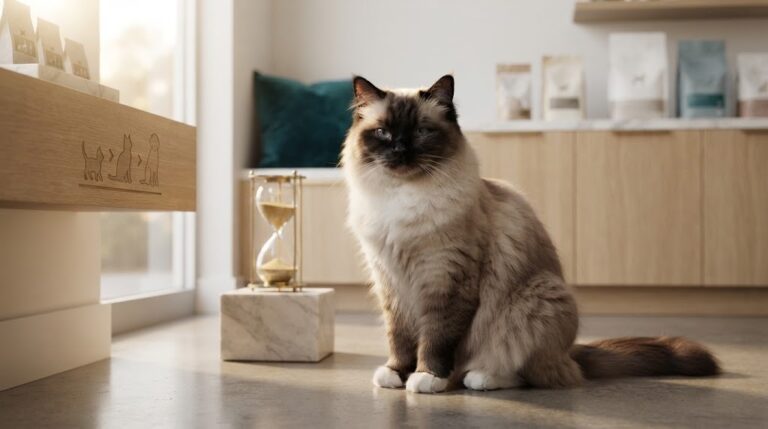
A seal-point Ragdoll can have deep coloration on its face, ears, legs, paws, and tail while maintaining a lighter body. As the cat grows older, the coat can become darker and the contrast can change.
This is why identifying a Ragdoll simply as “black” can be misleading. A cat that looks black in a photograph may actually have a very dark seal-point pattern.
Understanding Ragdoll genetics, coat patterns, age-related color changes, and breed standards provides a much clearer answer. If determining whether a particular cat is a purebred Ragdoll is important, pedigree documentation and information from a reputable breeder are more dependable than appearance alone.
FAQs
Can Ragdoll cats be black?
Traditional Ragdolls are not generally known for a completely solid-black coat. However, seal-point Ragdolls can have extremely dark brown points that may appear almost black, especially as they mature.
Can a Ragdoll cat be solid black?
A traditional Ragdoll is characterized by its pointed coloration rather than a uniform solid-black coat. A completely black cat may have a different breed background or may not fit the traditional Ragdoll color standards used by a particular registry.
Are seal-point Ragdolls black?
Seal-point Ragdolls are not usually classified as solid black. Their points are a very dark seal-brown color, which can look black in certain lighting.
What is the darkest Ragdoll color?
Seal is generally considered the darkest traditional Ragdoll color. Seal-point markings can become particularly deep as the cat ages.
Can Ragdoll kittens become darker as they grow?
Yes. Ragdoll kittens commonly develop stronger point coloration as they mature. Their ears, face, legs, paws, and tail can become darker over time.
Why does my Ragdoll look black in some photos?
Lighting, shadows, camera exposure, and the natural depth of seal-point coloration can make a dark Ragdoll look black in photographs. Natural daylight may reveal that the color is actually a very dark brown.
Can a dark Ragdoll still be purebred?
A dark coat does not determine whether a cat is purebred. Pedigree records, registration information, ancestry, and recognized breed characteristics are more appropriate for determining purebred status.
Do Ragdoll colors change with age?
Yes. Ragdoll coats can become darker as cats mature. The change is especially noticeable in color-point cats, whose pigmentation develops progressively after birth.
Can black markings appear on a Ragdoll?
Ragdolls can have very dark markings that visually resemble black, particularly in seal-point coloration. These markings are concentrated on areas such as the ears, face, legs, paws, and tail.
Are black-looking Ragdolls rare?
Very dark seal-point Ragdolls are not necessarily rare. However, a genuinely solid-black cat described as a Ragdoll is a different question and depends on the breed standard and registry being considered.
Conclusion
Ragdoll cats are famous for their beautiful color-point coats, and their darkest varieties can sometimes look surprisingly close to black. The most important distinction is between a truly solid-black coat and the deep seal coloration found in traditional seal-point Ragdolls.
As Ragdolls grow, their point coloration can become darker, especially around the face, ears, legs, paws, and tail. This natural development can make an adult cat look dramatically different from its kitten appearance.
Therefore, when asking can Ragdoll cats be black, the most accurate answer is that traditional Ragdolls are generally not characterized by a completely solid-black coat, but some can have extremely dark seal points that appear almost black. Understanding the breed’s genetics and color patterns makes it much easier to identify what you are actually seeing.
Whether a Ragdoll is seal, blue, chocolate, lilac, red, cream, or another recognized color variety, responsible breeding and proper care remain more important than coat color alone. A healthy Ragdoll with a well-cared-for coat can be a beautiful companion regardless of its particular color and pattern.