What Does a Ragdoll Cat Look Like? Discover Their Stunning Blue Eyes, Silky Coat, Color Patterns, Size & Beautiful Features
If you have ever seen a Ragdoll cat, you may have noticed how quickly their appearance catches your attention. Their bright blue eyes, soft semi-long coat, large body, fluffy tail, and beautiful color patterns give them a distinctive look that is easy to remember. Unlike some cat breeds that have a very short or dense coat, Ragdolls have a softer, flowing appearance that adds to their elegant charm.
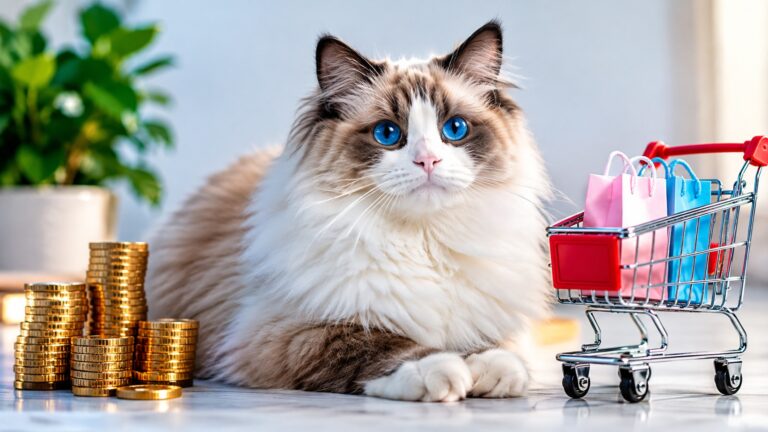
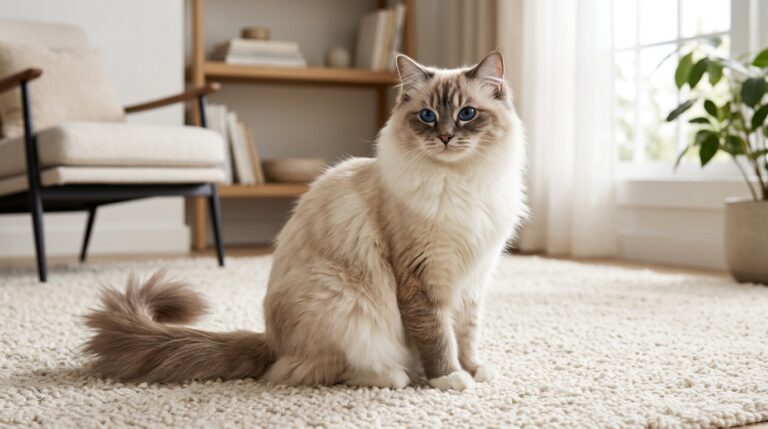
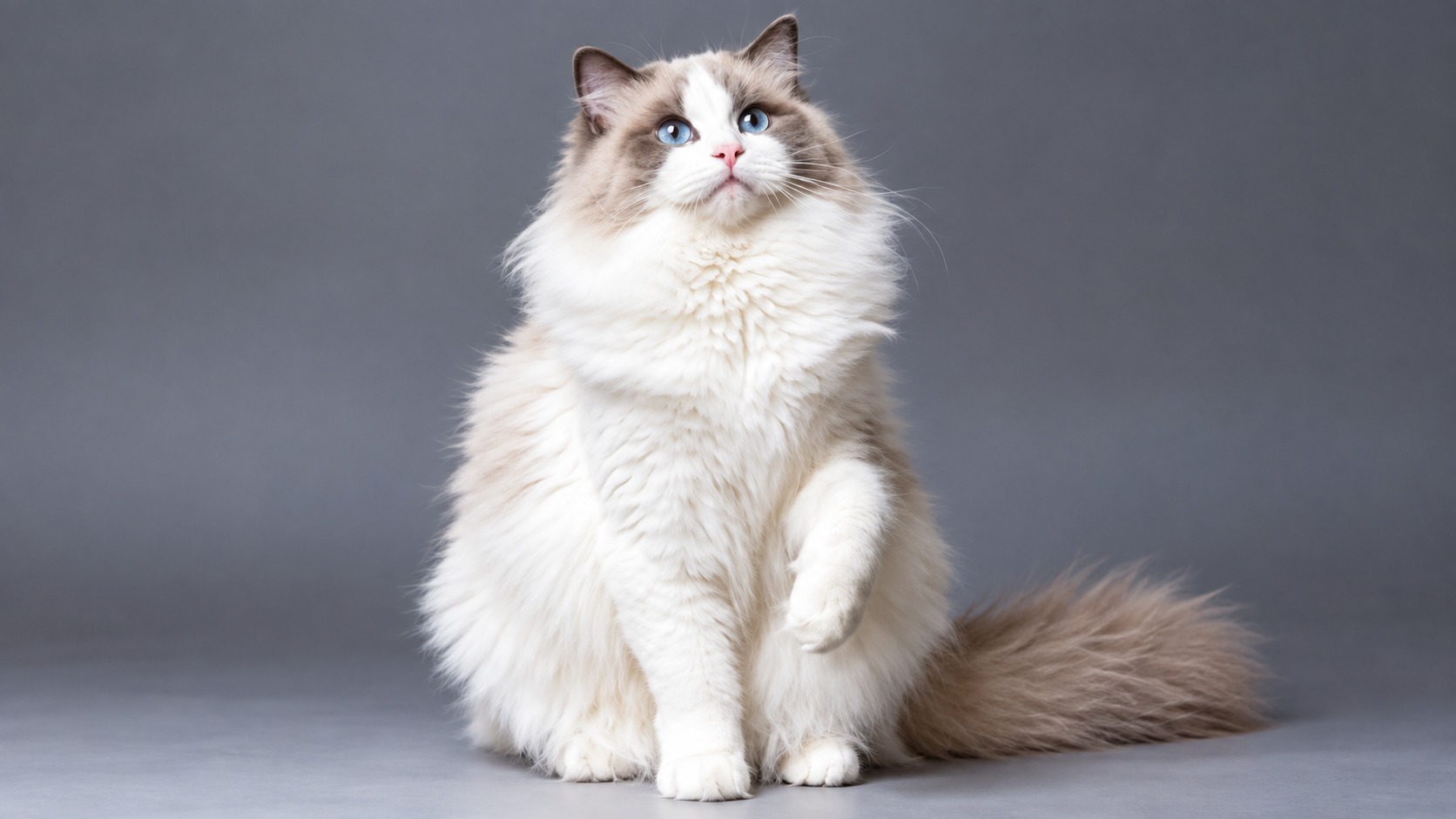
So, what does a Ragdoll cat look like? In general, a Ragdoll is a large, long-bodied cat with a broad chest, substantial legs, a full tail, and a silky semi-long coat. Their coloring is usually darker around the face, ears, legs, and tail while the body remains lighter. Their blue eyes are one of their most recognizable features.
However, there is much more to their appearance than blue eyes and fluffy fur. Ragdolls come in several colors and patterns, and their appearance changes significantly as they mature. A young kitten can look quite different from a fully grown adult.
This guide explores the Ragdoll cat’s appearance from head to tail, including their eyes, coat, body shape, paws, tail, colors, patterns, and kitten development. Understanding these features can help you appreciate why this breed has such a distinctive and beautiful appearance.
What Does a Ragdoll Cat Look Like?
A typical Ragdoll cat has a large, balanced body covered with a soft, semi-long coat. The breed has a substantial appearance without looking overly compact or heavy. Their body is generally longer than it is tall, and their legs are strong and proportionate to the rest of the body.
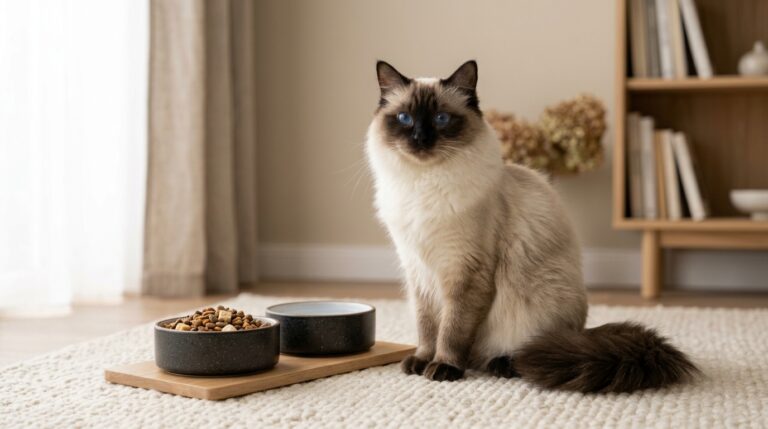
One of the first things people notice is the contrast between the lighter body and darker points. The ears, face, legs, and tail often have deeper coloring than the torso. This point coloration is one of the features that gives Ragdolls their recognizable appearance.
Their head is broad with a modified wedge shape, while their eyes are large and expressive. The ears are medium-sized and positioned to complement the shape of the head. Their whiskers are prominent, and their cheeks can become more noticeable as they mature.
The coat is another major part of their appearance. Ragdolls have soft, silky fur that can look especially full around the neck, chest, hindquarters, and tail. Although their coat is relatively long compared with short-haired breeds, it generally does not have the same thick, woolly appearance associated with some other long-haired cats.
According to the Cat Fanciers’ Association, the Ragdoll is recognized for its large size, striking blue eyes, and pointed coloration. These characteristics help distinguish the breed from many other domestic cats.
Ragdoll Cat Face and Head Shape
The face of a Ragdoll cat has a soft and balanced appearance. Their head is broad and generally described as having a modified wedge shape. The contours are not extremely sharp, which contributes to the breed’s gentle-looking expression.
A mature Ragdoll may develop fuller cheeks, especially in males. The muzzle is well defined, and the chin should appear strong enough to create balance with the rest of the face.
Their whisker pads can also make the face appear broader. When combined with their large eyes and medium-sized ears, these features create the classic Ragdoll expression that many cat lovers recognize immediately.
The shape of the face can vary somewhat from one individual to another. Not every Ragdoll will have exactly the same facial proportions, and kittens can look considerably different from adults while their features are still developing.
What Shape Are Ragdoll Cat Heads?
Ragdoll heads are generally broad with a modified wedge shape. The forehead and cheeks create a smooth transition toward the muzzle, while the overall structure remains proportionate to the cat’s large body.
The head should not look extremely narrow or overly round. Instead, the breed standard aims for a balanced shape that works naturally with the cat’s large frame.
What Color Are Ragdoll Cats’ Eyes?
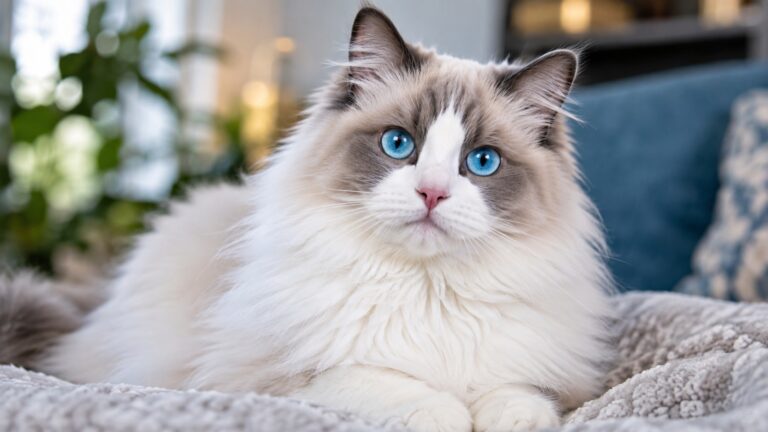
Blue eyes are among the most famous features of a Ragdoll cat. In fact, the breed is particularly well known for its striking blue eye color.
Ragdoll eyes can range from a lighter blue to deeper, more vivid shades. The exact intensity may differ from one cat to another. Some may have a soft sky-blue appearance, while others have a much richer blue tone.
Their eye color creates a strong contrast against their facial markings. This is especially noticeable in darker-pointed Ragdolls, where the blue eyes stand out against the deeper coloring around the face.
Young kittens can also experience changes as they mature. Their appearance gradually develops, and their point coloration becomes more pronounced over time.
The Governing Council of the Cat Fancy also recognizes blue eyes as a defining characteristic of the Ragdoll breed.
Why Do Ragdoll Cats Have Blue Eyes?
Ragdoll eye color is connected to the genetics responsible for their pointed coloration. The same general genetic mechanism associated with color-point patterns affects pigmentation development and contributes to their characteristic blue eyes.
This is why the combination of darker points, a lighter body, and blue eyes is so closely associated with Ragdolls and other color-pointed cats.
What Does a Ragdoll Cat’s Coat Look Like?
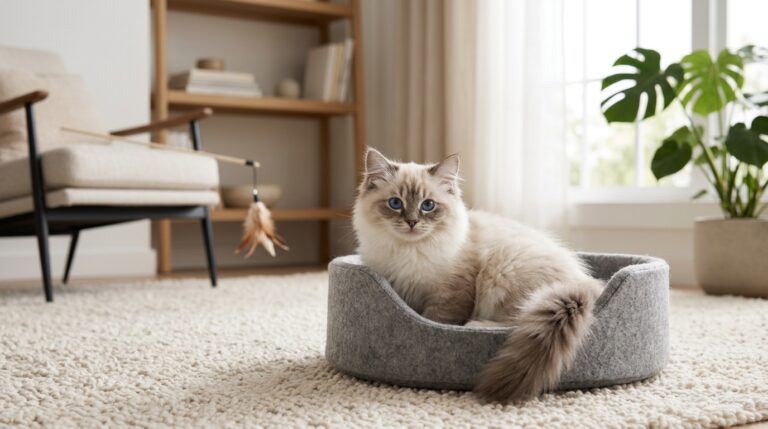
A Ragdoll’s coat is soft, silky, and semi-long. It is one of the most visually appealing characteristics of the breed.
The fur is typically longer around the neck, chest, hindquarters, and tail. This can give the cat a fluffy and luxurious appearance, particularly when the coat is fully developed.
Despite looking very fluffy, Ragdoll fur is not the same as the dense, cottony coat found in some other long-haired breeds. Its texture is generally softer and smoother, allowing the fur to fall naturally around the body.
The coat may look especially impressive when the cat is sitting or walking because the longer fur around the chest and tail creates a flowing silhouette.
Ragdolls also tend to have a noticeable ruff around the neck. This feature can become more prominent as the cat matures.
Is Ragdoll Fur Long or Medium-Length?
Ragdoll cats are generally described as having a semi-long coat. Their fur is longer than that of short-haired breeds but does not necessarily have the extremely long appearance associated with certain other breeds.
The length can vary between individual cats, and seasonal changes can also affect how full the coat looks.
Ragdoll Cat Colors and Patterns
Ragdolls can appear in several beautiful colors and patterns. Their pointed coloration is an important part of the breed’s identity, but different pattern combinations can make individual cats look quite different.
The body is generally lighter, while the points become darker. These points can appear on the ears, face, legs, and tail.
Some Ragdolls have clean, simple point patterns, while others have white markings or tabby-style striping. This variety means two Ragdolls can have noticeably different appearances while still sharing the same breed characteristics.
Color-Point Ragdolls
The traditional color-point pattern creates a strong contrast between the lighter body and darker extremities.
The ears and face develop deeper coloring, while the legs and tail also become darker. The exact shade depends on the cat’s color variety.
This classic appearance is one of the easiest ways to recognize a Ragdoll.
Mitted Ragdolls
Mitted Ragdolls have white markings on their paws that can look like little gloves or mittens. This is where the term “mitted” comes from.
They may also have white markings on the chest and chin. The contrast between the darker points and white paws can give these cats an especially distinctive appearance.
Their front paws often look as though they are wearing small white socks, while their rear legs can also have white areas.
Bicolor Ragdolls
Bicolor Ragdolls have more extensive white markings than mitted Ragdolls. One of their most recognizable facial characteristics is the white area that extends upward on the face.
The white pattern can create a visually dramatic contrast with the darker ears and surrounding facial color.
Their legs and underside can also contain substantial amounts of white.
Because markings can vary in shape and distribution, every bicolor Ragdoll does not look the same.
Lynx Ragdolls
Lynx Ragdolls have tabby-style markings incorporated into their point coloration. These markings can appear as stripes around the face, legs, and other areas.
The additional patterning gives the cat a more detailed appearance compared with a solid color-point pattern.
Lynx markings can be especially noticeable around the forehead and cheeks.
Tortie Ragdolls
Tortie Ragdolls have tortoiseshell-style mixtures of color within their point pattern. This creates a more varied appearance, with different shades blending.
Because tortoiseshell patterns naturally vary from cat to cat, each tortie Ragdoll can have a highly individual look.
What Does a Ragdoll Cat’s Body Look Like?
Ragdolls are known for having large, substantial bodies. They are one of the larger domestic cat breeds, and their size contributes significantly to their overall appearance.
Their body is long and well-proportioned. They have a broad chest, strong legs, and large paws. Their structure gives them a substantial appearance even when they are not carrying excess body weight.
Male Ragdolls are typically larger than females, although individual size can vary considerably.
The breed develops slowly compared with many other cats. A young Ragdoll may look relatively slim before developing the broader body and fuller coat associated with adulthood.
This gradual development is one reason it can be difficult to judge the eventual appearance of a young kitten simply by looking at its current size.
How Big Does a Ragdoll Cat Look?
A mature Ragdoll can look noticeably larger than the average household cat. Their large frame, long body, fluffy coat, and substantial paws all contribute to this impression.
However, apparent size should not be confused with unhealthy weight. A healthy Ragdoll should maintain a balanced body condition appropriate for its frame.
Their coat can also make them appear larger than they actually are. A full tail, chest ruff, and fluffy hindquarters can add visual volume.
If you want to understand more about their development, a veterinarian can help assess whether an individual Ragdoll is growing appropriately. The American Veterinary Medical Association provides general information about responsible pet care and veterinary health guidance.
What Do Ragdoll Cat Paws Look Like?
Ragdoll paws are relatively large and rounded, matching the breed’s substantial body.
Their paws can appear particularly fluffy because of the fur between the toes. This extra hair contributes to their soft, plush appearance.
In mitted Ragdolls, the white markings on the paws are especially noticeable. These markings can make the feet look as though the cat is wearing little white gloves.
The paws also provide another visual clue when observing the overall proportions of the breed. A large body combined with relatively substantial paws creates the balanced appearance expected from a mature Ragdoll.
What Does a Ragdoll Cat’s Tail Look Like?
The Ragdoll’s tail is long, full, and covered with soft fur. It is one of the features that contributes to the breed’s elegant appearance.
The tail is usually fuller toward the base and gradually tapers toward the tip. When the cat walks or sits, the fluffy tail can create a beautiful flowing outline.
A healthy coat can make the tail appear especially impressive. Grooming helps remove loose hair and prevent tangles, although individual grooming needs vary.
The tail can also become more noticeable when the cat is standing because it extends naturally behind the long body.
What Do Ragdoll Kittens Look Like?
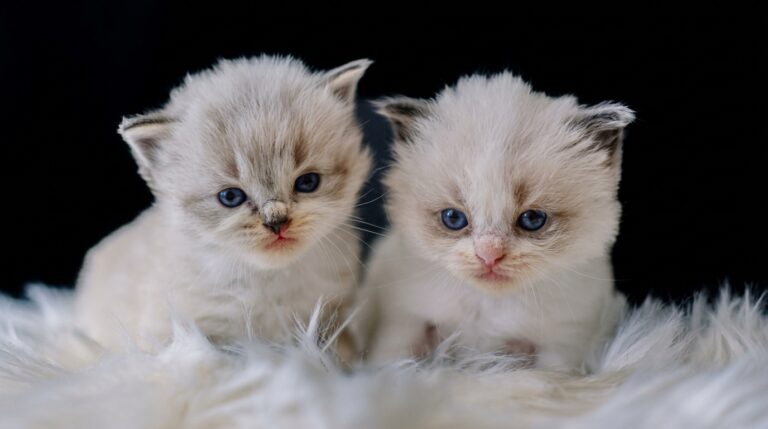
Ragdoll kittens can look surprisingly different from mature Ragdolls.
Many young kittens are born with very light coloration. Their darker points develop progressively as they grow, meaning the appearance of a newborn kitten may not immediately resemble that of an adult.
As the kitten matures, darker areas become more noticeable around the ears, face, legs, and tail. Their body color remains comparatively lighter.
The eyes also become an increasingly recognizable feature as the kitten grows. Their coat gradually becomes fuller, and the body starts developing the substantial proportions associated with adult Ragdolls.
This slow transformation is part of what makes watching a Ragdoll kitten grow so interesting.
When Do Ragdoll Kittens Get Their Color?
Ragdoll kittens develop their point coloration gradually. The cooler areas of the body tend to show darker pigmentation as the kitten grows.
Temperature-sensitive color genetics play an important role in this pattern. As a result, the points become more visible over time.
The exact rate and final appearance can differ among individual cats.
How Ragdoll Cats Look Different as They Grow
Ragdolls are a slow-maturing breed, so their appearance changes considerably during their development.
Ragdoll Kitten Stage
Young Ragdolls often have softer, lighter coloring and a smaller frame. Their coat is not yet as full as it will become later.
Their body may look relatively slender, and their facial features can appear more delicate.
Young Adult Stage
As the cat grows, the body becomes longer and more substantial. The coat starts looking fuller, and the point coloration becomes easier to recognize.
The face may also develop stronger proportions as the cat matures.
Mature Adult Stage
A mature Ragdoll generally has the full combination of characteristics people associate with the breed: a large body, full coat, developed point coloration, striking blue eyes, substantial paws, and a fluffy tail.
Some cats may continue filling out for several years, so adult appearance can develop gradually.
How to Recognize a Ragdoll Cat by Appearance
If you are trying to identify a Ragdoll by appearance, several characteristics can help.
First, look at the eyes. Blue eyes are a major characteristic of the breed.
Next, consider the coat. Ragdolls generally have soft, semi-long fur with darker point coloration.
Then look at the body. A Ragdoll typically has a substantial, long body with strong legs and relatively large paws.
The tail should appear long and full, while the face should have a broad, modified wedge shape.
Color and pattern can provide additional clues. A Ragdoll may be color-pointed, mitted, bicolor, lynx, tortie, or a combination of recognized patterns.
However, appearance alone is not always enough to confirm that a cat is a purebred Ragdoll. Some mixed-breed cats can have similar blue eyes, pointed coloring, or long fur.
What Makes Ragdoll Cats Look So Distinctive?
The Ragdoll’s appearance comes from a combination of several features rather than one characteristic.
Their blue eyes attract attention immediately. Their color-point coat creates contrast between the body and extremities. Their semi-long fur gives them a soft appearance, while their large body makes them visually impressive.
Their facial structure adds another layer to their appearance. A broad head, expressive eyes, medium ears, and full cheeks create a balanced expression.
Their fluffy tail and large paws complete the look.
When all these characteristics appear together, the result is a cat that is easy to distinguish from many other breeds.
Does Every Ragdoll Cat Look the Same?
No two Ragdolls have the same appearance.
Even cats from the same litter can have different point coloration, markings, coat fullness, and facial details.
A bicolor Ragdoll may have a different facial pattern from another bicolor, while two mitted cats can have slightly different white markings.
The shade of the points can also vary depending on the recognized color variety.
Age makes an even bigger difference. A young kitten will not necessarily look like the same cat several years later.
This natural variation is part of the appeal of the breed. While Ragdolls share recognizable characteristics, every individual cat still has its own appearance.
Ragdoll Cat Appearance Compared With Other Long-Haired Cats
Ragdolls are sometimes confused with other long-haired or color-pointed breeds.
Maine Coon cats, for instance, can also become very large and have long coats, but their head shape, ear structure, and overall coat appearance are different.
Birman cats can also have blue eyes and pointed coloring. However, their body proportions, facial features, and characteristic white markings differ from those of Ragdolls.
Himalayan cats can also have blue eyes and pointed coats, but their facial structure and body type are generally quite different.
The important point is that breed identification should consider multiple characteristics rather than relying on a single visual feature.
How to Keep a Ragdoll Cat Looking Its Best
A Ragdoll’s appearance naturally depends partly on genetics, but proper care can help maintain a healthy and attractive coat.
Regular brushing can help remove loose hair and reduce the formation of tangles. The frequency required depends on the individual cat’s coat and lifestyle.
A balanced diet, clean water, routine veterinary care, and good hygiene also contribute to overall coat and body condition.
The Cornell Feline Health Center provides educational information about feline health and care.
It is also important to remember that grooming should be gentle. Cats can become uncomfortable if their fur is pulled or brushed too aggressively.
Regularly checking the eyes, ears, paws, and coat can help owners notice changes that may require veterinary attention.
FAQs
Are all Ragdoll cats blue-eyed?
Ragdolls are known for their blue eyes, which are a defining breed characteristic. The exact shade can vary from lighter blue to deeper blue.
Are Ragdoll cats born white?
Many Ragdoll kittens are born with very light coloring. Their darker point coloration develops gradually as they grow.
Do Ragdoll cats have long hair?
Ragdolls have a semi-long, soft, silky coat. Their fur is especially noticeable around the neck, chest, hindquarters, and tail.
What colors can Ragdoll cats be?
Ragdolls are recognized in several color varieties, including seal, blue, chocolate, and lilac, along with additional recognized colors depending on the cat registry. Their colors can appear in different patterns such as color-point, mitted, bicolor, lynx, and tortie.
Do all Ragdolls have the same markings?
No. Markings can vary significantly between individual cats. Even cats with the same pattern can have different shapes and distributions of color.
How big does a Ragdoll cat get?
Ragdolls are a large breed. Adult males are generally larger than females, although individual size varies. Their long body, substantial bone structure, and full coat can make them look particularly impressive.
Do Ragdoll cats get fluffier with age?
Their coat generally becomes fuller as they mature. The neck ruff, tail, and body fur can become more prominent in adulthood.
Can you identify a Ragdoll only by appearance?
Appearance can provide useful clues, but it cannot always prove that a cat is a purebred Ragdoll. Cats from mixed backgrounds can share similar characteristics.
Final Thoughts
Ragdoll cats have a distinctive appearance created by a beautiful combination of features. Their striking blue eyes, soft semi-long coat, darker color points, large body, substantial paws, and fluffy tail make them one of the most recognizable cat breeds. Their appearance can also change significantly as they grow, with kittens gradually developing darker points, fuller coats, and more mature body proportions.
One of the most interesting things about Ragdolls is that they do not all look exactly alike. Different colors and patterns can create a wide range of appearances, while individual markings make each cat unique. A bicolor Ragdoll may look very different from a mitted or lynx Ragdoll, even though they share the same basic breed characteristics.
If you are considering a Ragdoll, looking beyond appearance is important too. Responsible breeding, healthy development, proper nutrition, grooming, and regular veterinary care all contribute to a cat’s overall well-being. Ultimately, the Ragdoll’s beauty comes not from one single feature but from the way its eyes, coat, colors, body, and natural expression come together. That combination gives this breed its unmistakable and memorable look.