Do All Ragdolls Have Blue Eyes? Uncover Their Eye Color Secrets, Genetic Traits, Kitten Changes & Breed Standard
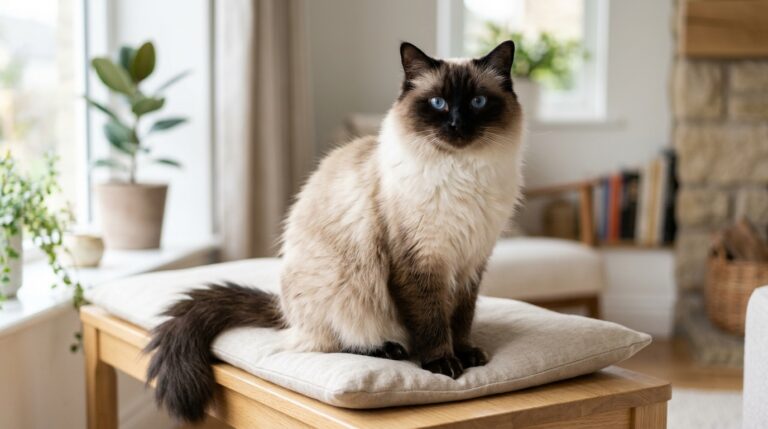
Ragdoll cats are known for their gentle appearance, beautiful semi-long coats, color-point patterns, and remarkably expressive eyes. Among all of their physical features, their blue eyes are perhaps the one that people notice first. The combination of a soft coat, darker facial points, and bright blue eyes gives the Ragdoll a distinctive appearance that is easy to recognize.
But one question often comes up among cat lovers and people considering a Ragdoll kitten: do all Ragdolls have blue eyes?
For a typical purebred Ragdoll, blue eyes are an important characteristic of the breed. However, there is more to the subject than simply saying that every Ragdoll has the same shade of blue. Genetics, age, lighting, photography, coat pattern, and breed identification can all influence how a cat’s eyes appear.
Understanding Ragdoll eye color is especially useful for new owners. A kitten may look quite different as it grows, and photographs can sometimes make an eye color appear lighter or darker than it actually is. It is also important to understand that a cat with blue eyes and a pointed coat is not automatically a pedigreed Ragdoll.
In this detailed guide, we will explore Ragdoll eye color from several angles. We will discuss genetics, kitten development, different shades of blue, breed standards, coat colors, eye health, and the reasons some cats may be incorrectly identified as Ragdolls.
Do All Ragdolls Have Blue Eyes?
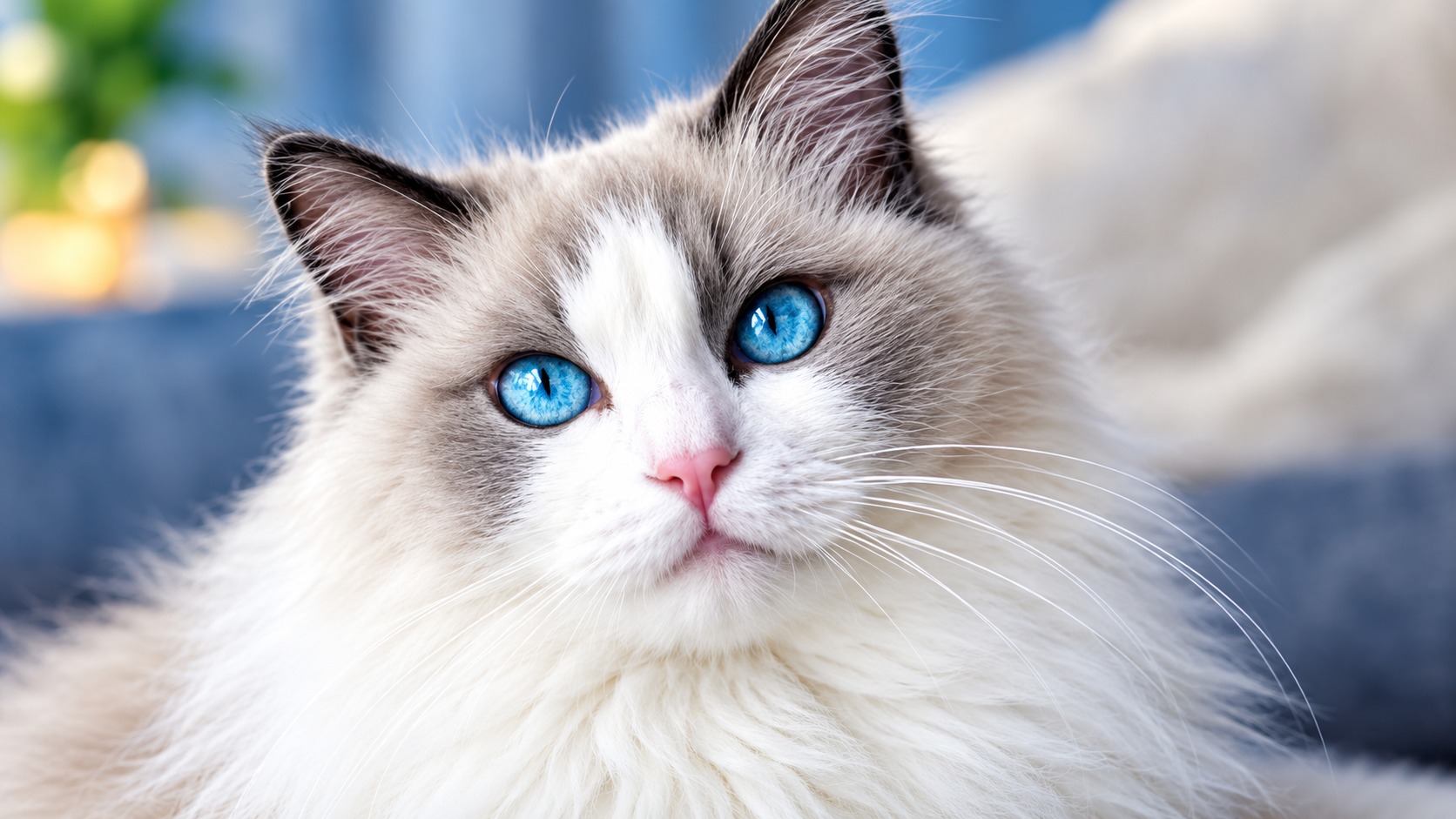
Blue eyes are one of the defining characteristics associated with Ragdoll cats. Recognized Ragdoll breed standards describe blue eyes as a key feature of the breed.
So, when someone asks whether Ragdolls have blue eyes, the answer is generally yes when discussing cats that conform to the recognized Ragdoll breed standard.
However, it is important to understand what “Ragdoll” means in this context. A pedigreed Ragdoll is a cat whose ancestry has been documented through a recognized registration system or breeder records. A cat that simply resembles a Ragdoll may not have the same genetic background.
This distinction matters because many cats can have blue eyes, long hair, and pointed markings. Those characteristics alone do not prove that a cat is a purebred Ragdoll.
The eyes should therefore be considered as one part of the overall breed profile rather than the only identifying feature.
Why Do Ragdolls Have Blue Eyes?
The famous blue eyes of Ragdolls are closely connected to their genetics.
Ragdolls are color-pointed cats. Their genetics influence how pigment develops in different areas of the body. The points, such as the ears, face, legs, and tail, develop darker coloration while much of the body remains lighter.
The same genetic background is associated with their characteristic blue eyes.
Eye color in cats is influenced by pigment. Blue eyes contain relatively little visible pigment, and the way light interacts with the eye contributes to the blue appearance.
This is why the blue eyes of a Ragdoll are not simply an unrelated decorative feature. They are part of the genetic characteristics that help create the breed’s recognizable appearance.
How Color-Point Genetics Influence Ragdolls
Color-point genetics are responsible for the distinctive contrast seen in several cat breeds.
In Ragdolls, this genetic trait creates the darker points against a lighter body. The appearance becomes more obvious as kittens mature.
Because the pigmentation pattern and eye color are connected to the breed’s genetics, changing from one accepted Ragdoll coat color to another does not normally mean that the cat will develop green, yellow, or copper eyes.
The breed’s characteristic blue eyes remain an important part of the overall appearance.
What Shade of Blue Are Ragdoll Eyes?
Not every Ragdoll has eyes that look the same shade of blue.
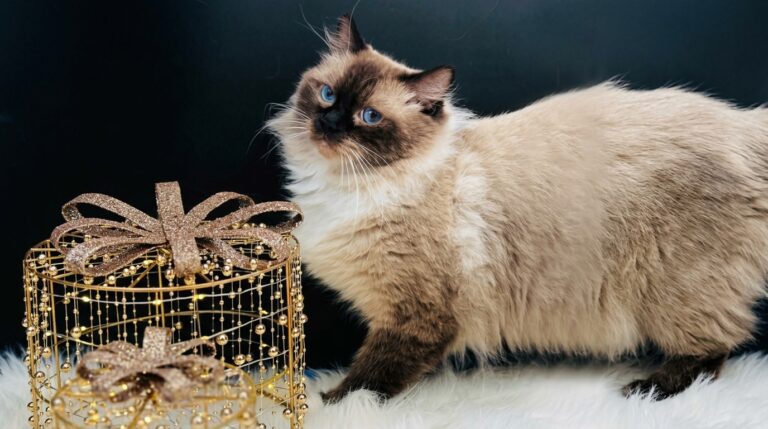
Some may have very light blue eyes that appear almost icy in bright natural light. Others may have a deeper or more vivid blue appearance.
This does not necessarily mean that one cat has a different type of eye color from another.
The way human eyes perceive color is strongly affected by the surrounding environment. The cat’s coat, room lighting, camera settings, and even the color of nearby objects can influence how blue the eyes appear.
For this reason, it is difficult to determine the exact shade of a Ragdoll’s eyes simply by looking at one online photograph.
Why Lighting Can Change the Appearance
Natural daylight can make a Ragdoll’s eyes look brighter and clearer. Indoor lighting may make the same eyes appear darker.
Photography can create even greater differences. Camera exposure, white balance, image processing, and reflections can all influence the final image.
If you are evaluating a Ragdoll kitten, it is better to observe the eyes in natural conditions rather than relying entirely on edited photographs.
Do Ragdoll Kittens Have Blue Eyes?
Ragdoll kittens go through several stages of physical development.
Like other kittens, they are born with their eyes closed. Once their eyes open, their appearance continues to develop as they grow.
Young Ragdolls may not immediately have the same intense appearance seen in photographs of mature cats. Their eye color becomes more established as they develop.
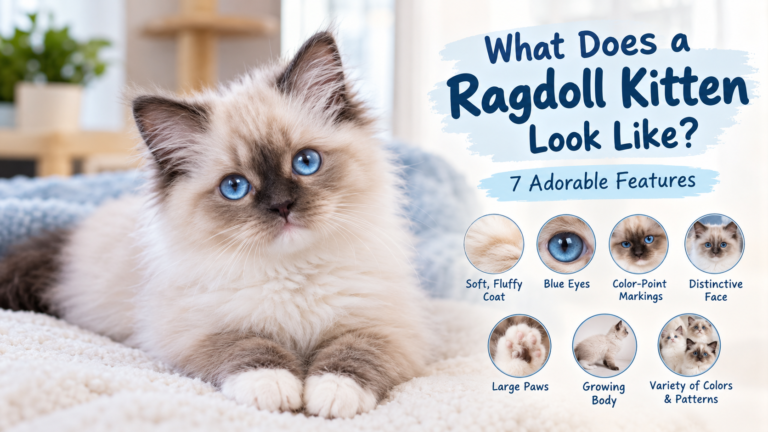
The same is true of their coat. Ragdoll kittens are often born with very light coloration, and their darker points become increasingly visible as they mature.
This gradual transformation is one of the fascinating features of the breed.
When Do Ragdoll Kittens Develop Their Adult Appearance?
There is not one exact moment when every Ragdoll kitten suddenly looks like an adult.
Growth happens gradually.
The coat points become more pronounced, the body becomes larger, the facial structure matures, and the eyes become easier to evaluate.
For people raising a Ragdoll kitten, this means that photographs taken several months apart can show noticeable differences.
The kitten you bring home may look considerably different after reaching adulthood.
Do Ragdoll Eyes Change Color With Age?
A kitten’s eyes can appear different as the eyes mature. However, this developmental process should not be confused with an adult Ragdoll changing from blue to another completely different color.
The eyes of kittens are still developing during early life. As the kitten grows, the final appearance becomes clearer.
Once the characteristic eye color has been established, dramatic changes should not simply be considered a normal part of aging.
If an adult Ragdoll develops a sudden change in eye appearance, especially if there is cloudiness, redness, swelling, discharge, squinting, or obvious discomfort, it is best to seek veterinary advice.
Can Ragdolls Have Different Eye Colors?
The recognized characteristic eye color of Ragdolls is blue.
If a cat described as a Ragdoll has clearly green, yellow, gold, or copper-colored eyes, there may be another explanation.
The cat could be a mixed breed, incorrectly identified, or lacking verified pedigree information.
Another possibility is that the lighting or photograph is affecting how the eye color appears.
This is why breed identification should never depend entirely on eye color.
Blue Eyes Do Not Automatically Mean Ragdoll
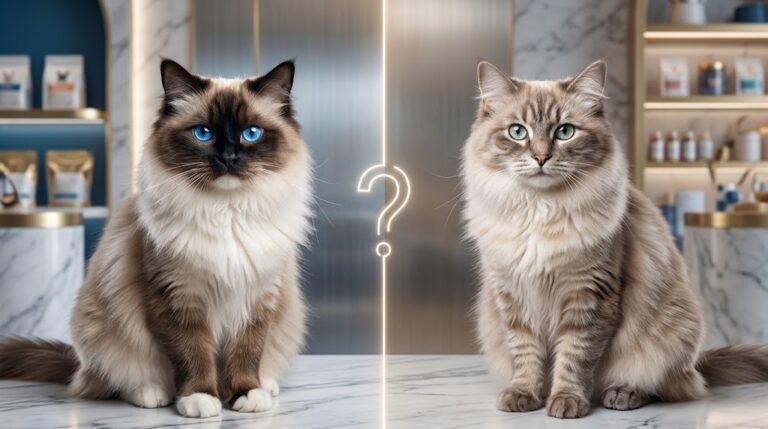
Several other cat breeds can have blue eyes.
Siamese and Himalayan cats, among others, can have blue eyes because of their own genetic characteristics.
Mixed-breed cats can also inherit blue eyes.
Therefore, blue eyes can be a useful clue, but they cannot independently prove that a cat is a Ragdoll.
Do Different Ragdoll Coat Colors Affect Eye Color?
Ragdolls are available in several recognized coat colors and patterns.
Commonly discussed colors include seal, blue, chocolate, and lilac, along with different patterns and variations recognized by particular breed organizations.
Although the coat colors can look very different, the characteristic Ragdoll eye color remains blue.
This is an interesting feature of the breed because people may naturally expect darker coats to be associated with darker eyes.
That assumption does not apply to Ragdolls.
Seal Point Ragdolls
Seal point Ragdolls have dark brown to very dark points on the ears, face, legs, and tail.
Their darker facial markings can make the blue eyes appear particularly vivid because of the strong contrast.
Blue Point Ragdolls
Blue point Ragdolls have softer gray-blue points.
Their overall appearance is cooler and more muted, but their eyes are still characteristically blue.
The combination of blue-gray points and blue eyes creates a soft visual appearance.
Chocolate Point Ragdolls
Chocolate point Ragdolls have warm brown points that contrast with their lighter body.
Their eye color remains blue, creating an attractive contrast between the warm coat tones and cool eye color.
Lilac Point Ragdolls
Lilac point Ragdolls have very soft, pale grayish points with a subtle pink or lavender tone.
Their eyes continue to follow the characteristic Ragdoll blue appearance.
What Do Ragdoll Breed Standards Say About Blue Eyes?
Breed standards provide descriptions of the physical traits expected in a recognized breed.
For Ragdolls, blue eyes are an important characteristic.
Organizations that maintain breed standards use these descriptions to help breeders and judges understand the physical features associated with the breed.
However, breed standards should not be treated as a simple checklist where one characteristic proves the identity of a cat.
A genuine Ragdoll has a combination of traits involving body structure, coat, pattern, head shape, eye color, and other characteristics.
Why Breed Standards Matter
Breed standards help preserve recognizable characteristics over generations.
For Ragdolls, the blue eyes are part of what makes the breed visually distinctive.
If you are researching Ragdolls before purchasing a kitten, looking at recognized breed standards can help you understand what the breed is supposed to look like.
It is also useful to work with reputable breeders who can provide appropriate pedigree and health information.
Can Eye Color Confirm That a Cat Is a Purebred Ragdoll?
No. Eye color alone cannot confirm pedigree.
A cat can have blue eyes and a pointed coat without being a purebred Ragdoll.
There are several breeds and mixed-breed cats with similar characteristics.
If a seller claims that a kitten is a purebred Ragdoll, buyers should look beyond photographs. Pedigree documentation, registration information, breeder records, and appropriate health information are much more useful when determining the kitten’s background.
This can help prevent confusion between a pedigreed Ragdoll and a cat that simply has a similar appearance.
Why Do Ragdoll Eyes Look So Expressive?
Ragdoll eyes are not only blue; they are also typically large and oval in appearance.
Their size and shape contribute to the expressive look associated with the breed.
The surrounding facial markings also make the eyes stand out.
A darker mask around the face can create a strong contrast with bright blue eyes, while lighter markings can produce a softer appearance.
Photography often emphasizes this effect by focusing closely on the cat’s face.
Why Can Ragdoll Eyes Look Different in Photos?
Photos do not always reproduce colors exactly as they appear in person.
Lighting is one of the biggest factors.
A photograph taken outside on a bright day may make the eyes look much lighter. A photo taken indoors may produce a deeper blue appearance.
Cat coat and physical characteristics are influenced by inherited genetic traits, and veterinary genetics resources can help explain how these characteristics are passed from parents to kittens. UC Davis Veterinary Genetics Laboratory
Camera exposure and white balance can also influence the result.
Editing software and social-media filters can change colors even further.
For this reason, an online photograph should not be used as the only evidence when determining a Ragdoll’s exact eye color.
Can a Ragdoll’s Eyes Become Darker?
Ragdoll eyes may appear darker or lighter depending on the lighting and viewing conditions.
The surrounding coat can also influence how intense the eyes appear.
For example, dark facial points can make blue eyes seem brighter by contrast.
However, this visual effect is different from the eye itself undergoing a major color transformation.
If you notice a sudden and unusual physical change in an adult cat’s eyes, it should not automatically be assumed to be a normal color variation.
How Can You Tell If Your Ragdoll’s Eyes Are Healthy?
Eye color and eye health are two different things.
A Ragdoll can have beautiful blue eyes while still developing an eye problem. Therefore, owners should pay attention to the overall condition of the eyes rather than focusing only on their color.
Healthy-looking eyes are generally clear and comfortable.
Persistent discharge, redness, swelling, cloudiness, excessive tearing, squinting, or signs of discomfort can warrant professional veterinary attention.
Regular Grooming Can Help
Ragdolls have semi-long coats, so regular grooming is an important part of their care.
Loose hair around the face can sometimes become noticeable, especially in cats with longer facial fur.
Keeping the grooming routine gentle and regular can help keep the face clean.
If there is persistent discharge around the eyes, owners should avoid using random household products or human eye medication.
A veterinarian can determine the cause and recommend appropriate care.
What Should You Do If Your Ragdoll Does Not Have Blue Eyes?
If a cat described as a Ragdoll does not appear to have blue eyes, do not immediately assume that something is wrong.
First, check the lighting.
Look at the cat’s eyes in natural daylight and compare them with several photographs taken under different conditions.
Next, consider the cat’s age. A young kitten is still developing, so its appearance may not yet resemble that of an adult.
Finally, consider the cat’s pedigree.
If the cat was sold as a purebred Ragdoll, documentation can provide more useful information than appearance alone.
If there is a sudden change in an adult cat’s eyes, veterinary evaluation is appropriate.
Ragdoll Blue Eyes Compared With Other Cat Breeds
Ragdolls are not the only cats with blue eyes.
Siamese cats are well known for blue eyes and pointed coat patterns. Himalayan cats can also have blue eyes and a pointed appearance.
This similarity can sometimes confuse.
The important difference is that a breed is identified by a combination of characteristics, not by one feature.
Ragdolls have their own body structure, coat type, patterns, head characteristics, and overall appearance.
Blue eyes are therefore an important clue, but they are not a standalone breed test.
Genetics Make Ragdoll Eyes Special
The relationship between genetics, coat pattern, and eye color is one of the most interesting aspects of Ragdoll cats.
The color-point pattern is genetically connected to the breed’s characteristic pigmentation.
The reduced pigmentation associated with this genetic pattern contributes to the appearance of blue eyes.
This is why Ragdoll eye color should be understood as part of the breed’s overall genetic profile.
It also explains why coat color changes and eye color do not necessarily follow the same visual rules.
A Ragdoll can have different coat colors while maintaining the characteristic blue eyes.
Are Blue Eyes Important When Choosing a Ragdoll Kitten?
Blue eyes can certainly be part of what attracts people to Ragdoll kittens.
However, eye color should not be the only factor considered when choosing a kitten.
Health, temperament, breeder practices, socialization, pedigree, and living conditions are also important.
A responsible breeder should be able to provide information about the kitten’s parents and relevant health history.
Prospective owners should also make sure they understand the long-term grooming, nutrition, veterinary, and general care requirements of a Ragdoll.
A beautiful pair of blue eyes is wonderful, but a healthy and well-socialized companion is much more important.
Why Ragdoll Blue Eyes Remain So Popular
There is something especially striking about the combination of blue eyes and the Ragdoll’s color-point coat.
The darker facial markings frame the eyes and make them stand out.
The breed’s soft coat and calm-looking facial expression add to the overall impression.
This combination has made Ragdolls extremely popular among people who appreciate distinctive cat breeds.
Still, every Ragdoll has its own individual appearance. Even cats from the same litter can look slightly different as they mature.
That individuality is part of what makes living with a Ragdoll so enjoyable.
FAQs
Do all Ragdolls have blue eyes?
Blue eyes are a defining characteristic of Ragdolls and are expected under recognized breed standards. A cat with a different eye color may not conform to the typical breed standard or may not be a pedigreed Ragdoll.
What color are Ragdoll cats’ eyes?
Ragdoll cats are characteristically known for blue eyes. The exact visual shade can range from lighter blue to deeper blue depending on the individual cat and viewing conditions.
Can a Ragdoll have green eyes?
Green eyes are not the characteristic eye color of the Ragdoll breed. If a cat identified as a Ragdoll has green eyes, its pedigree and breed identification may need closer consideration.
Do Ragdoll kittens have blue eyes when they are born?
Ragdoll kittens are born with their eyes closed. Their eyes develop after they begin opening, and their appearance becomes more established as they grow.
Do Ragdoll kittens’ eyes change color?
A kitten’s eyes can change in appearance as they develop. However, mature Ragdolls are characteristically expected to have blue eyes.
Can Ragdoll eyes become darker with age?
The eyes can appear darker or lighter depending on lighting and surroundings. A major sudden change in an adult cat’s eye appearance should be discussed with a veterinarian.
Are all blue-eyed cats Ragdolls?
No. Several breeds and mixed-breed cats can have blue eyes. Eye color alone cannot confirm that a cat is a Ragdoll.
Why are Ragdoll eyes blue?
Ragdoll eye color is connected to the genetics associated with their color-point pattern and pigmentation.
Does Ragdoll coat color affect eye color?
Ragdolls can have several coat colors, but their characteristic eye color remains blue across those recognized coat variations.
Can a Ragdoll have yellow eyes?
Yellow eyes are not the characteristic eye color associated with the Ragdoll breed standard. A cat described as a Ragdoll with yellow eyes may require closer breed identification.
Why do my Ragdoll’s eyes look lighter in sunlight?
Natural light can make blue eyes appear brighter or more vivid. This is a visual effect rather than necessarily a change in the actual eye color.
Can a photograph change how blue Ragdoll eyes look?
Yes. Camera exposure, lighting, white balance, reflections, and image editing can all affect how blue eyes appear in a photograph.
Are Ragdoll eyes naturally very bright blue?
Some Ragdolls have vivid blue eyes, while others may appear softer or lighter. Individual appearance and lighting can influence how intense the color looks.
Does eye color prove a Ragdoll is purebred?
No. Blue eyes are an important Ragdoll characteristic, but they cannot prove pedigree by themselves. Documentation and recognized registration information are more reliable.
Why do Ragdolls have such expressive eyes?
Their blue color, large oval eye shape, facial markings, and overall head structure work together to create the expressive appearance commonly associated with the breed.
Final Thoughts
Ragdoll cats are famous for their beautiful blue eyes, and that reputation has a strong foundation. Blue eyes are one of the defining characteristics of the Ragdoll breed and are closely connected to the genetics behind their color-point appearance. Their coat may come in different recognized colors and patterns, but the characteristic eye color remains blue.
At the same time, it is important to understand that not every cat with blue eyes is a Ragdoll. Other breeds and mixed-breed cats can share blue eyes and pointed markings. If confirming whether a cat is genuinely a pedigreed Ragdoll matters to you, pedigree records, breeder information, and recognized registration details are much more useful than appearance alone.
Ragdoll kittens can also change considerably as they grow. Their coat points become more noticeable, their body develops, and their eyes become easier to evaluate. Lighting and photography can further change how their blue eyes appear.
Ultimately, the famous blue eyes are only one part of the Ragdoll’s appeal. Their distinctive coat, graceful appearance, individual personality, and gentle-looking expression all contribute to the breed’s charm. Whether the eyes look pale blue in sunlight or deeper blue indoors, they remain one of the features that make Ragdolls so recognizable and fascinating to cat lovers.