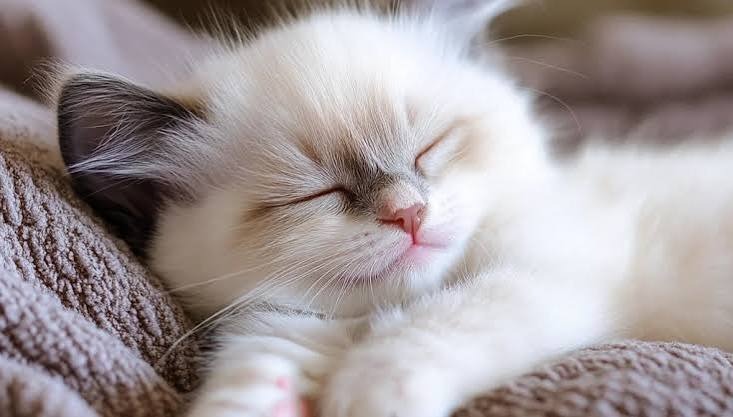

What Is a Ragdoll Cat Breed? Discover Their Gentle Personality, Unique Appearance, History, Care Needs & Loving Nature
If you have ever seen a Ragdoll cat, you may have noticed how different they look from many other domestic cats. Their bright blue eyes, soft semi-long coat, large body, and relaxed expression give them an unmistakable appearance. But their beauty is only one part of what makes this breed so interesting. Many people who discover Ragdolls for the first time naturally ask, what is a Ragdoll cat breed, and what makes these cats so special?
The Ragdoll is a large, affectionate cat breed known for its gentle temperament, striking appearance, and strong connection with people. They are often described as calm, friendly, and social companions. Their name itself comes from the breed’s reputation for becoming relaxed when picked up, although individual cats can behave differently.
Ragdolls are not simply beautiful cats that spend their days sleeping. They are intelligent, interactive animals that enjoy companionship, play, exploration, and a comfortable home environment. They can develop strong bonds with their families and often like staying close to the people they trust.
Understanding the breed before bringing one home is important. Their large size, coat, grooming requirements, social personality, nutritional needs, and long-term care all deserve attention. Whether you are researching Ragdolls for the first time or considering welcoming one into your home, learning about their history and characteristics can help you understand what life with this remarkable breed may be like.
What Is a Ragdoll Cat Breed?
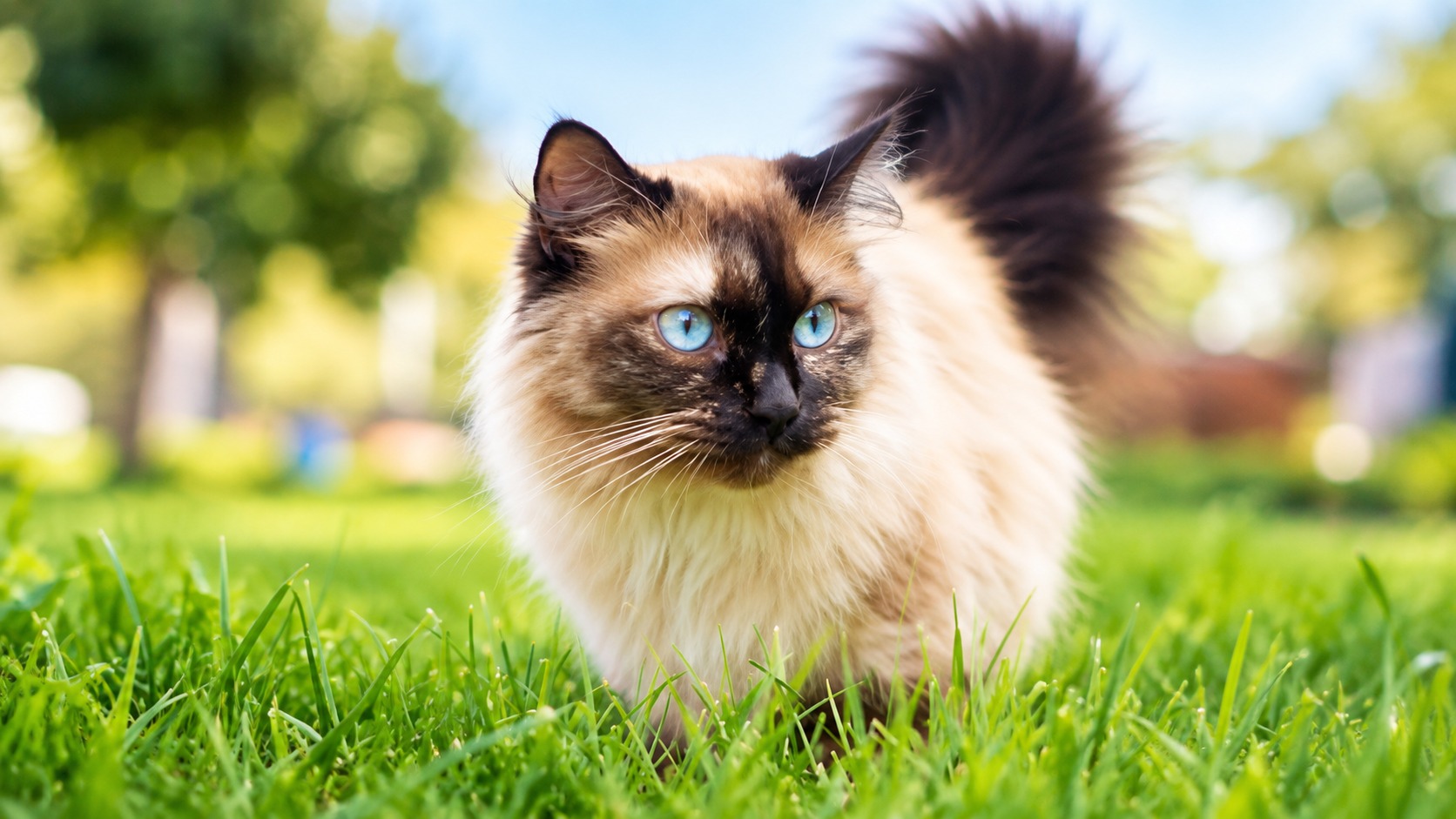
The Ragdoll is a large domestic cat breed recognized for its blue eyes, color-pointed coat, substantial body, and generally gentle personality. The breed has a semi-long coat that can appear luxurious without having the extremely dense undercoat associated with some other long-haired breeds.
Ragdolls are commonly known as companion cats because many enjoy spending time with people. They may follow family members around the house, sit nearby while someone is working, or settle beside their owners during quiet moments.
One of the most interesting features of the breed is its development. Unlike naturally occurring cat types that evolved over long periods, the modern Ragdoll was deliberately developed through selective breeding. This helped establish many of the physical and behavioral characteristics associated with the breed today.
A Ragdoll’s personality can vary from one cat to another, so it is important not to assume that every individual will behave the same way. However, the breed is generally associated with a relaxed, affectionate, and people-oriented temperament.
The History and Origin of Ragdoll Cats
The story of the Ragdoll begins in California during the 1960s. The breed was developed by breeder Ann Baker, who worked with cats that displayed particular physical and behavioral characteristics.
The cats she developed eventually became known as Ragdolls. Selective breeding helped establish the distinctive appearance and temperament that people associate with the breed today.
The breed’s name is particularly memorable. It is connected with the tendency some Ragdolls have to relax when they are picked up and handled comfortably. However, the name should not be interpreted as meaning that every Ragdoll will simply go limp whenever someone holds them.
As the breed became more widely known, interest grew among cat enthusiasts. Ragdolls eventually became established as a recognized pedigree breed, and their popularity expanded beyond their original development in California.
Today, Ragdolls are recognized by major cat organizations and are kept as companion animals in many parts of the world.
What Makes Ragdoll Cats So Special?
Several characteristics combine to make the Ragdoll distinctive. Their size immediately attracts attention because they can become considerably larger than many common household cats. Their blue eyes create another recognizable feature, while their pointed coloring gives them an elegant appearance.
Their temperament is equally important. Ragdolls are often appreciated by people who enjoy cats that like human company. They may prefer staying in the same room as their family rather than spending most of the day isolated.
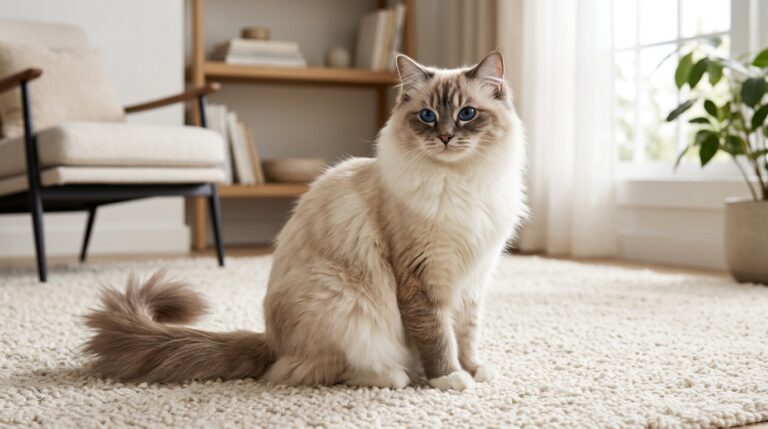
Their coat is another defining characteristic. Although Ragdolls have semi-long fur, their coat can feel soft and silky. Regular grooming helps keep it comfortable and reduces the chance of mats and tangles.
Perhaps the most important point is that the breed combines appearance with companionship. A Ragdoll is not simply a decorative pet. It is an intelligent living animal that needs attention, proper nutrition, veterinary care, exercise, and a safe environment.
What Does a Ragdoll Cat Look Like?
Ragdolls have a distinctive appearance that makes them relatively easy to recognize. They generally have a large, muscular body with a broad chest, sturdy legs, and a proportionate head.
Their overall appearance is often described as elegant but substantial. They are not delicate-looking cats despite their soft expression and flowing coat.
Ragdoll Eyes
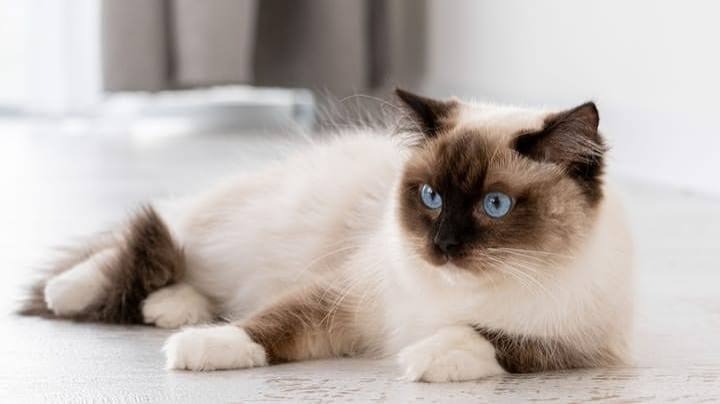
One of the most recognizable features of a traditional Ragdoll is its blue eyes. The eyes can contribute strongly to the breed’s characteristic appearance, particularly when combined with the darker coloration around the face.
The shade of blue can vary among individual cats, but blue eyes are an important feature associated with the breed standard.
Ragdoll Coat
Ragdolls have a soft, semi-long coat. The fur around the neck can create a noticeable ruff, while the body may have a smooth and flowing appearance.
Their coat requires regular attention, but grooming does not necessarily have to become an overwhelming task. Establishing a consistent brushing routine from an early age can make grooming easier for both the cat and owner.
Ragdoll Cat Colors and Patterns
Ragdolls are available in several recognized colors and patterns. Their pointed coloring means that certain areas of the body, particularly the ears, face, legs, and tail, are darker than the main body.
Colorpoint Ragdolls
The traditional colorpoint pattern features darker points on the ears, face, legs, and tail while the main body remains lighter.
This pattern creates the classic appearance many people imagine when they hear the word Ragdoll.
Mitted Ragdolls
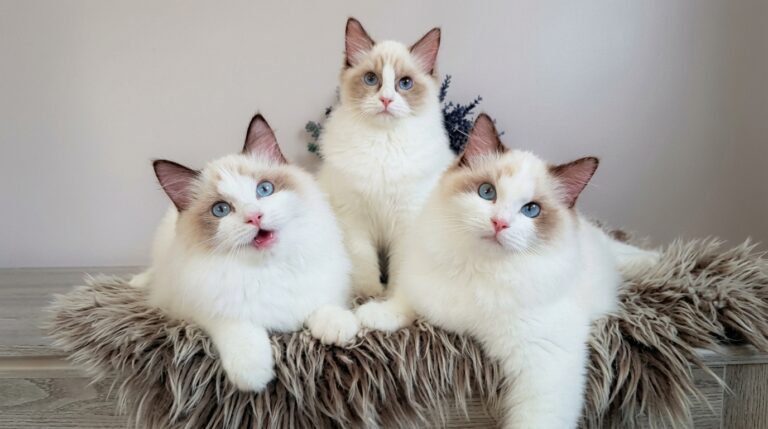
Mitted Ragdolls have darker coloration on their points along with distinctive white markings on their paws. The white areas can give the cat the appearance of wearing little gloves.
Their markings can make them particularly recognizable, although the exact pattern can differ between individual cats.
Bicolor Ragdolls
Bicolor Ragdolls have significant white areas combined with darker color-point markings. Their faces often feature an attractive inverted V-shaped white marking.
The contrast between the lighter and darker areas gives the bicolor pattern a distinctive appearance.
What Is a Ragdoll Cat’s Personality Like?
The Ragdoll’s personality is one of the biggest reasons people become interested in the breed. They are generally described as affectionate, calm, social, and people-oriented.
Many Ragdolls enjoy being near their owners. Instead of constantly demanding attention, they may simply choose to stay close. A Ragdoll might sit beside someone reading a book, follow a person from one room to another, or rest nearby while the household is active.
They can also be playful. Their calm personality does not mean they have no interest in toys or games. Young Ragdolls especially need opportunities to explore, chase toys, climb, and exercise.
Every cat remains an individual, however. Some Ragdolls may be more outgoing than others, while some may prefer quieter interactions. Early socialization and the cat’s environment can also influence how comfortable it becomes around people and other animals.
Are Ragdoll Cats Friendly?
Ragdolls are generally known for being friendly and social, which is one reason they are popular companion cats.
They often enjoy human interaction and may form strong relationships with their families. A well-socialized Ragdoll can become comfortable with normal household routines and may enjoy being involved in everyday activities.
Their friendliness does not mean that every Ragdoll will immediately trust unfamiliar people. Cats need time to become comfortable in new surroundings. A kitten or adult cat may initially hide or remain cautious after entering a new home.
Giving the cat a quiet place, allowing it to explore at its own pace, and using gentle interactions can help create a positive transition.
Are Ragdoll Cats Very Active?
Ragdolls are usually considered moderately active rather than extremely energetic. They enjoy play but are not generally associated with the intense activity levels of some highly energetic breeds.
This makes daily enrichment important. Toys that encourage chasing, batting, climbing, and problem-solving can help keep them physically and mentally engaged.
Interactive play can also strengthen the relationship between a Ragdoll and its owner. Short play sessions throughout the day can provide exercise while preventing boredom.
A comfortable cat tree, scratching post, safe climbing area, and different types of toys can turn an indoor environment into an interesting space.
How Intelligent Are Ragdoll Cats?
Ragdolls are intelligent cats that can learn household routines and respond to consistent training. They can become familiar with feeding schedules, playtime, grooming routines, and other regular activities.
Some may learn simple commands or behaviors through positive reinforcement. Treats, toys, and praise can make training more enjoyable.
Mental stimulation is particularly useful for indoor cats. Puzzle feeders, interactive toys, and supervised games can give a Ragdoll opportunities to use its natural curiosity.
The goal is not to make the cat perform complicated tricks. Instead, simple activities can help prevent boredom and provide a more interesting daily life.
Ragdoll Cat Grooming Needs
A Ragdoll’s beautiful coat requires regular grooming. While the coat is not identical to that of every other long-haired breed, loose fur can still accumulate, particularly during periods of increased shedding.
Regular brushing can help remove loose hair and reduce tangling. It also allows owners to check the cat’s skin and coat for unusual changes.
Brushing a Ragdoll Cat
A consistent brushing routine is generally more useful than occasional intensive grooming.
Begin gently, especially if the cat is young or unfamiliar with brushing. Allowing the cat to associate grooming with calm attention can make future sessions easier.
Pay attention to areas where fur may become tangled, such as around the neck, behind the legs, and around the body.
Never pull aggressively on a mat. If a serious matting problem develops, professional grooming or veterinary advice may be appropriate.
Other Grooming Needs
Grooming involves more than brushing. Ragdolls also benefit from regular nail care and appropriate dental hygiene.
Their ears can be checked periodically for dirt or unusual discharge. Cleaning should only be done using appropriate methods recommended for cats.
Regular veterinary examinations are also an important part of maintaining overall health.
What Do Ragdoll Cats Eat?
Good nutrition is essential for every cat, including Ragdolls. Their diet should provide the nutrients required for growth, energy, muscle maintenance, and general health.
Kittens have different nutritional needs from adult cats, so their food should be appropriate for their life stage. Adult Ragdolls also need a balanced diet that fits their individual lifestyle and activity level.
Because Ragdolls can become large cats, owners should pay attention to appropriate feeding rather than assuming that a bigger cat needs unlimited food.
Fresh drinking water should always be available. Some cats prefer water fountains, while others are perfectly comfortable drinking from a clean bowl.
If you are uncertain about the right food, feeding amount, or nutritional needs of your individual cat, a veterinarian can provide guidance based on age, weight, activity, and health.
Ragdoll Cat Health and Veterinary Care
Ragdolls can make wonderful companions, but responsible ownership includes understanding their health needs.
Routine veterinary examinations can help identify problems early and allow owners to discuss preventive care. Vaccinations, parasite prevention, dental care, nutrition, and general health monitoring can all contribute to a cat’s well-being.
Some health conditions have been associated with particular cat breeds, including Ragdolls. This does not mean every Ragdoll will develop these conditions. Genetics, breeding practices, environment, nutrition, and overall care can all influence individual health.
For this reason, prospective owners should ask reputable breeders about health screening and veterinary records when purchasing a kitten.
A responsible approach to breeding can help reduce avoidable genetic risks and support healthier future generations.
How Big Do Ragdoll Cats Get?
Ragdolls are considered one of the larger domestic cat breeds. Adult males are generally larger than females, although individual size can vary considerably.
One interesting feature of the breed is that Ragdolls can mature relatively slowly. They may continue developing their full body size and physical maturity for several years.
Their size means owners should provide appropriately sized equipment. A sturdy cat tree, comfortable bed, spacious carrier, and durable scratching post can make everyday life easier.
It is also important to remember that bigger does not automatically mean healthier. A healthy Ragdoll should have appropriate body condition, good mobility, normal behavior, and suitable nutrition rather than simply being as large as possible.
How Long Do Ragdoll Cats Live?
Ragdolls can be long-term companions when provided with appropriate care. Their lifespan can vary based on genetics, nutrition, veterinary care, lifestyle, and individual health.
Indoor living can reduce exposure to certain outdoor hazards, although indoor cats still require exercise and environmental enrichment.
Routine checkups can help monitor changes as a Ragdoll grows older. Dental health, weight management, nutrition, mobility, and general behavior all become increasingly important throughout adulthood and later life.
Providing a safe home and responding promptly to changes in appetite, behavior, activity, or appearance can support better long-term care.
Do Ragdoll Cats Shed?
Yes, Ragdolls shed. Their semi-long coat means owners should expect some loose fur around the home.
Shedding can change throughout the year. Some periods may bring more noticeable loose hair, while other times may require less grooming.
Regular brushing is one of the simplest ways to manage shedding. It can remove loose hairs before they end up on furniture, clothing, and floors.
A healthy grooming routine also gives owners the chance to notice changes in the coat, skin, or body condition.
Are Ragdoll Cats Good House Cats?
Ragdolls can adapt well to indoor living when their environment provides enough enrichment and social interaction.
Because they often enjoy human companionship, they may appreciate being part of everyday household life. However, owners should avoid assuming that a quiet cat needs no stimulation.
Ragdolls are recognized as a distinct pedigree breed by major cat organizations. You can learn more about the breed standard and characteristics from the Cat Fanciers’ Association (CFA) Ragdoll breed page.
An indoor Ragdoll should have places to climb, scratch, rest, hide, and play. Window perches can provide visual stimulation, while interactive toys can encourage activity.
Safety is equally important. Windows, balconies, electrical cords, toxic household substances, and unsuitable plants should be considered when creating an indoor environment.
What Is It Like to Live With a Ragdoll Cat?
Living with a Ragdoll can be a rewarding experience for someone who enjoys an affectionate companion. Their presence can become part of everyday household routines.
A Ragdoll may greet family members, follow them around the home, relax nearby, and participate in play sessions. Their social personality can make them feel like an active part of the household.
However, owning one is also a long-term responsibility. Food, grooming, veterinary care, toys, litter, scratching equipment, and other supplies all require ongoing attention.
Potential owners should consider whether they have enough time and resources to care for a cat throughout its entire life.
Ragdoll Cats vs. Other Popular Cat Breeds
Ragdolls have several characteristics that distinguish them from other popular breeds.
Ragdoll vs. Maine Coon
Both Ragdolls and Maine Coons are large breeds with impressive coats, but they have different appearances and personalities.
Maine Coons are famous for their large bodies, tufted ears, long tails, and distinctive facial structure. Ragdolls are recognized for their pointed coloring, blue eyes, and softer color contrast.
Both can be affectionate companion cats, but individual personality remains more important than breed stereotypes.
Ragdoll vs. Siamese
Siamese cats are generally recognized for their slender bodies, pointed coloring, blue eyes, and highly social personalities.
Compared with the substantial body of a Ragdoll, Siamese cats usually have a more streamlined appearance. Siamese cats are also well known for being expressive and vocal.
Both breeds can form strong relationships with their owners, but their physical characteristics and typical communication styles differ.
Ragdoll vs. Persian
Persian cats are known for their long coats and distinctive facial features. Their grooming requirements can be significant.
Ragdolls have a semi-long coat and a different body structure, with color-pointed markings and blue eyes being central parts of their appearance.
Choosing between breeds should involve more than appearance. Prospective owners should consider grooming, activity level, temperament, health needs, and the amount of daily interaction they can provide.
How to Choose a Healthy Ragdoll Kitten
Choosing a kitten responsibly is an important step in becoming a Ragdoll owner.
If purchasing from a breeder, look for someone who is transparent about the kitten’s background, veterinary care, and health screening. A responsible breeder should be willing to answer reasonable questions about the parents and kittens.
A kitten should appear appropriately active and responsive for its age. Its living environment should be clean, safe, and suitable for raising young cats.
Potential owners should also ask about vaccination records, parasite treatment, feeding, socialization, and veterinary examinations.
Avoid rushing into a purchase simply because a kitten looks attractive. Taking time to understand the breeder, ask questions, and review available health information can help you make a responsible decision.
How to Help a Ragdoll Feel Comfortable at Home
Bringing a new cat home can be exciting, but the transition should be handled calmly.
Prepare a quiet area where the cat can eat, drink, sleep, use the litter box, and gradually become familiar with its surroundings.
Do not force a nervous cat to interact immediately. Give it time to explore and approach people when it feels comfortable.
Once the cat becomes more confident, gradually introduce additional areas of the home. Toys, scratching posts, comfortable sleeping spaces, and safe climbing areas can make the environment more enjoyable.
A predictable routine can also help. Regular feeding, grooming, play, and quiet time allow the cat to understand what to expect each day.
FAQs
What is a Ragdoll cat breed known for?
Ragdolls are best known for their large size, blue eyes, pointed coat patterns, semi-long fur, and generally gentle, social temperament.
Are Ragdoll cats naturally affectionate?
Many Ragdolls are affectionate and enjoy human companionship. However, every cat has its own personality, so individual behavior can vary.
Are Ragdoll cats indoor cats?
Ragdolls can live successfully indoors when they have appropriate enrichment, exercise, scratching opportunities, safe climbing areas, and regular interaction.
Do Ragdoll cats have blue eyes?
Blue eyes are one of the defining features associated with the Ragdoll breed.
Are Ragdoll cats easy to groom?
Their semi-long coat requires regular brushing, but a consistent grooming routine can make coat care manageable.
How large can Ragdoll cats become?
Ragdolls are a large breed, with males generally larger than females. Individual size varies, and they can mature gradually.
Do Ragdoll cats shed a lot?
Ragdolls shed, and the amount can vary between individuals and throughout the year. Regular brushing can help manage loose hair.
Are Ragdoll cats good with other pets?
Many Ragdolls can adapt well to living with other animals when introductions are gradual and carefully managed.
How long do Ragdoll cats usually live?
Their lifespan varies between individuals and depends on genetics, health, nutrition, veterinary care, and lifestyle.
Are Ragdoll cats suitable for first-time cat owners?
They can be suitable for people who are prepared to meet the breed’s grooming, nutrition, veterinary, social, and environmental needs.
Final Thoughts
Understanding what is a Ragdoll cat breed means looking beyond its beautiful blue eyes and luxurious coat. Ragdolls are large, distinctive companion cats with a history that began in California and a reputation for being gentle, social, and affectionate. Their relaxed personality and strong interest in human companionship have helped make them popular with cat lovers around the world.
At the same time, owning a Ragdoll comes with meaningful responsibilities. Their semi-long coat needs regular grooming, their large bodies require appropriate nutrition and equipment, and their social nature means they benefit from attention and interaction. Routine veterinary care is also an important part of helping them enjoy a healthy life.
Every Ragdoll is an individual, so personality, activity level, and preferences can differ from one cat to another. A responsible owner focuses on the cat’s actual needs rather than relying only on breed expectations.
With a safe home, balanced nutrition, regular grooming, mental stimulation, loving interaction, and appropriate veterinary care, a Ragdoll can become a wonderful long-term companion. For people who appreciate a beautiful cat with a calm presence and a strong desire for companionship, the Ragdoll offers a truly distinctive experience.